ARTICLES BY DEWAYNE
Christian Articles With A Purpose For Truth.
#19 THE GARDEN OF GOOD AND EVIL 8-22-26
The garden was beautiful, peaceful, and perfect. God had given man everything he needed. There was food for his hunger, beauty for his eyes, meaningful work for his hands, and fellowship with his Creator. But in the middle of that paradise stood a tree that reminded man of an important truth: God is God, and man is not. The story of the garden is not merely the story of a forbidden tree. It is the story of God’s authority, God’s love, man’s rebellion, and God’s response to sin.
THE COMMAND OF GOD
God gave Adam a clear command: “Of every tree of the garden you may freely eat” (Genesis 2:16). Then came the restriction: “But of the tree of the knowledge of good and evil you shall not eat” (Genesis 2:17).
Notice the generosity of God before you notice the prohibition of God. There were many trees Adam could eat from, but there was one tree he could not eat from. God was not withholding everything from man. He was teaching man to trust Him.
Every command of God is ultimately a test of whether we will trust the wisdom of God above our own wisdom. Sin begins when we decide that we know better than God.
The command was simple. The responsibility was clear. Adam did not need another explanation. He needed obedience.
THE CONCERN OF GOD
Then we see the concern of God. God was not indifferent toward His creation. He had warned man because He loved man. “In the day that you eat of it you shall surely die” (Genesis 2:17).
God’s commands are not arbitrary restrictions designed to make life miserable. They are expressions of His wisdom and His love. A loving Father warns His children about what will destroy them.
The serpent made God’s command sound unreasonable. He questioned God’s goodness by asking, “Has God indeed said?” (Genesis 3:1). That question has echoed through human history. Can God really be trusted? Is His way really best? Does obedience really matter?
God had already answered those questions by everything He had given Adam.
Sometimes we look at the one thing God has forbidden while forgetting the thousands of blessings He has freely given. The enemy wants us to stare at the restriction. God wants us to remember His goodness.
THE CORRUPTION OF MAN
Then came the corruption of man. Eve saw the tree, desired what it promised, took its fruit, and ate. Adam also ate (Genesis 3:6).
Sin entered the human story through disobedience. Man was not deceived because God had failed to communicate. Man rebelled because he trusted another voice more than God’s voice.
The serpent promised that they would be like God, knowing good and evil (Genesis 3:5). But instead of becoming like God, they discovered their own nakedness and shame (Genesis 3:7).
That is always the tragedy of sin. Sin promises freedom but produces bondage. It promises pleasure but produces pain. It promises wisdom but produces shame. It promises that we can improve our lives by ignoring God, but it ultimately destroys what God has given us.
Adam and Eve hid themselves from the presence of the Lord (Genesis 3:8). Sin always makes us want to hide from the God whose presence we were created to enjoy.
THE CORRECTION OF GOD
Finally, we see the correction of God. God came searching for Adam and asked, “Where are you?” (Genesis 3:9).
God knew where Adam was. The question was not for God’s information. It was for Adam’s examination.
Sin had consequences. The serpent was judged. The woman would experience increased sorrow. The man would labor under the curse upon the ground. They would be driven from Eden, and death would now mark the human experience (Genesis 3:14-24).
But even in correction, there was mercy.
God did not destroy Adam and Eve. He judged their sin, but He also covered their nakedness (Genesis 3:21). And in the midst of the judgment came the first great promise of redemption. The seed of the woman would bruise the serpent’s head (Genesis 3:15).
The Bible begins with a garden, a command, a rebellion, and a broken relationship. But the story does not end there. The Bible eventually brings us to another garden, where another Man would pray, “Not My will, but Yours, be done” (Luke 22:42).
In Eden, man said yes to his own will and brought death. In Gethsemane, Christ submitted Himself to the Father’s will and went to the cross to bring life.
The garden of Eden shows us what sin did.
The garden of Gethsemane shows us what love was willing to do about it.
And that is the gospel. The God who came looking for Adam is the God who came looking for us.
_______________
Father, help us to trust Your commands because we know Your heart. Keep us from believing the lies of the enemy and choosing our own wisdom over Yours. When we fall, teach us to come out of hiding and return to You. Thank You for Your correction, Your mercy, and above all, for Jesus Christ who came to undo what sin had done. Help us to live today in obedience, humility, and gratitude for Your grace. Amen.
BDD
#18 THE PRESENCE OF CHRIST 8-22-26
There is a precious truth that can transform the way we live every day: Jesus is with us. Christianity is not merely believing facts about Christ, remembering what He did in the past, or looking forward to being with Him in heaven. It is walking with Him now. He walks with us through the ordinary moments of life. He is not a distant Savior, but an intimate Friend. He is the Friend of sinners, the One who came near to the broken, the lonely, the struggling, and the guilty. We can live every day consciously aware of His presence. He is closer than we realize.
HIS PRESENCE
The first blessing is His presence. Jesus promised His disciples, “I am with you always, even to the end of the age” (Matthew 28:20). That promise was not merely for the apostles. It is the comfort of every believer. When we wake in the morning, Christ is there. When we walk through the responsibilities of the day, Christ is there. When we are troubled, He is there. When nobody else understands, He is there.
Think about the wonder of that truth. The One who calmed the storm walks with us through our storms. The One who healed lepers is not afraid to come near us in our weakness. The One who forgave sinners still receives us when we come to Him. He calls us friends (John 15:15). We do not have to live as though we are abandoned.
The Christian life becomes sweeter when we stop merely thinking about Christ and begin consciously walking with Christ. Before we make a decision, we can remember that He is there. Before we speak, we can remember that He hears. When temptation comes, we can remember that we are not alone. His presence changes the way we live.
HIS POWER
But His presence is accompanied by His power. Jesus does not merely walk beside us as a helpless companion. He is the risen Lord. He has “all authority” in heaven and on earth (Matthew 28:18). The Christ who lives within us is greater than anything that can come against us.
Paul said, “I can do all things through Christ who strengthens me” (Philippians 4:13). The strength we need for today is not found merely in ourselves. It comes from Him. When we are weak, His grace is sufficient. When we are tempted, His strength is available. When we are discouraged, His power sustains us.
There are days when we may feel that we cannot take another step. Yet we can take the next step because Christ is with us. We can forgive because Christ strengthens us. We can endure because Christ strengthens us. We can resist temptation because Christ strengthens us. We can keep serving when we are tired because Christ strengthens us.
His presence means we are never alone. His power means we are never without help.
HIS PEACE
And where His presence and power are trusted, there is His peace. Jesus said, “My peace I give you” (John 14:27). The peace of Christ is not the absence of trouble. It is the presence of Christ in the middle of trouble.
The world gives us circumstances and tells us that we can have peace when everything goes our way. Jesus gives us Himself and teaches us that we can have peace even when everything does not go our way.
It is wonderful to know that the Lord is walking beside you. The future may be uncertain, but Christ is certain. The road may be difficult, but Christ is present. People may disappoint us, but Christ remains faithful. We may not know what tomorrow holds, but we know who holds us today.
“And the peace of God, which surpasses all understanding, will guard your hearts and minds through Christ Jesus” (Philippians 4:7). His peace stands guard over the heart.
HIS PROMISE
And perhaps we should add one more thought: His promise. He has promised that His presence will not abandon us. “I will never leave you nor forsake you” (Hebrews 13:5).
That means we can live today consciously aware of Christ. Talk to Him. Walk with Him. Depend upon Him. Bring your burdens to Him. Thank Him in the ordinary moments. Remember Him when temptation comes. Look to Him when sorrow comes. Rejoice in Him when blessings come.
He is not simply the Savior we met at conversion. He is the Friend who walks with us every day.
The best friend you will ever have is Jesus. He is the Friend of sinners. He is the Friend of the weary. He is the Friend of the brokenhearted. He is the Friend who never walks away.
So today, do not live as though you are alone.
His presence. His power. His peace. His promise.
Walk with Jesus today. He is already walking with you.
_______________
Lord Jesus, help me to become more conscious of Your presence every day. When I am weak, remind me of Your power. When I am troubled, remind me of Your peace. When I am lonely, remind me that You are my faithful Friend. Help me to walk with You, talk with You, trust You, and live every moment knowing that You are near. Amen.
BDD
#17 THE GREAT EXCHANGE 8-22-26
The Gospel is the story of the greatest exchange the world has ever known. At the cross, Jesus took what belonged to us and offered us what belonged to Him. He did not merely come to make bad people better. He came to take our place. “For He made Him who knew no sin to be sin for us, that we might become the righteousness of God in Him” (2 Corinthians 5:21).
He took our shame so we could take His glory.
Sin brought shame. Adam and Eve sinned, and the first thing they did was hide themselves (Genesis 3:8). Shame makes us want to cover ourselves, retreat from God, and pretend that our failures are not there. But Jesus took our shame upon Himself. He endured the cross, “despising the shame” (Hebrews 12:2). He was mocked, beaten, stripped, rejected, and crucified. The spotless Son of God willingly entered our shame so that we could share in His glory. What a mystery of grace. He took the humiliation so that we could receive the honor of being called children of God (1 John 3:1).
He took our sin so we could take His righteousness.
This is the heart of the gospel. Our sin was not ignored. It was dealt with at the cross. “He Himself bore our sins in His own body on the tree” (1 Peter 2:24). He took what condemned us and gave us what we could never produce by ourselves. We come to Christ guilty, and He gives us forgiveness. We come stained, and He gives us cleansing. We come unable to boast in our own righteousness, and He gives us a righteousness that comes through faith (Philippians 3:9).
That is grace. We bring Him our sin. He gives us His righteousness.
He took our death so we could take His life.
Death entered the human story through sin, but Christ entered death and conquered it. He did not merely teach us how to die. He died in our place and rose again. Paul said that we are united with Christ in His death and resurrection so that “we also should walk in newness of life” (Romans 6:4). The grave could hold Him only temporarily. On the third day, He rose victorious.
And because He lives, life is available to those who belong to Him. Jesus said, “I am the resurrection and the life” (John 11:25). He took the death we deserved so that we could receive the life that comes from Him.
Look at the exchange.
He took our shame.
He gave us His glory.
He took our sin.
He gave us His righteousness.
He took our death.
He gave us His life.
At the cross, Jesus went lower so that we could be lifted higher. He became poor that we might become rich in Him (2 Corinthians 8:9). He was wounded so that we could be healed (Isaiah 53:5). He was rejected so that we could be received.
This is why the cross can never become ordinary to the Christian.
Every time we look at it, we should remember that Jesus was not there because He had done something wrong.
We were the ones who needed the exchange.
And He willingly made it.
_________________
Lord Jesus, thank You for taking what belonged to us and giving us what we could never earn. Thank You for bearing our shame, carrying our sin, and entering our death. Help us to live in the glory, righteousness, and life You have given us. May we never look at the cross casually, but always marvel at the love that made the great exchange possible. Amen.
BDD
#16 REVERSALS: GREEN ACRES AND THE BEVERLY HILLBILLIES 8-22-26
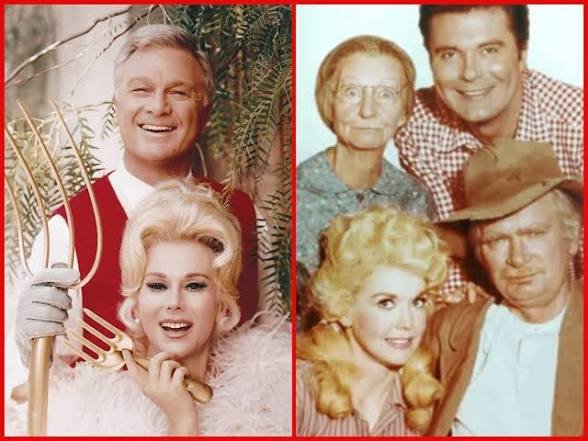
Two of the funniest television shows of the 1960s had clever irony in them. On The Beverly Hillbillies, a rural family moved to the city. On Green Acres, a city family moved to the country. The Clampetts left their simple life in the Ozarks after striking oil and settled into a mansion in Beverly Hills, while Oliver and Lisa Douglas left New York City for a farm near Hooterville.
It was almost as if television decided to conduct an experiment. Take country people and put them in the city. Take city people and put them in the country. Then sit back and watch everybody discover that the grass isn’t necessarily greener on the other side of the fence.
The Clampetts had money but didn’t understand the culture around them. The Douglases had sophistication but struggled with the culture they had entered. Jed Clampett could find his way around a swamp but didn’t know what to do with Beverly Hills. Oliver Douglas knew the law, business, and city life but couldn’t figure out how to get a tractor to cooperate. Both families were fish out of water.
And that is a picture of us sometimes.
We spend an astonishing amount of our lives believing that our happiness is waiting somewhere else. If only we had more money. If only we lived somewhere different. If only our circumstances changed. If only people treated us differently. If only we had a better job, a nicer house, fewer problems, or a different season of life.
We keep moving the location of our happiness.
But the Bible teaches us that the great problem is not primarily where we are. It is who we are and where our hearts are. Paul said, “I have learned in whatever state I am, to be content” (Philippians 4:11). Paul had learned something that neither the Clampetts nor the Douglases ever completely mastered: contentment does not come from changing your circumstances. It comes from knowing Christ.
Jesus did not promise His disciples a trouble-free location. He promised His presence. “I am with you always, even to the end of the age” (Matthew 28:20). That means you can be in a mansion and be miserable, or you can be in a little house and have peace. You can be surrounded by wealth and still be poor in spirit, or you can possess very little and yet have riches that cannot be measured in dollars.
The great exchange is not from country to city or city to country.
It is from earth to heaven.
Jesus said, “Do not lay up for yourselves treasures on earth…but lay up for yourselves treasures in heaven” (Matthew 6:19-20). He calls us to exchange the temporary for the eternal, the visible for the invisible, the passing for the permanent.
The Clampetts went from a shack to a mansion but remained the same people. Oliver went from a New York apartment to a Hooterville farm but remained the same man. Changing the scenery does not necessarily change the soul.
Only Christ can do that.
Paul described the Christian life as becoming a new creation in Christ (2 Corinthians 5:17). That is a relocation of the heart. We may still live in the same house, work the same job, drive the same car, and face many of the same circumstances, but something fundamental has changed. We no longer belong to this world in the same way. Our citizenship is in heaven (Philippians 3:20).
And perhaps that is why Christians can live differently wherever God places them.
You don’t have to escape your circumstances to experience God’s presence. You don’t have to wait for everything to become perfect before you can have joy. You don’t have to move to your version of Beverly Hills or your version of Green Acres.
Christ can meet you right where you are.
There is something else amusing about those old shows. Both families eventually discovered that the place they imagined would solve their problems had problems of its own. That is a lesson worth learning before we spend our lives chasing the next thing.
The next place may not be paradise.
The next paycheck may not satisfy.
The next possession may not fulfill.
The next chapter may still have problems.
But Jesus is enough in this chapter.
So bloom where God has planted you. Serve Him where you are. Love the people around you. Give thanks for what you have. And if God changes your circumstances, thank Him there too.
Because the greatest blessing is not finding the perfect place.
It is finding the presence of God.
The Clampetts had Beverly Hills. The Douglases had Hooterville. We have something better.
We have Christ.
And when Christ is with you, even an ordinary place can become holy ground.
_______________
Lord, teach us to be content wherever You have placed us. Keep us from believing that happiness is always somewhere else. Help us to recognize the blessing of Your presence today, and teach us to seek treasures that cannot be lost, taken, or destroyed. May our hearts be at home in You, wherever we are. Amen.
BDD
Livestream Preaching Times for Saturday, August 22, 2026
10:00 AM
“The Apostolic Witness”
(Acts 1:8)
2:00 PM
“Obedience and Sprinkling”
(1 Peter 1:1-2)
5:00 PM
“A Mansion On the Hill”
(John 14:1-3)
TikTok: @dewaynedunawayministries
All times CST
#15 RIVERS THAT FLOW FROM WITHIN 8-21-26
A river is a beautiful thing. It does not have to be forced to move. When water has a source, it finds a channel and begins to flow. Jesus used that picture to describe what happens when the Holy Spirit takes up residence in the life of a believer. “If anyone thirsts, let him come to Me and drink” (John 7:37). Then He said, “He who believes in Me, out of his heart will flow rivers of living water” (John 7:38).
There is the presence of the water. Jesus did not speak of a stagnant pool, but of “living water.” The picture is of something moving, fresh, and alive. He was speaking of the Spirit, whom those who believe in Him would receive (John 7:39). Christianity is not merely learning facts about God. It is having God present with us. The Holy Spirit dwells within the believer, reminding us that we are not walking through this life alone.
Jesus told His disciples that the Spirit would be with them and in them (John 14:17). What a thought. The God who made the oceans, filled the rivers, and sends rain upon the earth chooses to dwell within His people. The river begins with His presence.
There is the power of the water. A river may begin as a tiny stream, but given enough time, water can carve through rock, reshape valleys, and transform landscapes. Living water does something similar in the human heart. The Spirit of God changes us from the inside out. He produces love, joy, peace, patience, kindness, goodness, faithfulness, gentleness, and self-control (Galatians 5:22–23).
We sometimes try to change ourselves by pushing harder, making more promises, and attempting greater self-discipline. But Christianity is not merely behavior modification. It is transformation produced by the presence and power of God. The Spirit works in us, teaching us, correcting us, strengthening us, and conforming us to the character of Christ.
And then there is the participation of the water. Jesus said the rivers would flow out of us. The water is not intended to stop with us. God blesses us so that we can become a blessing to others. The comfort we receive can become comfort we give. The mercy we have experienced can become mercy we extend. The truth we have learned can become truth we teach.
A river that never flows becomes stagnant. In the same way, a Christian who only receives but never gives misses something of God’s purpose. We drink from Christ so that we can pour into the lives of others.
Jesus said, “Come to Me and drink.” First, we receive. Then, “out of his heart will flow rivers.” Then, we release what we have received. The direction is from Christ, into us, and through us to others.
Perhaps someone around you is thirsty today. They may need encouragement. They may need forgiveness. They may need someone to listen. They may need to hear the gospel. They may simply need to see what the grace of God looks like when it takes flesh in an ordinary Christian life.
Let the river flow.
The source is Christ. The power is the Spirit. The channel is you.
You do not have to manufacture the water. You simply have to stay connected to the Source.
______________
Lord, fill us with Your presence and let Your Spirit work within us. Give us more than a faith that merely receives. Make us people through whom Your grace, mercy, truth, love, and hope can flow into the lives of others. Let the living water You have placed within us become a river of blessing wherever we go. Amen.
BDD

#14 WHEN THE LIGHTS GO DOWN 8-21-26
Darkness can be unsettling. We are comfortable when the lights are on. We can see where we are going. We can recognize what is around us. But when the lights go down, everything changes. Even familiar places can suddenly feel strange. Journey captured something of that feeling in the song “Lights,” imagining the lights of the city as a symbol of home, distance, and longing. We understand that feeling because every human heart longs for a light that darkness cannot overcome.
The Bible begins with God speaking light into darkness. “Let there be light” (Genesis 1:3). It ends with a city where there is no need for the sun or moon because the glory of God illuminates it, and the Lamb is its light (Revelation 21:23). Between those two scenes runs the story of redemption. The Bible is a story about God bringing people out of darkness and into His marvelous light.
There is illumination. Jesus said, “I am the light of the world” (John 8:12). Light reveals what darkness conceals. It shows us who God is, and it shows us who we really are. The Word of God is a lamp to our feet and a light to our path (Psalm 119:105). Sometimes we do not need God to give us a different road. We simply need Him to turn the light on so we can see the road we are already walking.
There is separation. Light and darkness cannot remain comfortable together. “What fellowship has righteousness with lawlessness? And what communion has light with darkness?” (2 Corinthians 6:14). When Christ enters our lives, He does not merely make darkness more comfortable. He calls us out of it. “You were once darkness, but now you are light in the Lord. Walk as children of light” (Ephesians 5:8). The coming of light creates a separation between what we were and what God calls us to become.
There is incarnation. The greatest light did not remain distant from us. “The Word became flesh and dwelt among us” (John 1:14). The Light came into our darkness. Jesus did not shout instructions from heaven and leave us to find our own way. He came down. He walked our roads. He entered our world. He experienced hunger, weariness, rejection, sorrow, and suffering. The Light of the world stepped into the darkness of our world so that those trapped in darkness could see the glory of God.
There is destination. The light is taking us somewhere. Peter said that God called us “out of darkness into His marvelous light” (1 Peter 2:9). We are not wandering aimlessly through the night. We are headed toward home. And when we finally arrive, there will be no more night. “There shall be no night there” (Revelation 22:5). The journey ends where the darkness ends.
And there is exaltation. The One who came as the Light will one day be openly glorified before all creation. “At the name of Jesus every knee should bow” (Philippians 2:10). The world that once rejected Him will one day see Him in His glory. The Christ who was despised will be exalted. The One who came quietly into Bethlehem will one day fill heaven and earth with His glory.
So when the lights go down, do not be afraid. There is a Light that darkness cannot extinguish. When you cannot see the road, trust the One who can. When God exposes something in your heart, do not run from the light. Let Him change you. When the journey seems long, remember the destination.
One day the lights of every earthly city will go dark. Buildings will fall. Streets will empty. Human achievements will fade. But the Light of Christ will never go out.
________________
Lord, shine Your light upon our hearts. Lead us out of darkness, keep us walking in Your light, and help us remember that we are headed toward a city where there will be no night. May the Christ who came into our darkness be exalted in our lives until the day we see His glory face to face. Amen.
BDD

#13 WHEN GOD GIVES YOU REST 8-21-26
There are seasons when life feels like a weight we were never meant to carry. We try to fix everything, understand everything, control everything, and somehow keep moving as though we are strong enough to handle it all. But the gospel reminds us that we were never meant to carry the burden of sin or walk through life without the help of God. Jesus does for us what we could never do for ourselves.
There is redemption in Christ. We were lost, but He came looking for us. We were guilty, but He bore our guilt. We were separated from God, but Christ made peace through the blood of His cross (Colossians 1:20). Peter said that we were redeemed “with the precious blood of Christ” (1 Peter 1:18-19). Redemption means that our past does not have to determine our future. The chains can be broken. The debt can be paid. The sinner can come home. In Christ, we are not merely improved. We are redeemed.
There is relaxation in His presence. Jesus said, “Come to Me, all you who labor and are heavy laden, and I will give you rest” (Matthew 11:28). He does not say, “Come to Me when you have everything figured out.” He says, “Come to Me” when you are tired. Come when you are burdened. Come when you have exhausted your own strength. The Christian life is not a frantic attempt to earn what Christ has already provided. We serve because we are loved, not so that we might become lovable. There is a holy rest that comes when we finally trust the One who holds our lives in His hands.
And there is reward ahead. The Bible tells us that God is not unjust to forget our work and labor of love (Hebrews 6:10). Jesus said that even a cup of cold water given in His name will not lose its reward (Matthew 10:42). What an encouragement. God sees what people overlook. He remembers the prayer nobody heard, the kindness nobody applauded, the sacrifice nobody recognized, and the faithful service that seemed insignificant. Nothing done for Christ is wasted.
One day, the redeemed will be rewarded. The weary will rest. The faithful will see that every sacrifice was worth it. We will understand that the moments when we wondered whether serving God mattered were the very moments when He was preparing something eternal.
So don’t spend your life trying to carry what Christ came to carry for you. Rest in His grace. Walk in His presence. Serve Him faithfully. Your past can be redeemed, your present can be relaxed in His care, and your future is held in His promise.
The world tells us to work harder, worry more, and prove ourselves. Jesus says, “Come to Me.” There is redemption behind you, rest beneath you, and reward before you.
__________________
Lord, thank You for redeeming us when we were lost, giving us rest when we are weary, and promising a reward that cannot be taken away. Help us to trust You with our past, depend upon You in the present, and look forward with confidence to the future. Amen.
BDD

#12 THE WORLD WITHIN A CELL 8-21-26
We like to think we know what we are looking at. A tree is a tree. A rock is a rock. A human being is a human being. Our eyes give us a convincing picture of reality, but our eyes are remarkably limited instruments. There is an entire universe operating beneath the threshold of ordinary vision. The cell is one of the places where that hidden universe begins.
A human cell is extraordinarily small. Most cells cannot be seen with the unaided eye. Yet inside something so small that millions could fit into a space we barely notice, there is organization of astonishing complexity. There are membranes controlling what enters and leaves, structures producing energy, molecules carrying information, and countless chemical reactions occurring every moment. The cell is not simply a tiny bag of chemicals. It is an intricately ordered world.
“I will praise You, for I am fearfully and wonderfully made” (Psalm 139:14). David did not have a microscope. He could not see DNA, mitochondria, chromosomes, or molecular machinery. But he understood something modern science continues to teach us: the deeper we look into creation, the more reason we have to marvel.
What can we see? With an ordinary microscope, we can begin to see the architecture of the cellular world. With more powerful instruments, we can examine structures far smaller than anything our eyes could distinguish. Fluorescent techniques can allow scientists to follow particular molecules. Modern imaging can reveal cellular processes occurring in real time.
But every improvement in our ability to see also reveals how much remains unseen.
The deeper we look, the smaller the structures become. Molecules are composed of atoms. Atoms contain smaller components. And at the subatomic level, our ordinary idea of “seeing” begins to break down. We do not simply look at an electron the way we look at a grain of sand. We infer its properties through measurements and their effects.
That ought to produce humility.
We are surrounded by realities we cannot see. We cannot see gravity itself, but we see what gravity does. We cannot see radio waves with our eyes, but we can measure and use them. We cannot see every molecular event occurring inside a living cell, but we can observe its effects.
The Christian understands this principle spiritually as well. “For we walk by faith, not by sight” (2 Corinthians 5:7). Faith is not pretending that evidence does not exist. It is recognizing that visible reality is not the whole of reality. “The things which are seen are temporary, but the things which are not seen are eternal” (2 Corinthians 4:18).
The cell proves that invisible does not mean imaginary.
Inside that microscopic world is information, order, communication, energy production, transportation, repair, and reproduction. We cannot watch every event with our eyes, but we can study the evidence and understand what is happening.
And then we come to the great question: What can we know?
Science has discovered an enormous amount about the cell. We know that DNA contains biological information. We know that proteins perform specific functions. We know that cellular structures interact in remarkably precise ways. We know that energy is transformed and transported. We know that cells communicate with one another.
But science also teaches us what we cannot know completely. We cannot observe every event that has ever occurred inside every cell. We cannot reconstruct every molecular interaction in the history of a human body. There are limits to measurement, observation, prediction, and human understanding.
That should not discourage us. It should humble us.
“There is no searching of His understanding” (Isaiah 40:28). Our knowledge grows, but God’s knowledge is not growing. We discover things. God already knows them. We explore creation. God made it.
Think about that the next time you look at your own hand.
You see skin. God sees an extraordinary living system composed of countless cells, each containing structures and processes beyond what your eyes can perceive. You see a human body. God sees every molecule within it. You see the surface. He knows the depths.
The Psalmist asked, “How precious also are Your thoughts to me, O God! How great is the sum of them!” (Psalm 139:17). The wonder of the microscopic world should not merely make us admire nature. It should turn our attention toward the Creator.
The telescope teaches us humility by showing us how immense the universe is. The microscope teaches us humility by showing us how intricate the small is. We can look outward and be overwhelmed by galaxies. We can look inward and be overwhelmed by cells. In both directions, we encounter a creation far greater than ourselves.
And the Christian has one more reason to marvel.
The God who made the universe took on flesh.
The One who created the microscopic machinery of the human body entered a human body. The One who made life came into the world as a living man. “The Word became flesh and dwelt among us” (John 1:14).
That is greater than anything a microscope can reveal.
So study the cell. Explore the universe. Ask questions. Discover what can be discovered. But when your discoveries make you realize how little you know, do not despair. Worship.
What we can see should produce wonder.
What we cannot see should produce humility.
What we can know should produce gratitude.
And what we cannot know should remind us that we are creatures standing before a Creator whose wisdom is infinitely greater than our own.
“The heavens declare the glory of God; and the firmament shows His handiwork” (Psalm 19:1).
Sometimes the best place to see His glory is not in the heavens above us, but in the tiny world within us.
______________
Lord, open our eyes to the wonder of Your creation. Give us minds that love truth, hearts that remain humble, and wisdom to recognize Your handiwork in both the vastness of the universe and the smallest details of life. When we discover how much we do not know, remind us that You know all things. And may every discovery lead us beyond creation to the Creator. Amen.
BDD

Livestream Preaching Times for Friday, August 21, 2026
5:30 AM
“He Anoints My Head with Oil”
(Psalms 23:4)
10:00 AM
“Christ Our Judge”
(2 Timothy 4:1)
2:00 PM
“Justified By His Grace”
(Titus 3:7)
6:00 pm
“Filled With All Unrighteousness”
(Romans 1:28-32)
TikTok: @dewaynedunawayministries
All times CST
#11 THE SHEPHERD WHO NEVER LETS GO 8-21-26
Psalm 23 is more than a beautiful description of a peaceful life. It is the testimony of a sheep who has discovered that everything he needs is found in the Shepherd. “The Lord is my shepherd. I shall not want” (Psalm 23:1). David does not begin with what the sheep can do for himself. He begins with what the Shepherd does for him.
There is deliverance in the Shepherd. “Yea, though I walk through the valley of the shadow of death, I will fear no evil” (Psalm 23:4). Notice that David does not say the Shepherd keeps him from every valley. He says the Shepherd walks with him through the valley. Sometimes God delivers us by keeping us out of trouble. Sometimes He delivers us by walking with us through it. The valley may be dark, but it is not deserted. The shadow may be frightening, but a shadow cannot destroy you. The Shepherd is still there.
There is dependence in the Shepherd. “He makes me to lie down in green pastures. He leads me beside the still waters” (Psalm 23:2). Sheep are not known for finding their own way. They need a shepherd to lead them to food, water, safety, and rest. We are not as independent as we like to think we are. We need God every day. We need His wisdom when we do not know what to do, His strength when ours is gone, His correction when we begin to wander, and His presence when we are afraid.
That is why David says, “He restores my soul. He leads me in the paths of righteousness for His name’s sake” (Psalm 23:3). The Shepherd does not merely rescue us from danger. He redirects us when we are going the wrong way. His rod may correct us and His staff may pull us back, but both are expressions of His care. The hand that corrects us is the same hand that protects us.
And then there is destination. The Shepherd is not simply taking us through today. He is taking us somewhere. “Surely goodness and mercy shall follow me all the days of my life” (Psalm 23:6). David’s confidence is not merely that God will help him survive another day. His confidence is that God is leading him toward home. “And I will dwell in the house of the Lord forever.”
That is where the whole journey ends. Not in the valley. Not beside the enemies. Not in the wilderness. Not in the places where we have struggled. Home. The Shepherd who led us through the valley will finally lead us into His presence.
So when you are afraid, remember His deliverance. When you are weak, remember your dependence. When you cannot see what lies ahead, remember your destination.
The sheep does not have to understand every turn in the road. He only has to stay close to the Shepherd.
_______________
Lord, thank You for being our Shepherd. Deliver us when we are in danger, teach us to depend upon You when we are weak, and keep our eyes fixed upon the home You are preparing for us. When the path is dark, help us trust the One who knows the way. Amen.
BDD
#10 LAYING UP TREASURE IN HEAVEN 8-20-26
Jesus told us not to spend our lives piling up treasures on earth where moth and rust destroy and thieves break in and steal. Instead, He said, “Lay up for yourselves treasures in heaven” (Matthew 6:19-20). The question is not whether we will treasure something. The question is where we will put our treasure.
Everything in the Word of God points us toward eternity. The Bible continually lifts our eyes above the temporary and teaches us to invest in what cannot perish. Houses will pass away. Money will change hands. Possessions will eventually belong to someone else. Even our earthly accomplishments will one day be forgotten. But what we do for God is never wasted.
Paul understood this when he wrote to the Philippians, “Not that I seek the gift, but I seek the fruit that abounds to your account” (Philippians 4:17). Paul was not merely interested in receiving their offering. He was interested in what their generosity was producing in eternity. Their gift was becoming fruit credited to their account before God.
That changes the way we look at giving. When you give to the work of God, you are not simply losing something from your hand. You are sending something ahead of you. When you feed the hungry, encourage the discouraged, support the preaching of the gospel, help someone in need, or give to the work of Christ, heaven sees what earth may overlook.
Jesus even said that something as seemingly insignificant as giving a cup of cold water in His name will not lose its reward (Matthew 10:42). Think about that. A cup of cold water. Something inexpensive. Something ordinary. Something that may take only a moment. Yet God remembers it. The world may never applaud it, but heaven does not forget it.
We sometimes think we have to do something spectacular for God to notice. We imagine that great sacrifices must involve great sums of money, great platforms, or great accomplishments. But Jesus teaches us that the smallest act done in love and obedience matters to God. A cup of water can become a treasure in heaven when it is given in the name of Christ.
The widow who gave two small coins understood this. Others gave large amounts, but Jesus noticed her because she gave from the heart (Mark 12:41–44). The value of a gift is not measured merely by what leaves your hand. God looks at the love, faith, sacrifice, and obedience behind it.
And laying up treasure in heaven is not limited to money. We lay up treasure when we pray for someone. We lay up treasure when we teach the Word. We lay up treasure when we forgive someone who has wronged us. We lay up treasure when we visit the lonely, feed the hungry, encourage the broken, rescue the wandering, and tell someone about Jesus.
Every act of faithful obedience is an investment in eternity.
Paul told the Corinthians, “Your labor is not in vain in the Lord” (1 Corinthians 15:58). That may be one of the most encouraging truths in Scripture. You may not see the results. You may never know who was helped by your kindness or who was strengthened by your testimony. You may never know how many prayers God answered because you refused to stop praying. But if it was done for the Lord, it was not wasted.
The world teaches us to accumulate. Jesus teaches us to invest. The world asks, “What can I keep?” Jesus asks, “What can I send ahead?” The world measures wealth by what is stored in the bank. Heaven measures treasure by what has been invested in eternal things.
One day we will leave everything behind except what we have sent ahead.
So lay up treasure in heaven. Give generously. Serve faithfully. Love deeply. Forgive freely. Pray continually. Preach the Word. Help the helpless. Encourage the discouraged. Give that cup of cold water. Do the little things that nobody else notices.
You may forget what you gave. You may forget the kindness you showed. You may never know the eternal effect of a simple act of obedience. But God does not forget.
Jesus said, “Where your treasure is, there your heart will be also” (Matthew 6:21). Perhaps that is the real issue. When we begin laying up treasure in heaven, our hearts begin following our treasure there.
_____________
Lord, teach us to stop living only for what we can see and start investing in what will last forever. Give us generous hearts, faithful hands, willing feet, and eyes that see opportunities to serve You every day. Help us remember that nothing done for Christ is ever wasted and that even the smallest act of love will never lose its reward. May our treasure be in heaven and our hearts follow it there. Amen.
BDD

#9 THE SCAPEGOAT 8-20-26
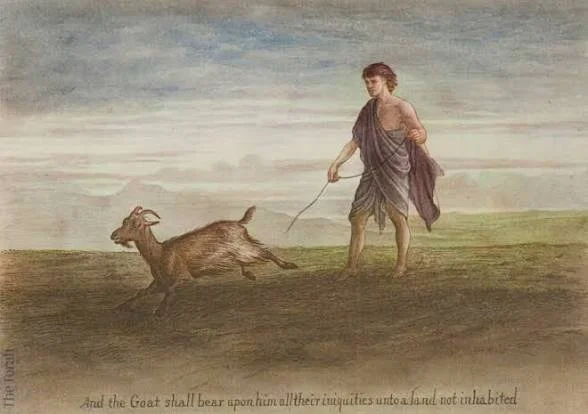
On the Day of Atonement, two goats were brought before the Lord. One would be offered as a sacrifice. The other would become the scapegoat.
The high priest would lay his hands upon the head of the living goat and confess over it the sins of the people. Symbolically, their sins were placed upon that goat, and it was sent away into the wilderness, carrying their iniquities where they would never be seen again (Leviticus 16:21–22).
What a picture of Jesus.
Our sins were not merely overlooked. They were dealt with. They were laid upon Christ. “The LORD has laid on Him the iniquity of us all” (Isaiah 53:6). The innocent One stood in the place of the guilty. The spotless Lamb bore the sins of those who had stained themselves with sin.
The scapegoat was sent away from the presence of the people, carrying their sins into a solitary land. And that points us to the completeness of Christ’s work. He didn’t simply make forgiveness possible. He bore our sins away. “As far as the east is from the west, so far has He removed our transgressions from us” (Psalm 103:12).
Think about that. East and west never meet. You can travel east forever and never arrive at west. God isn’t saying that our sins have been moved a few miles down the road. He is telling us that when He forgives, He removes our sins completely.
How often do we keep carrying what God has already carried away? Christ took our sin, yet we continue to drag its memory behind us. God has forgiven us, yet we keep condemning ourselves. God has buried our transgressions, yet we keep digging them back up.
The scapegoat says that Jesus carried something away that we could never carry ourselves.
“He Himself bore our sins in His own body on the tree” (1 Peter 2:24). He took what belonged to us so that we could receive what belonged to Him. Our guilt was placed upon Him. His righteousness is given to us through faith.
And when Christ carried our sins away, He didn’t leave them halfway between us and God. He finished the work.
That is why the Christian can look back at a sinful past without being imprisoned by it. We remember what we were, but we don’t have to remain what we were. We can say with David, “Blessed is he whose transgression is forgiven, whose sin is covered” (Psalm 32:1).
The scapegoat walked away carrying the sins of Israel. Jesus went to the cross carrying ours.
The goat disappeared into the wilderness. Christ went into the grave and rose again in victory.
And our sins? If they have been forgiven through Christ, they have been removed as far as the east is from the west.
________________
Lord Jesus, thank You for bearing what we could never bear. Thank You for taking our sins upon Yourself and carrying them away. Help us to stop living under the condemnation of sins You have forgiven. Teach us to walk in the freedom of Your grace, remembering that our transgressions have been removed as far as the east is from the west. Amen.
BDD
#8 LOVE 8-20-26
“Above all things have fervent love for one another, for ‘love will cover a multitude of sins’” (1 Peter 4:8).
Whatever else you get wrong in this life, make sure you get this right. Love.
You may get some things wrong. You may make bad decisions. You may say the wrong thing, choose the wrong path, misunderstand someone, or fail in ways you wish you could undo. We are all going to get some things wrong. But don’t let the failures of life teach you to stop loving. Don’t let disappointment make you hard. Don’t let the sins of others become an excuse for you to become bitter.
Love is what life is all about.
Love does not mean pretending sin is not sin. It does not mean calling darkness light or refusing to correct what needs correcting. Biblical love is not weakness. Sometimes love confronts. Sometimes love warns. Sometimes love says, “You are going the wrong way.” But love does not delight in exposing, humiliating, or destroying people. Love seeks restoration.
Peter says that love “covers a multitude of sins” (1 Peter 4:8). Love knows how to cover what ought to be covered. It does not keep digging up yesterday’s failures just to throw them into today’s argument. It does not keep a record of wrongs so that every old wound can be reopened. Love understands that people are more than the worst thing they have ever done.
Think about how God has loved us. He knows everything about us, including the things we would rather nobody else knew. Yet He did not turn away from us. He sent His Son for us. “But God demonstrates His own love toward us, in that while we were still sinners, Christ died for us” (Romans 5:8).
If Christ could love us at our worst, surely we can learn to love one another through our weaknesses.
Life is too short to spend it collecting offenses. There will always be somebody who disappoints you. Somebody will say something they shouldn’t say. Somebody will fail you. Somebody will misunderstand you. Somebody will hurt you. And you will do the same to somebody else. We are all broken people trying to walk through a broken world.
So love while you have the opportunity.
Forgive while you still have time. Encourage while you still have breath. Tell people you love them. Be patient with their weaknesses. Give grace where grace is needed. Correct when correction is necessary, but do it with tears in your eyes and love in your heart.
One day, many of the things that seem so important to us today will not matter at all. The arguments will be forgotten. The possessions will be gone. The applause will fade. The titles will mean nothing. But the love we gave will have mattered.
“Let all that you do be done with love” (1 Corinthians 16:14).
Whatever else you get wrong, get this right.
Love.
Because when everything else is stripped away, love is still what remains.
________________
Lord, teach us to love as You have loved us. Keep our hearts from bitterness, pride, and unforgiveness. Help us to cover what should be covered, forgive what should be forgiven, correct what must be corrected, and always do it with love. Let our lives be remembered not for how much we knew, possessed, or accomplished, but for how faithfully we loved. In Jesus’ name, Amen.
BDD

#7 THE COMFORT OF THE ROD AND THE STAFF 8-20-26
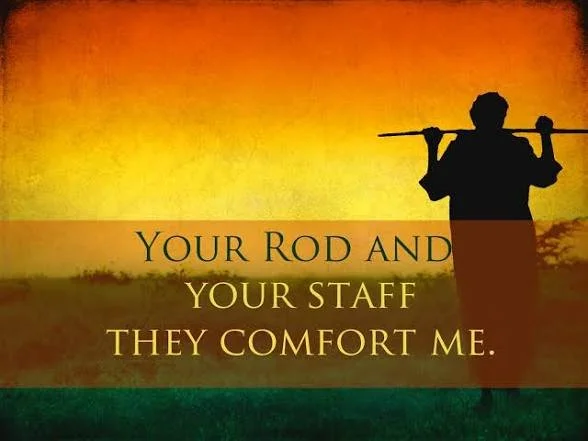
David said, “Thy rod and thy staff, they comfort me” (Psalm 23:4). At first, that may seem like a strange thing to say. We understand why the shepherd’s presence would comfort the sheep. We understand why green pastures and still waters would bring peace. But why would a rod bring comfort? The rod represents authority, protection, and correction. The staff represents guidance and rescue. Both belong to the Shepherd, and both are evidence of His love.
The correction of the Lord is not always pleasant. Sometimes God puts His finger on something in our lives that we would rather leave untouched. He convicts us of an attitude, exposes a sin, closes a door, or allows us to experience the consequences of our wandering. In those moments, His rod does not feel comfortable. But the word of God says, “For whom the Lord loves He chastens” (Hebrews 12:6). His correction is not the anger of a cruel master. It is the loving discipline of a Father who refuses to leave His children to destroy themselves.
A good shepherd does not allow his sheep to wander wherever they please. A wandering sheep can easily find itself among thorns, near cliffs, or in the path of a predator. The shepherd’s rod brings the wandering sheep back. Sometimes God has to correct our direction because He sees dangers that we cannot see. What feels like restriction may actually be protection. What feels like disappointment may be divine mercy.
The rod also speaks of protection. The shepherd carried his rod because there were enemies that wanted to destroy the sheep. David could walk through the valley because he knew that his Shepherd was there. The presence of the rod meant that the sheep did not have to fight every battle by itself. There are enemies we cannot see and dangers we cannot anticipate, but our Shepherd never lays down His rod. “The Lord is my shepherd” means that I belong to One who watches over me (Psalm 23:1).
Then there is the staff. The staff says that God does not merely correct us. He leads us. He knows the way through the valley. He knows where the pasture is. He knows where the water is. He knows where we need to go even when we cannot see beyond the next step. “He leads me in the paths of righteousness for His name’s sake” (Psalm 23:3).
Sometimes the Shepherd’s staff gently pulls us back when we begin to wander. Sometimes He uses circumstances to turn us around. Sometimes He speaks through His Word. Sometimes He uses another believer to lovingly tell us what we do not want to hear. However He chooses to work, His purpose is the same. He is keeping His sheep near Himself.
We should therefore learn to thank God not only for the things that comfort us, but also for the things that correct us. The hand that holds the rod is the same hand that holds the staff. The Shepherd who disciplines us is the Shepherd who leads us. The God who says, “No,” is the God who knows what we need. His correction may hurt for a moment, but His purpose is always greater than the pain.
There is comfort in knowing that our Shepherd loves us too much to leave us alone. If He corrects you, listen. If He redirects you, follow. If He closes a door, trust Him. If He brings you back from wandering, thank Him. The rod and the staff may not always be pleasant, but they are precious because they belong to the Shepherd who gave His life for the sheep (John 10:11).
____________
Lord, thank You for being my Shepherd. Help me not to despise Your correction or resist Your guidance. When Your rod corrects me, give me humility to receive it. When Your staff leads me, give me faith to follow. Keep me close to You, protect me from the enemies I cannot see, and lead me safely through every valley until I am home with You. Amen.
BDD
#6 JESUS IS IN THE BOAT 8-20-26
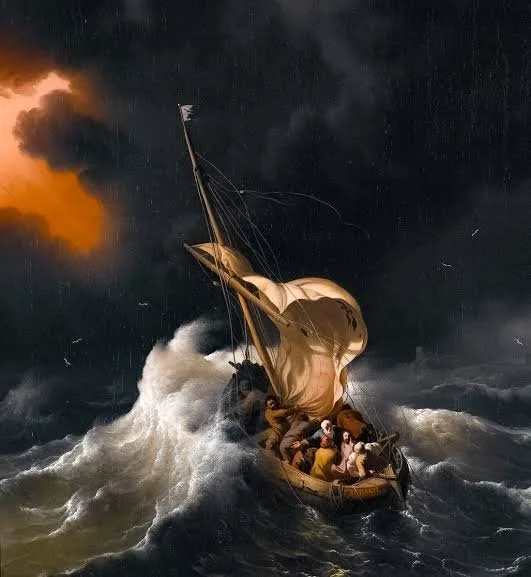
Sometimes it is best to remember that Jesus is in the boat with you. The disciples were crossing the Sea of Galilee when a great storm arose. The waves beat against the boat, and they became afraid. Yet Jesus was there with them. He was asleep in the boat while the storm raged around them. They awakened Him and cried, “Teacher, do You not care that we are perishing?” (Mark 4:38).
How easily we can become like those disciples. When the storms of life begin to rise, we can forget who is with us. We see the waves, we hear the wind, and we feel the boat beginning to shake. We look at the problem instead of looking at the One who is in the boat with us.
Jesus arose and rebuked the wind and the sea, saying, “Peace, be still!” And the wind ceased, and there was a great calm (Mark 4:39). No matter what the storm is like, Jesus has the ability to calm it. The storm that terrified the disciples was completely under His authority. The wind could blow, the waves could rise, and the darkness could surround them, but none of it was beyond His power.
Then Jesus asked them, “Why are you so fearful? How is it that you have no faith?” (Mark 4:40). His question reaches across the centuries and speaks to us today. Why are we so afraid when Jesus is in the boat? Why do we doubt when the One who has all authority is with us?
Faith is one of the most important things in our walk with God. Faith does not mean that we will never have problems. It means that we believe God is greater than our problems. Faith does not deny the storm. Faith simply refuses to believe that the storm has the final word.
God responds to faith. “Without faith it is impossible to please Him” (Hebrews 11:6). Faith brings our weakness to His strength. Faith brings our problems to His power. Faith says, “I may not understand what God is doing, but I know that God can handle this.”
The disciples thought they were going to perish, but Jesus was already in the boat. Perhaps you are facing a storm that seems too great for you today. Your circumstances may be beyond your ability, but they are never beyond His ability. God can handle the problems of life if we will trust Him.
So when the wind begins to blow and the waves begin to rise, remember this simple truth: Jesus is in the boat. You may not know what tomorrow holds. You may not know how the storm will end. But you know who is with you in the storm. And really that is all the faith you need.
_______________
Lord, help me remember that You are in the boat with me. When the storms of life arise, keep me from looking only at the waves. Strengthen my faith and help me trust Your power, Your presence, and Your care. Teach me to believe that whatever I face, You are greater than the storm. Amen.
BDD
Livestream Preaching Times for Thursday, August 20, 2026
5:30 AM
“The Comfort of His Presence”
(Psalm 23:4-5)
10:00 AM
“A Merry Heart”
(Proverbs 17:22)
2:00 PM
“The Just Shall Live By Faith”
(Habakkuk 2:4)
5:00 pm
“The Little Book”
(Revelation 10)
TikTok: @dewaynedunawayministries
All times CST
#5 THE SACRIFICES OF A ROYAL PRIESTHOOD 8-19-26
The New Testament describes believers as a royal priesthood, a people called out of darkness to offer spiritual sacrifices acceptable to God through Jesus Christ (1 Peter 2:4-5). This truth changes how we see our entire lives. We are not merely spectators in worship—we are participants. We are not only recipients of grace—we are also called to respond with sacrifice.
Peter says that Christ is the living stone, rejected by men but chosen by God, and that we, as living stones, are being built into a spiritual house. As part of this holy priesthood, our lives become an offering. The question is no longer whether we will worship, but what kind of worship we will bring.
Paul helps us understand this in Romans 12:1 when he writes, “I beseech you therefore, brethren, by the mercies of God, that you present your bodies a living sacrifice, holy, acceptable unto God, which is your reasonable service.” Under the old covenant, sacrifices were dead offerings placed on an altar. But under the new covenant, God calls for something greater: living sacrifices—daily, willing, surrendered lives laid before Him.
This means that everything we are belongs to God. Our hands, our feet, our minds, our time, our strength, and our desires are no longer our own. We do not offer God only part of ourselves; we offer Him all of ourselves.
One expression of this priestly life is giving. In Philippians 4:18, Paul describes financial generosity as “an acceptable sacrifice, well-pleasing to God.” When we give to support the work of the gospel, to help the needy, and to strengthen the body of Christ, we are not merely donating, we are worshiping. Giving becomes an altar where gratitude is expressed and faith is demonstrated.
Another sacrifice of the royal priesthood is the praise of our lips. Hebrews 13:15 says, “By Him therefore let us offer the sacrifice of praise to God continually, that is, the fruit of our lips giving thanks to His name.” Praise is not dependent on circumstances. It is a deliberate offering. Even in trials, even in uncertainty, the believer lifts up praise as an act of trust in the goodness and sovereignty of God.
But the greatest sacrifice is not merely what we give or what we say, it is who we are. “Or do you not know that your body is the temple of the Holy Spirit who is in you, whom you have from God, and you are not your own? For you were bought at a price; therefore glorify God in your body and in your spirit, which are God’s” (1 Corinthians 6:19-20).
This is a powerful reminder that the believer’s body is sacred. We are not our own masters. We have been purchased by the blood of Christ. Therefore, every action, every decision, every habit, and every pursuit must be brought under His lordship. Our bodies are not instruments for self-indulgence but temples for God’s presence.
To be a royal priesthood means we live with this awareness daily. We wake up as priests. We work as priests. We speak as priests. We rest as priests. Our entire existence becomes an offering laid before God.
Peter, Paul, and the writer of Hebrews all point us in the same direction: worship is not confined to a place or a moment. It is a life surrendered. It is giving, praising, and yielding ourselves completely to God.
So the call is clear. Present your body. Offer your praise. Give your resources. Live as a temple of the Holy Spirit. Let every part of your life become a sacrifice that is holy and pleasing to God.
This is the calling of the royal priesthood: not perfection in our own strength, but surrender through Christ. And when we live this way, the world sees something powerful: a people who belong fully to God, and whose lives declare His glory in both body and spirit.
BDD

#4 HE WENT A LITTLE FARTHER 8-19-26
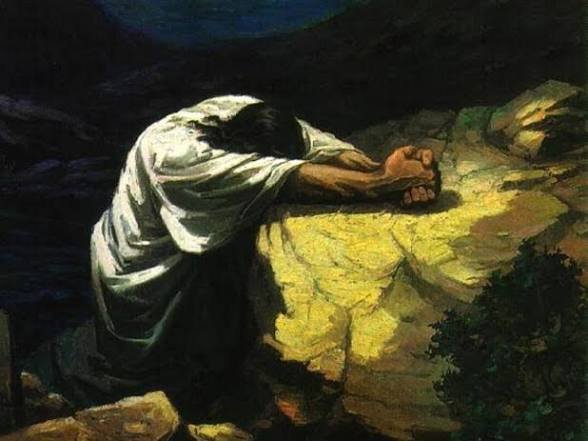
There is a small phrase in the garden of Gethsemane that carries an enormous weight: “He went a little farther” (Matthew 26:39). Jesus had entered the garden with His disciples. He knew what awaited Him. The cross was before Him. The cup was before Him. The sins of the world were about to be laid upon Him. Yet He went a little farther.
The disciples could go only so far. Jesus went farther.
They were weary. He was burdened. They slept. He prayed. They could not fully understand what was happening, but Jesus knew exactly what was coming. He knew the nails. He knew the crown. He knew the mocking. He knew the scourging. He knew the separation and suffering that lay before Him. Yet He went a little farther.
And He went farther for us.
Jesus did not go into Gethsemane because He had lost control of His circumstances. He went there because He was willingly submitting Himself to the Father’s will. “Nevertheless, not as I will, but as You will” (Matthew 26:39). The Savior’s journey toward the cross was not an accident. It was an act of love.
He went a little farther for our sins. Peter tells us, “Who Himself bore our sins in His own body on the tree” (1 Peter 2:24). Our sins were not merely acknowledged at Calvary. They were borne by Christ. The One who knew no sin took our place so that we might receive the mercy of God. “For Christ also suffered once for sins, the just for the unjust, that He might bring us to God” (1 Peter 3:18).
Think about how far He went. He left the glory of heaven and came into the poverty of Bethlehem. He walked among sinners. He endured rejection. He was misunderstood by those He came to save. He was betrayed by a friend. He was abandoned by His disciples. He was falsely accused. He was beaten, mocked, and crucified. At every step, He could have stopped. But He went a little farther.
Love kept Him moving.
There is a point where we stop, but there was no point where Jesus stopped. When obedience became costly, He continued. When suffering became unbearable, He continued. When the cross stood before Him, He continued. He went a little farther into the garden, a little farther toward the judgment hall, a little farther toward Golgotha, and finally all the way to the cross.
Why?
For you. For me. For our sins.
The distance between us and God was greater than we could ever cross ourselves. Sin had separated us from our Creator. But Jesus went the distance. He bore what we could not bear. He paid what we could not pay. He suffered what we deserved to suffer. He went farther than we deserved, so that grace could bring us nearer than we could ever go on our own.
The Christian life is also a call to go a little farther. When forgiveness is difficult, go a little farther. When service is inconvenient, go a little farther. When prayer seems hard, go a little farther. When obedience costs something, go a little farther. We do not go farther to earn the love of Christ. We go farther because He first went farther for us.
The garden reminds us that our salvation was purchased by a Savior who refused to turn back. He could have called for angels. He could have escaped. He could have abandoned the cross. Instead, He prayed, submitted, arose, and went forward.
“He went a little farther.”
Those words should humble us. They should break our hearts. They should awaken our gratitude. The One who had every reason to turn back kept going because He loved sinners.
So when you feel that obedience is asking too much, remember Jesus. When the road becomes difficult, remember Jesus. When sacrifice becomes costly, remember Jesus. Look toward Gethsemane and see your Savior going a little farther.
He went a little farther into the garden.
He went a little farther toward the cross.
He went all the way for you.
__________________
Father, thank You for Jesus, who went farther than we could ever comprehend to redeem us from our sins. Help us never to take His sacrifice lightly. When obedience becomes difficult, remind us of Gethsemane. When we are tempted to turn back, remind us that Jesus never turned back. Give us grace to follow Him faithfully, because He went all the way for us. Amen.
BDD
#3 COWBOYS AND INDIANS 8-19-26
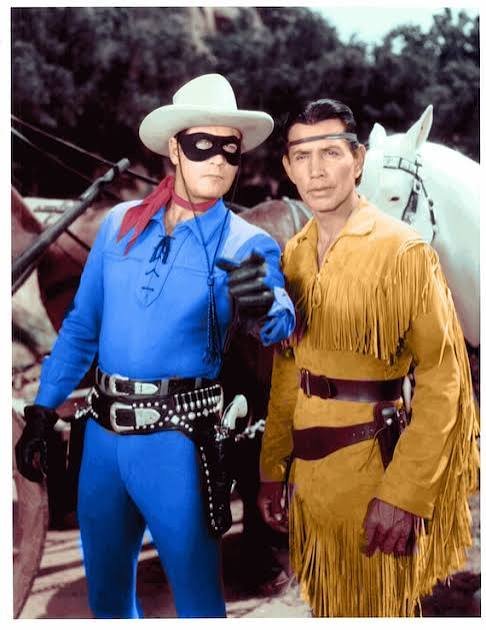
People have often talked about cowboys and Indians as natural enemies. The old Western stories frequently presented them as opposing sides, each suspicious of the other. But one of my favorite shows, The Lone Ranger, gave us a different picture. The Lone Ranger and Tonto were different in almost every way, yet they learned to ride together, fight together, and work together. Their differences did not have to become a barrier to their purpose.
That is a lesson for the body of Christ. Too often, we allow differences between people to become greater than our common faith in Christ. We see the color of someone’s skin, the place where they came from, the language they speak, their social standing, or their background, and we begin to divide people into “us” and “them.” But the Gospel tears down those walls. “There is neither Jew nor Greek, there is neither slave nor free, there is neither male nor female, for you are all one in Christ Jesus” (Galatians 3:28).
In Christ, there is neither Jew nor Greek. And there is neither cowboy nor Indian. There is neither black nor white. There is neither rich nor poor. There is neither educated nor uneducated. There is neither country boy nor city boy. The world may build walls between people, but Christ builds bridges. The ground at the foot of the cross is level. Every sinner comes the same way. Every Christian is saved by the same Lord. Every redeemed person becomes part of the same family.
The Lone Ranger and Tonto did not have to become identical to become partners. Tonto could be Tonto, and the Lone Ranger could be the Lone Ranger. Their differences did not prevent them from working toward a common purpose. That is important for the church to remember. Unity does not mean that everyone looks alike, thinks alike about every matter, or comes from the same background. Biblical unity means that we belong to the same Lord and are committed to the same mission. “Endeavoring to keep the unity of the Spirit in the bond of peace” (Ephesians 4:3).
The church needs people who know how to ride together. We need believers who can look beyond secondary differences and see a brother or sister for whom Christ died. Paul told the Corinthians, “For by one Spirit we were all baptized into one body” (1 Corinthians 12:13). Different members, different gifts, different personalities, different histories, but one body and one Lord.
Imagine what would happen if Christians stopped fighting one another long enough to fight the real enemy. Imagine what could happen if we spent less time defending our tribes and more time proclaiming Christ. The harvest is too great for us to waste our strength fighting over differences that the gospel has already overcome. Jesus prayed that His followers would be one so that the world might believe that the Father had sent Him (John 17:21).
Tonto and the Lone Ranger rode together because they had a mission greater than their differences. Christians have an even greater mission. We have been commanded to take the gospel to the world. We are not called to ride alone. We are called to work together, pray together, serve together, love together, and point people to Jesus together.
The world already knows how to divide. The church should know how to unite. The world says, “You are different from me, so you cannot be with me.” Christ says, “You are mine, so we can walk together.” The world sees race, class, culture, and history. Christ sees souls. And every soul matters to Him.
So learn to ride together. Learn to work together. Learn to love one another. The cowboy and the Indian did not have to cease being different to become companions. Neither do we. In Christ, our differences do not have to divide us. They can become opportunities to demonstrate the power of the gospel.
There is a world watching us. Let them see something they cannot explain apart from Jesus. Let them see people from different backgrounds loving one another, serving one another, and working side by side for the glory of God. Let them see that the cross is greater than our differences.
________________
Father, help us to see one another as You see us. Tear down every wall that keeps Your children divided. Teach us to love beyond race, culture, background, and circumstance. Give us the humility to work together and the grace to walk together. May our unity point the world to Jesus Christ, the One who has made us one. Amen.
BDD