

ARTICLES BY DEWAYNE
Christian Articles With A Purpose For Truth.
#2 JESUS THE LAMB OF GOD 8-19-26
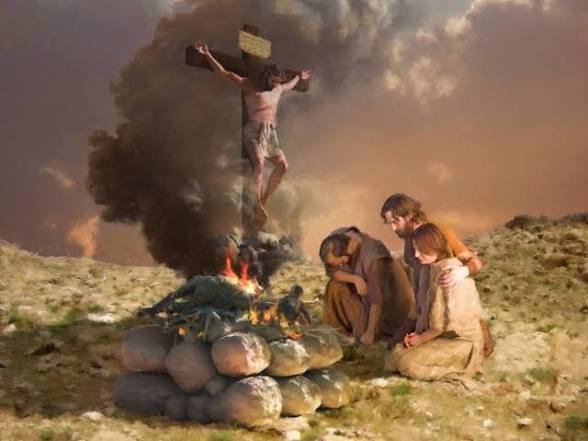
When John the Baptist saw Jesus coming toward him, he made one of the greatest declarations ever spoken concerning Christ: “Behold! The Lamb of God who takes away the sin of the world!” (John 1:29). John did not simply call Jesus a lamb. He called Him the Lamb of God. Those words would have immediately brought to the minds of the Jewish people the sacrifices, the altar, the priesthood, the blood, and the constant reminder that sin requires atonement. From the beginning, God was preparing His people to understand what Christ would accomplish at Calvary.
Throughout the Old Testament, lambs were brought to the altar as sacrifices to God. God instructed Israel concerning the altar, saying, “An altar of earth you shall make for Me, and you shall sacrifice on it your burnt offerings” (Exodus 20:24). Sacrifice was not man’s idea. It was God’s provision. The sinner needed a substitute. Something innocent would stand in the place of the guilty. The blood of the sacrifice testified that sin is serious, that holiness matters, and that reconciliation with God requires God’s appointed means.
The lamb brought for sacrifice was to be without blemish. God was not pleased with careless offerings or animals that were defective. The sacrifice had to be worthy. It could not represent perfection while itself being flawed. This points us beautifully toward Jesus Christ. He was completely without sin. He was tempted in all things as we are, yet without sin (Hebrews 4:15). Peter said that we were redeemed “with the precious blood of Christ, as of a lamb without blemish and without spot” (1 Peter 1:19). The Lamb who would take away the sins of the world had no sin of His own.
The Old Testament priesthood also prepared the way for Christ. The high priest would enter into the presence of God on behalf of the people, carrying the blood of sacrifice. He stood between a holy God and a sinful people. But the high priest himself was a sinner and needed atonement. His work had to be repeated. His sacrifices had to be offered again and again. Christ is different. He is both our perfect High Priest and our perfect sacrifice. He did not enter with the blood of another. He offered Himself. “Not with the blood of goats and calves, but with His own blood He entered the Most Holy Place once for all” (Hebrews 9:12).
This is the glory of the cross. Jesus was not merely a good man who died a tragic death. He was the Lamb God Himself provided. He came into the world with the purpose of giving His life for sinners. Like the sacrificial lamb, He was innocent. Like the sacrifice brought to the altar, He was offered. Like the blood that covered the guilty, His blood provides redemption. But unlike the sacrifices of the Old Testament, His sacrifice does not need to be repeated. “By that will, we have been sanctified through the offering of the body of Jesus Christ once for all” (Hebrews 10:10).
Because Christ has offered Himself as the Lamb of God, something has changed in the worship of God’s people. We no longer bring an animal to an earthly altar. We bring ourselves. Paul writes, “Present your bodies a living sacrifice, holy, acceptable to God, which is your reasonable service” (Romans 12:1). The Lamb was offered for us, and now we offer ourselves to Him. We are not trying to earn salvation by our sacrifice. We are responding to the sacrifice He has already made.
Peter describes believers as “living stones” who are being built into a spiritual house, offering “spiritual sacrifices acceptable to God through Jesus Christ” (1 Peter 2:5). Our praise is a sacrifice. Our obedience is a sacrifice. Our generosity is a sacrifice. Our service is a sacrifice. Our bodies, our time, our possessions, our abilities, and our lives belong to the One who purchased us with His blood.
The words of John the Baptist are powerful: “Behold!” He wanted people to look. Look at the Lamb. Look at Jesus. Look at the One God provided for sinners. Look at the One who is pure when we are stained, righteous when we are guilty, and willing when we have wandered. The answer to our sin is not found in our goodness. It is found in God’s Lamb.
The Old Testament sacrifices were shadows pointing forward. The altar pointed forward. The priest pointed forward. The blood pointed forward. The spotless lamb pointed forward. And then Jesus appeared, and John said, “Behold! The Lamb of God who takes away the sin of the world!” (John 1:29).
The Lamb has come. The sacrifice has been made. The blood has been shed. And now the redeemed are called to offer themselves completely to God. We look to the Lamb for salvation, and then we live for the Lamb in grateful surrender.
_______________
Father, thank You for giving us Your Lamb. Thank You for the sacrifice of Jesus Christ, the spotless One who gave Himself for sinners. Help us to behold Him, trust Him, worship Him, and offer our lives as living sacrifices to You. May everything we are and everything we have belong to the Lamb who loved us and gave Himself for us. Amen.
BDD
#1 THE FACE OF THE SUN 8-19-26
The sun rises each morning and spreads its light across the earth. Darkness retreats. Shadows disappear. Things that were hidden become visible. The sun does not have to announce its arrival. It simply shines. Its light reaches across the fields, through the windows, over the mountains, and into the darkest places. The face of the sun reminds us of the glory of the Son of God. Jesus said, “I am the light of the world” (John 8:12).
Light reveals what darkness conceals. When the rays of the sun enter a dark room, we suddenly see what was there all along. The light did not create the furniture, the walls, or the dust. It simply revealed them. In the same way, Christ shines into the human heart and reveals us as we really are. His light exposes sin, but it also shows us the way home. “For the word of God is living and powerful, and sharper than any two-edged sword” (Hebrews 4:12). We may hide from the light, but we cannot change what the light reveals.
The rays of the sun also give life. Plants reach toward the light. Seeds grow because of the warmth and energy of the sun. Creation depends upon its light. Without the sun, the earth would become cold, dark, and lifeless. Jesus is the source of spiritual life. He is not merely someone who shows us the way to life. He is the Life. “In Him was life, and the life was the light of men” (John 1:4). The soul that comes to Christ finds what sin could never provide. He gives forgiveness to the guilty, hope to the hopeless, peace to the troubled, and life to the dead.
Yet the same sun that gives life can also burn. Its rays can warm the body, but prolonged exposure can cause serious injury. The sun is beautiful, but it is not something to be treated carelessly. There is a spiritual lesson here. Jesus is gentle and merciful toward the repentant sinner, but He is also holy and righteous. The Christ who saves is the Christ who judges. “For we must all appear before the judgment seat of Christ” (2 Corinthians 5:10). We should never separate the love of Christ from the holiness of Christ. The hands that were pierced for our salvation are the hands by which He will one day judge the world.
The sun can also bring healing. Its warmth can comfort the body, and its light can help restore what darkness has weakened. The Bible gives us an even greater picture when it speaks of Christ as “the Sun of Righteousness” who rises “with healing in His wings” (Malachi 4:2). There is healing in the presence of Jesus. He heals the wounds caused by sin. He restores the broken heart. He lifts the fallen. He brings the wandering soul back into fellowship with God. His light does not merely expose our darkness. It drives the darkness away.
There is another beautiful truth about sunlight. We do not have to manufacture it. We simply receive it. The earth does not create the sun. The flower does not produce the light toward which it turns. The light comes from above. So it is with salvation. We do not save ourselves. We turn toward Christ and receive what He freely gives. “For by grace you have been saved through faith” (Ephesians 2:8). The Christian life begins when we stop trusting in ourselves and begin resting in the One who is the Light of the world.
One day, the sun itself will no longer be necessary. The Bible tells us that in the eternal city, “The city had no need of the sun or of the moon to shine in it, for the glory of God illuminated it. The Lamb is its light” (Revelation 21:23). The light that we see in the sky is only a faint reminder of a greater glory. The sun is a servant. Christ is the Savior. The sun gives physical light, but Jesus gives eternal life.
So look at the face of the sun and remember the face of the Son. Let its brightness remind you of His glory. Let its rays remind you of His grace. Let its warmth remind you of His love. Let its power remind you of His judgment. And let its rising remind you that darkness never has the final word when the Light has come.
___________
Father, thank You for sending Your Son into our dark world. Help us to walk in His light, receive His life, trust His grace, and live in reverence before His judgment. May the light of Christ shine through our lives so brightly that others may see Him in us. Amen.
BDD

Livestream Preaching Times for Wednesday, August 19, 2026
5:30 AM
“The Valley of the Shadow of Death”
(Psalms 23:4)
5:00 pm
“Jesus is Speaking”
(Hebrews 1:1-4)
TikTok: @dewaynedunawayministries
All times CST
7. FATHER, INTO YOUR HANDS I COMMIT MY SPIRIT 8-18-26
These are the final words recorded from the lips of Jesus before His death (Luke 23:46). After saying, “Father, into Your hands I commit My spirit,” He breathed His last. What a way to end His earthly life. He began His final journey toward the cross in obedience to the Father, and He ended it by placing Himself completely into the Father’s hands. His enemies had not taken His life from Him. He willingly laid it down (John 10:18). So let’s take a look.
I. THIS STATEMENT REVEALS HIS TRUST
Jesus trusted the Father even in death. His circumstances were terrible, but His confidence in God remained. Psalm 31 says, “Into Your hand I commit my spirit” (Psalm 31:5). Jesus knew that the Father could be trusted even when the path led through suffering and death. Faith does not mean that we will never face darkness. Faith means that we know whose hands hold us in the darkness.
II. THIS STATEMENT REVEALS HIS TURNING
Jesus had completely turned Himself over to the Father’s will. In the garden He had prayed, “Not My will, but Yours, be done” (Luke 22:42). Now at the cross, that surrender reaches its final expression. He gave Himself. Paul later wrote that Christ “loved me and gave Himself for me” (Galatians 2:20). The cross was not merely something that happened to Jesus. It was something He willingly endured for us.
III. THIS STATEMENT REVEALS HIS TRIUMPH
Jesus died, but death did not have the victory. He would rise again. Peter preached that God raised Him up, having loosed the pains of death because it was not possible that He should be held by it (Acts 2:24). The Savior who committed His spirit into the Father’s hands would walk out of the tomb in resurrection power. The cross was followed by the empty tomb, and the empty tomb declares that Jesus is Lord.
_______________
Prayer: Father, teach us to trust You as Jesus trusted You. Help us to surrender our lives completely into Your hands. When our journey through this world comes to an end, may we be found trusting You, knowing that the One who conquered death will raise us to life. In Jesus’ name, Amen.
BDD
6. IT IS FINISHED 8-18-26
This is one of the greatest statements ever spoken. John tells us that Jesus, knowing that all things had been accomplished, said, “It is finished!” (John 19:30). He did not say, “I am finished.” He said, “It is finished.” His earthly suffering was finished. The Scriptures concerning His suffering were being fulfilled. The work He came to accomplish was complete. The cross was not a defeat. It was the completion of His mission. So let’s take a look.
I. THE SUFFERING WAS FINISHED
For hours Jesus had endured the cruelty of Calvary. The beating, the mocking, the nails, the thirst, the darkness, and the agony were coming to an end. Isaiah had said that the Messiah would pour out His soul unto death (Isaiah 53:12). Now that suffering had reached its appointed conclusion.
II. THE SCRIPTURES WERE FULFILLED
Jesus had come according to the Scriptures and was dying according to the Scriptures. His birth, His ministry, His rejection, His suffering, and His death had all been spoken of beforehand. After His resurrection He told His disciples that the things concerning Him had to be fulfilled which were written in Moses, the Prophets, and the Psalms (Luke 24:44). Nothing had gone wrong. Everything was happening according to God’s purpose.
III. THE SACRIFICE WAS FINAL
This is the glory of the cross. Jesus finished what He came to do. He offered Himself for our sins. The writer of Hebrews says that Christ offered one sacrifice for sins forever (Hebrews 10:12). The work of redemption was accomplished through His death and resurrection. We do not need another Savior. We do not need another sacrifice. We need to trust the Savior who cried, “It is finished.”
__________________
Prayer: Lord Jesus, thank You for finishing the work You came to accomplish. Help us to rest in the sufficiency of Your sacrifice and never look anywhere else for salvation. May we glory in the cross. Amen.
BDD
5. I THIRST 8-18-26
This is a short statement, but it carries tremendous meaning. John tells us that Jesus, knowing that all things were now accomplished and that the Scripture might be fulfilled, said, “I thirst” (John 19:28). The One who once stood in the temple and cried, “If anyone thirsts, let him come to Me and drink” (John 7:37), now cries out because He Himself is thirsty. The One who gives living water is suffering the thirst of Calvary. So let’s take a look.
I. THIS STATEMENT REVEALS HIS SELF
Jesus was truly man. He was not pretending to suffer. He experienced the weakness and suffering of the human body. He became flesh and dwelt among us (John 1:14). Hebrews tells us that He was made like His brethren in all things, yet without sin (Hebrews 2:17; 4:15). When Jesus said, “I thirst,” we see the reality of His humanity.
II. THIS STATEMENT REVEALS HIS SUFFERING
Thirst was only one part of the agony of the cross. His body had been beaten and wounded. He had lost blood. He had endured hours of suffering. Yet John tells us that Jesus said this “that the Scripture might be fulfilled” (John 19:28). Even His suffering was connected with the prophetic Word of God. Psalm 69 had spoken of the suffering of the Messiah and His thirst (Psalm 69:21).
III. THIS STATEMENT REVEALS OUR SAVIOR
The wonderful truth is that the One who thirsted for us offers us living water. Jesus told the woman at the well that whoever drinks of the water He gives will never thirst in the same way again (John 4:13-14). At the cross, Jesus experienced thirst so that sinners could come and drink freely from the fountain of life. Revelation ends with this invitation: “Let him who thirsts come” (Revelation 22:17).
_________________
Prayer: Lord Jesus, thank You for becoming flesh and suffering for us. Help us to understand the price You paid and to come continually to You for the living water that only You can give. Amen.
BDD
4. MY GOD, MY GOD, WHY HAVE YOU FORSAKEN ME? 8-18-26
This is the most mysterious and solemn statement spoken by Jesus from the cross (Matthew 27:45-46). Darkness covered the land from the sixth hour until the ninth hour. Then Jesus cried with a loud voice, “My God, My God, why have You forsaken Me?” These words take us into the deepest suffering of Calvary. They are the opening words of Psalm 22, a psalm that points us toward the suffering of the Messiah. We may not be able to comprehend everything taking place at the cross, but we can understand something of its awful seriousness. So let’s take a look.
I. THIS CRY REVEALS HIS SUFFERING
Jesus truly suffered. The cross was not an illusion. He was beaten. He was mocked. He was pierced. He was nailed to the tree. He experienced thirst, pain, loneliness, and anguish. Isaiah had foretold that He would be “despised and rejected by men, a Man of sorrows and acquainted with grief” (Isaiah 53:3). The suffering of Christ was real.
II. THIS CRY REVEALS OUR SIN
We should never look at Calvary casually. Something terrible had to happen because of sin. Isaiah said, “The Lord has laid on Him the iniquity of us all” (Isaiah 53:6). Peter said that Christ “Himself bore our sins in His own body on the tree” (First Peter 2:24). The cross shows us what sin costs. It also shows us how much God loved us.
III. THIS CRY REVEALS HIS SCRIPTURE
Jesus was not speaking randomly. His cry takes us directly to Psalm 22. That psalm speaks of the suffering, mocking, piercing, and ultimate vindication of the righteous sufferer (Psalm 22). Even in His darkest hour, Jesus was fulfilling the Scriptures. The cross was not an accident. It was the fulfillment of God’s redemptive purpose.
__________________
Prayer: Father, help us never to take the cross lightly. Let us see the seriousness of sin and the greatness of the love demonstrated there. Thank You for sending Your Son to suffer for us. Amen.
BDD
3. BEHOLD YOUR SON…BEHOLD YOUR MOTHER 8-18-26
In this series, we are considering the seven sayings from the cross, one at a time, and seeking to hear again the voice of Jesus in His darkest hour. As we listen to His words, may we see more clearly the greatness of His sacrifice and the glory of the One who loved us and gave Himself for us.yu
3. BEHOLD YOUR SON…BEHOLD YOUR MOTHER
This is a statement made by Jesus as He looked upon His mother and the disciple whom He loved (John 19:25-27). Mary stood near the cross watching her Son suffer. John stood beside her. Jesus knew that His earthly life was coming to an end, yet even in His agony He was thinking about others. He looked at Mary and said, “Woman, behold your son!” Then He said to John, “Behold your mother!” There is something beautiful here about the heart of Jesus. So let’s take a look.
I. THIS STATEMENT REVEALS HIS CONCERN
Jesus was suffering more than we can comprehend, but He was still concerned about others. He did not become so consumed with His own pain that He forgot those around Him. This is the mind of Christ. Paul said, “Let each of you look out not only for his own interests, but also for the interests of others” (Philippians 2:4). Jesus practiced this even from the cross.
II. THIS STATEMENT REVEALS HIS COMPASSION
Jesus had compassion for the multitude, compassion for the sick, compassion for sinners, and compassion for those who were hurting. Now we see that compassion directed toward His mother. Hebrews tells us that we have a High Priest who can sympathize with our weaknesses (Hebrews 4:15). He understands suffering. He understands sorrow. He understands the tears of a broken heart.
III. THIS STATEMENT REVEALS HIS CHARACTER
Jesus taught us not merely by what He said but by what He did. Even at Calvary He demonstrated love, responsibility, and concern for others. Christianity is not merely knowing what Christ taught. It is learning to live as Christ lived. Paul said, “Imitate me, just as I also imitate Christ” (1 Corinthians 11:1). The cross teaches us that even in our own suffering, there are others who need our love.
________________
Prayer: Lord, give us the heart of Christ. Help us to see the needs of others even when we are hurting. Make us compassionate, considerate, and willing to serve. Amen.
BDD
2. TODAY YOU WILL BE WITH ME IN PARADISE 8-18-26
In this series, we will consider the seven sayings from the cross, one at a time, and seek to hear again the voice of Jesus in His darkest hour. As we listen to His words, may we see more clearly the greatness of His sacrifice and the glory of the One who loved us and gave Himself for us.
2. TODAY YOU WILL BE WITH ME IN PARADISE
This is a statement made by our Lord to a dying thief (Luke 23:39-43). Two criminals were hanging beside Jesus. One railed against Him, while the other recognized his own guilt and recognized something about the innocence and kingdom of Christ. He said, “Lord, remember me when You come into Your kingdom.” Jesus answered, “Assuredly, I say to you, today you will be with Me in Paradise.” What a statement. A dying sinner asks to be remembered, and the dying Savior promises him fellowship with Himself. So let’s take a look.
I. THIS PROMISE REVEALS HIS PARDON
This man had nothing to offer Jesus. He could not perform some great work. He could not make restitution. He could not undo the past. He could only turn to Jesus in faith. Yet Jesus received him. Salvation has always been a matter of grace. Paul said, “For by grace you have been saved through faith” (Ephesians 2:8). The thief reminds us that the door of mercy is open to the sinner who will turn to Christ.
II. THIS PROMISE REVEALS HIS POWER
The thief was looking beyond the cross. He believed Jesus had a kingdom even though Jesus was hanging upon a cross. That took faith. The world saw a defeated man. The thief saw a King. Jesus had the authority to promise life beyond death because He Himself is the resurrection and the life (John 11:25). Death could not destroy His authority.
III. THIS PROMISE REVEALS HIS PRESENCE
Notice those beautiful words: “You will be with Me.” That is the great blessing. Heaven is not merely a place. It is being with Christ. Paul said that to depart and be with Christ was far better (Philippians 1:23). The greatest promise Jesus gives the believer is not merely that death is over. It is that death brings us into the presence of the One who loved us and gave Himself for us.
_____________
Prayer: Lord Jesus, thank You for Your amazing grace. Help us to trust You as that dying thief trusted You. May we never forget that our greatest hope is not merely a place, but being with You. Amen.
BDD
1. FATHER, FORGIVE THEM 8-18-26
Few scenes in all of Scripture are more sacred than Calvary. There, while hanging upon the cross, our Lord Jesus Christ spoke seven statements that reveal something of His heart, His suffering, His love, and His purpose. These were not careless words spoken in the agony of death. Each statement carries meaning. Each points us to the Word of God. Each opens another window into the Savior who gave Himself for us.
In this series, we will consider these seven sayings from the cross, one at a time, and seek to hear again the voice of Jesus in His darkest hour. As we listen to His words, may we see more clearly the greatness of His sacrifice and the glory of the One who loved us and gave Himself for us.
I. FATHER, FORGIVE THEM
This is a statement made by our Lord while He was hanging upon the cross (Luke 23:34). The soldiers had taken Him, beaten Him, mocked Him, and nailed Him to that cruel tree. The crowd had cried out for His crucifixion. The religious leaders had rejected Him. Yet as He hangs there in agony, He looks upon those who are responsible and says, “Father, forgive them, for they do not know what they do.” That has to be one of the greatest statements ever made. It has to reveal something of the heart of the One who came to save sinners. So let’s take a look.
I. THIS PRAYER REVEALS HIS COMPASSION
Jesus could have called for judgment, but He called for forgiveness. He could have asked the Father to destroy His enemies, but He asked the Father to forgive them. This was not weakness. This was compassion. He had taught His disciples to love their enemies and pray for those who persecuted them (Matthew 5:44). Now He practices what He preached. The cross shows us that Jesus truly came seeking and saving the lost (Luke 19:10).
II. THIS PRAYER REVEALS OUR CONDITION
The people who crucified Jesus did not understand the greatness of what they were doing. They were blind to the glory of the One hanging before them. Sin does that to a man. It blinds the mind and hardens the heart. Paul said that the god of this age has blinded the minds of those who do not believe (2 Corinthians 4:4). We should never forget what sin has done to us. We needed forgiveness because we were sinners.
III. THIS PRAYER REVEALS HIS CROSS
The wonderful thing about this prayer is that forgiveness would actually be made possible by the very death they were bringing about. He was not merely asking that their sin be overlooked. He was going to provide the sacrifice for sin. Peter later preached that through repentance and faith there could be remission of sins (Acts 2:38). The One who prayed, “Father, forgive them,” was dying so that forgiveness could actually be offered. What a Savior!
_______________
Prayer: Father, help us to see the compassion of Christ and the seriousness of our sin. Thank You for the forgiveness provided through the blood of Jesus. Teach us to forgive others as we have been forgiven. In Jesus’ name, Amen.
BDD
Livestream Preaching Times for Tuesday, August 18, 2026
5:30 AM
“The Paths of Righteousness”
(Psalm 23:3)
10:00 AM
“Most Excellent Theophilus”
(Luke 1:1-4; Acts 1:1-3)
1:00 PM
“The Promise”
(Galatians 3:15-18)
3:00 PM
“Behaving Like a Christian”
(Romans 12:9-13)
5:00 pm
“That Which Was From the Beginning”
(1 John 1:1-4)
TikTok: @dewaynedunawayministries
All times CST
JESUS OUR COMFORT 8-17-26
Jesus said, “I will not leave you comfortless. I will come to you” (John 14:18). These words were spoken to disciples who were about to face uncertainty, sorrow, and trouble. Jesus knew their hearts would be troubled, yet He did not leave them without hope. He promised them His presence.
We often think comfort means that God will remove every difficulty from our lives. Sometimes He does. But often His comfort is not the removal of the storm. It is His presence in the storm. The disciples still had to face persecution. Paul still had to endure his thorn. David still walked through the valley. But God was with them. The greatest comfort is not knowing that the trouble will disappear. It is knowing that Jesus will never leave us in it.
Words from people cannot reach the depth of our sorrow. Friends may care. Family may encourage. Preachers may preach. But there are places in the heart that only Christ can reach. He understands our tears, our fears, our disappointments, and our burdens. He is touched with the feeling of our weaknesses (Hebrews 4:15). When no earthly voice can calm the heart, the presence of Jesus can bring peace that passes understanding (Philippians 4:7).
Jesus does not merely give comfort. Jesus is our comfort. His character comforts us because He is faithful. His promises comfort us because they cannot fail. His cross comforts us because it proves that He loves us. His resurrection comforts us because death does reign. His presence comforts us because He has promised, “I am with you always, even to the end of the age” (Matthew 28:20).
Therefore, when your heart is heavy, run to Christ. When you are afraid, trust Christ. When you are lonely, remember Christ. When you cannot understand what God is doing, hold on to Christ. Circumstances change, people change, and feelings change, but Jesus Christ is the same yesterday, today, and forever (Hebrews 13:8).
The world can offer temporary distractions, but only Jesus can give lasting comfort to the soul. He does not promise that we will never weep, but He promises that He will be with us when we weep. He does not promise that we will never hurt, but He promises to sustain us through our pain. And one day, He will wipe away every tear from our eyes (Revelation 21:4).
______________
Lord Jesus, when our hearts are weary, remind us that You are near. When we are afraid, remind us that You are faithful. When we are lonely, remind us that You have promised never to leave us. Teach us to find our comfort not merely in changed circumstances, but in Your unchanging presence. Amen.
BDD
THE WHISPER OF CREATION 8-17-26
There are some things God made that are so large we cannot see their boundaries, and others so small we cannot see them at all. We look into the night sky and see stars scattered across distances our minds can hardly comprehend. Then we look through a microscope and discover a hidden world of astonishing order and complexity. Creation is enormous, yet it is also intricate. It is majestic from a distance and marvelous up close.
The Bible says, “The heavens declare the glory of God, and the firmament shows His handiwork” (Psalm 19:1). Creation is constantly speaking. The stars have no voice, yet they testify. The mountains do not preach a sermon, yet they point to His majesty. The smallest details of life do not shout His name, yet they bear the marks of His wisdom. Everywhere we look, creation is pointing beyond itself.
It is humbling to realize that we did not make the world in which we live. We arrived here as creatures, not creators. We discovered the laws of nature, but we did not write them. We uncovered the order of the universe, but we did not establish it. We can study creation for a lifetime and still only scratch the surface of what God has made.
Job learned this when God questioned him from the whirlwind. “Where were you when I laid the foundations of the earth?” (Job 38:4). God did not need to give Job a scientific lecture. He simply reminded him of the difference between the Creator and the creature. There are questions we cannot answer because we were never meant to occupy God’s place.
And the wonder is that this great God is not distant from us. The One who hung the stars also knows the number of hairs upon our heads (Matthew 10:30). The One who created the oceans cares about a broken heart. The One who governs galaxies hears the prayer of a lonely believer. His greatness does not diminish His tenderness.
Perhaps that is one of the greatest lessons creation can teach us. We are small, but we are not forgotten. We are limited, but we are loved. We are surrounded by mysteries we cannot explain, but we know the One who does. “For of Him and through Him and to Him are all things, to whom be glory forever” (Romans 11:36).
So take time to look. Look at the heavens. Look at the flowers. Look at the human hand. Look at the smallest details of the world around you. Let creation humble you. Let it silence your pride. Let it awaken your worship. Everything God has made is another reason to remember that the Creator is greater than the creation, and the God who made this world is worthy of our wonder.
__________________
PRAYER
Lord, teach us to see Your fingerprints everywhere. Give us humble hearts that are amazed by Your works and thankful for Your care. May everything we see turn our hearts toward You. Amen.
BDD
THE GOD WHO IS GREATER 8-17-26
The telescope reveals the vastness of the universe. The microscope reveals the complexity of the small. One takes us outward into galaxies that stretch beyond our understanding. The other takes us inward into a world of cells, molecules, and structures too small for the naked eye to see.
But both discoveries teach the same lesson\. We are not as great as we sometimes imagine ourselves to be. Whether we look outward toward the heavens or inward toward the smallest details of creation, we discover a world far greater than ourselves.
David looked into the heavens and asked, “What is man that You are mindful of him?” (Psalm 8:3-4). The more we learn about creation, the more remarkable that question becomes. We live on a small planet in a vast universe, and yet the God who made the stars knows our name, hears our prayers, and cares about the smallest details of our lives. The greatness of creation does not make us insignificant to God. It makes His love toward us even more astonishing.
But the microscope teaches us something too. The world is not merely enormous. It is intricate. The smallest living things display order, design, and complexity. There is a remarkable wisdom written into creation that man can discover but did not create. The deeper we look, the more there is to see. “The works of the Lord are great, studied by all who have pleasure in them” (Psalm 111:2).
Creation ought to produce humility. We are surrounded by things we did not make, governed by laws we did not establish, and sustained by a world we did not design. “The heavens declare the glory of God, and the firmament shows His handiwork” (Psalm 19:1). The stars preach. The cells testify. The order of creation points beyond creation to the Creator.
Pride says, “I understand it all.” Humility says, “There is more here than I can comprehend.” Job learned this lesson when God answered him from the whirlwind. After hearing the Lord speak of the wonders of creation, Job confessed, “I know that You can do everything, and that no purpose of Yours can be withheld from You” (Job 42:2). Sometimes the proper response to the greatness of God is not another argument. It is worship.
The telescope should make us look up. The microscope should make us look closer. But both should ultimately make us look beyond ourselves. There is a God who is greater than the universe He created, wiser than the complexity we can observe, and higher than anything our minds can comprehend. “Great is the Lord, and greatly to be praised; and His greatness is unsearchable” (Psalm 145:3).
The tragedy is that man can study the heavens and still miss the One who made them. He can examine the smallest particles of creation and still refuse to acknowledge the Creator. Knowledge is a wonderful gift, but knowledge without humility can make a man proud. The more we discover about the world, the more reason we have to bow before the One who made it all.
So look up at the stars. Look closely at creation. Study the works of the Lord. But when you have finished looking, worship. The universe is vast, creation is complex, and our understanding is small. But the God who made it all is greater still.
________________
PRAYER
Lord, open our eyes to the greatness of Your works. Keep us humble when we discover how little we truly know, and teach us to see Your wisdom, power, and glory in everything You have made. May every discovery lead us not merely to greater knowledge, but to deeper worship of You. Amen.
BDD
WHEN HURT BECOMES CYNICISM 8-17-26
In the film Casablanca, Rick Blaine (Humphrey Bogart) is a man who has learned to hide his feelings behind cynicism. He has been hurt. He has been disappointed. He has loved and lost. So he builds a wall around his heart and pretends that nothing matters. His cynicism becomes his armor. If he expects nothing from people, people cannot disappoint him. If he cares about nothing, nothing can hurt him.
But beneath the cold exterior there is still a heart. Rick is not as indifferent as he wants everyone to believe. When the moment comes, he is capable of sacrifice. He is capable of compassion. He is capable of putting someone else ahead of himself. The man who had convinced himself that he would never get involved discovers that he cannot completely silence the better part of his nature.
Sometimes what we call cynicism is simply disappointment that has been allowed to harden. A person gets hurt, and instead of bringing the hurt to God, he carries it. Then the hurt becomes bitterness. Bitterness becomes suspicion. Suspicion becomes cynicism. Before long, the person begins expecting the worst from everybody because somebody once gave him their worst.
The Bible warns us about allowing bitterness to take root in our hearts. “Looking carefully lest anyone fall short of the grace of God, lest any root of bitterness springing up cause trouble” (Hebrews 12:15). Notice that bitterness is described as a root. Roots grow beneath the surface. You may not see them at first, but eventually what is hidden produces fruit.
Cynicism can make us feel wise. We tell ourselves that we have simply learned how people really are. We have seen enough to know better. We have been disappointed enough times to stop trusting. But there is a difference between discernment and cynicism. Discernment sees clearly. Cynicism assumes the worst. Discernment protects the heart. Cynicism hardens it.
Jesus knew exactly what was in people, yet He did not become cynical. He was betrayed, rejected, mocked, falsely accused, and crucified, yet He still prayed, “Father, forgive them” (Luke 23:34). That is a heart that has been wounded without becoming wicked. Christ shows us that we can face the ugliness of this world without allowing the ugliness of this world to get inside us.
You may have been disappointed by people. You may have trusted someone who betrayed you. You may have loved someone who walked away. You may have served faithfully and received little gratitude in return. But do not allow somebody else’s failure to determine the condition of your heart. Their sin does not deserve to become your bitterness.
There is something beautiful about a heart that has every reason to become hard but chooses to remain tender. Keep loving. Keep forgiving. Keep believing the best when wisdom allows it. Keep serving. Keep trusting God. “Do not be overcome by evil, but overcome evil with good” (Romans 12:21).
The answer to cynicism is not pretending that people are always good. The answer is remembering that God is always good. People may fail you. Circumstances may disappoint you. Friends may leave. But the Lord remains faithful. “Jesus Christ is the same yesterday, today, and forever” (Hebrews 13:8).
Do not let yesterday’s wound become tomorrow’s worldview. Bring your disappointment to Christ. Let Him heal what people have hurt. Let Him soften what life has hardened. A cynical heart says, “Never trust again.” Faith says, “I have been hurt, but I still trust God.”
_______________
Lord, keep my heart tender in a world that can make me hard. When I am disappointed, keep me from bitterness. When I am betrayed, keep me from hatred. When people fail me, remind me that You never will. Help me to walk in truth without becoming cynical, to use wisdom without losing love, and to remain faithful even when others are not. Amen.
BDD
WAIT ON GOD 8-17-26
Often the greatest thing we can do is wait. We live in a world that teaches us to hurry, fix everything, solve every problem, and take matters into our own hands. But David gives us a different way to live. “My soul, wait silently for God alone, for my expectation is from Him” (Psalm 62:5).
Waiting on God is not doing nothing. It is trusting God while we do not yet see what He is doing. There is a difference between inactivity and faith. Faith can be very active while it waits. It prays. It watches. It obeys. It serves. It remains faithful. It simply refuses to run ahead of God.
David had learned that people are not always dependable. Circumstances are not always stable. Riches can disappear. Positions can change. Even those we trust can disappoint us. But God remains. “He only is my rock and my salvation. He is my defense. I shall not be greatly moved” (Psalm 62:2).
We often become anxious because we are trying to hold together what only God can hold together. We want answers now. We want the door opened now. We want the situation changed now. But sometimes God does His deepest work while we are waiting. The waiting room of faith can become the classroom of trust.
Psalm 62 also warns us not to place our confidence in things that cannot carry the weight of our souls. “Trust not in oppression, nor vainly hope in robbery. If riches increase, do not set your heart on them” (Psalm 62:10). Money cannot save us. People cannot save us. Success cannot save us. Our own strength cannot save us. Only God is worthy of absolute confidence.
David says, “God is my salvation and my glory. The rock of my strength, my refuge, is in God” (Psalm 62:7). Notice how personal that is. David does not merely say that God has salvation. He says God is his salvation. He does not merely say that God gives refuge. He says God is his refuge.
That is where peace is found. Not in knowing what tomorrow will bring, but in knowing who holds tomorrow. Not in having every answer, but in knowing the One who has every answer. Not in controlling every circumstance, but in trusting the One who controls what we cannot.
So wait on God. Pray while you wait. Obey while you wait. Worship while you wait. Keep walking while you wait. Your silence before God is not wasted time. Your waiting is not forgotten. “My soul, wait silently for God alone, for my expectation is from Him” (Psalm 62:5).
_______________
Lord, teach us to wait without worrying, to trust without doubting, and to remain faithful when the answer has not yet come. Deliver us from leaning upon what cannot sustain us, and teach us to rest our whole weight upon You. You alone are our rock, our salvation, and our refuge. Amen.
BDD
Livestream Preaching Times for Monday, August 17, 2026
5:30 AM
“He Restores My Soul”
(Psalm 23:3)
10:00 AM
“The Grace of Our Lord Jesus Christ”
(2 Corinthians 8:9)
2:00 PM
“Teach Others to Teach Others”
(2 Timothy 2:2)
5:00 pm
“A Kingdom of Priests”
(Revelation 1:9)
TikTok: @dewaynedunawayministries
All times CST
PREPARE THE ALTAR 8-16-26
“If My people who are called by My name will humble themselves, and pray and seek My face, and turn from their wicked ways…” (2 Chronicles 7:14). We often think about preparing for revival by preparing the building, making announcements, inviting people, and praying for God to send a great crowd. And we should do those things. But there is another preparation that is even more important. Before we prepare the place for revival, we need to prepare the heart. Before Elijah called fire down from heaven, he repaired the broken altar of the Lord (1 Kings 18:30). Before we ask God to revive the church, we ought to ask Him to revive us.
SEARCH THE HEART
David prayed, “Search me, O God, and know my heart; Try me, and know my anxieties; And see if there is any wicked way in me” (Psalm 139:23-24). Notice that David did not pray, “Search my neighbor.” He did not say, “Search my preacher.” He said, “Search me.” That is where revival begins. We are very good at seeing what is wrong with everybody else while overlooking what is wrong with us.
The Word of God is a mirror (James 1:23-25). A mirror does not put dirt on your face. It simply shows you what is already there. Hebrews 4:12 tells us that God’s Word discerns the thoughts and intents of the heart. Sometimes the light of God’s Word reveals things we would rather leave hidden. But don’t break the mirror because you don’t like what you see.
Let God search you. Is there sin you have excused? Bitterness you have protected? Hypocrisy you have tolerated? Something God told you to do that you keep refusing to do? Before revival comes to the church, let it begin with an honest examination of your own heart.
SETTLE THE HURT
Jesus said, “And whenever you stand praying, if you have anything against anyone, forgive him” (Mark 11:25). Sometimes the greatest hindrance to revival isn’t in the pulpit. It’s in the pew. Somebody has been hurt. Somebody has been offended. Somebody has been carrying an old wound for years. And every time that person’s name is mentioned, the wound opens again.
Paul said, “Let all bitterness, wrath, anger, clamor, and evil speaking be put away from you” (Ephesians 4:31). Then he tells us to be kind, tenderhearted, and forgiving (Ephesians 4:32). Forgiveness does not mean that what happened did not matter. It means you refuse to allow what happened to control what happens next.
Bitterness is like drinking poison and waiting for somebody else to die. You carry the wound while the other person may not even know you are still carrying it. If you need to apologize, apologize. If you need to forgive, forgive. If you need to make the phone call, make it. If you need to walk across the room and shake somebody’s hand, walk across the room.
“If it is possible, as much as depends on you, live peaceably with all men” (Romans 12:18). Before we ask God to heal the church, let us allow Him to heal the hurts we have carried into it.
SURRENDER THE HELM
The helm is the steering place. Whoever holds the helm determines the direction. And that is a picture of the Christian life. We cannot experience genuine revival while insisting on being the captain of our own lives. Somebody has to hold the helm. Either we do, or Christ does.
Paul said, “Present your bodies a living sacrifice” (Romans 12:1). A sacrifice does not belong to itself. Once it is placed upon the altar, it has been surrendered. Jesus prayed in Gethsemane, “Nevertheless, not My will, but Yours, be done” (Luke 22:42). That is surrender.
We often ask God to bless what we are doing when what we really need to do is ask God what He wants us to do. Isaiah said, “Here am I! Send me” (Isaiah 6:8). Revival needs people who will stop saying, “Lord, bless me,” and start saying, “Lord, use me.”
A dead sacrifice stays on the altar. A living sacrifice can crawl off. And sometimes that is exactly what we do. We surrender on Sunday and crawl off on Monday. We surrender during the invitation and crawl off when temptation comes. We surrender when the preacher is preaching and crawl off when somebody hurts our feelings. But genuine revival requires genuine surrender. Put your will on the altar and leave it there.
We cannot manufacture revival. We cannot command the work of the Spirit. We cannot manipulate God into sending revival. But we can prepare the altar. Prepare your heart. Don’t just ask God to touch somebody else. Ask Him to touch you. Get alone with God. Open your Bible. Get on your knees. Let Him search your heart. Settle the hurt. Surrender the helm.
_________________
PRAYER
Father, search us and show us what we have refused to see. Reveal every sin, every bitterness, every attitude, and every area of our lives that does not belong to You.
Give us grace to confess what needs to be confessed, forgive what needs to be forgiven, and surrender what needs to be surrendered. Repair the broken places in our hearts and prepare Your people for revival.
When we gather together, let us not simply expect You to change others. Let us come willing for You to change us.
In Jesus’ name, Amen.
BDD
JESUS MY BEST FRIEND 8-16-26
Human relationships are fragile. Friends can drift away, fail us in our deepest moments, or struggle to understand the hidden burdens we carry. Yet there is a companion whose faithfulness never wavers, who knows the depths of our hearts and loves us still (Proverbs 18:24; John 15:13).
Jesus Christ is not a distant ruler or an abstract concept; He is the ultimate friend who bridges the vast gap between heaven and earth to walk beside us in our daily lives (Galatians 2:20; Hebrews 13:5, Matthew 28:20).
During His earthly ministry, the religious leaders mockingly called Jesus a "friend of tax collectors and sinners" (Matthew 11:19). They meant it as an insult, but it revealed the very heart of the Gospel.
Jesus does not wait for us to clean up our lives before drawing near; He steps directly into our mess, offering grace, forgiveness, and genuine fellowship. He is the friend who sits with us in our quietest longings, bears our heavy loads, and speaks truth into our lives when we lose our way (John 14:6).
To have Jesus as your best friend means living in constant, honest communication with Him through prayer and His Word (1 Thessalonians 5:17; Psalm 119:105). He explicitly calls those who trust Him His friends, sharing the Father's heart and inviting us to abide in His joy and love (John 15:14-15).
Unlike earthly companions, His presence is unconditional and permanent. Through every storm, every failure, and every victory, He remains steadfast, advocating for us before the throne of God (Hebrews 7:25; 1 John 2:1).
_______________
Heavenly Father, thank You for sending Your Son, Jesus, to be my Lord, my Savior, and my closest friend. Forgive me for the times I seek comfort in the world rather than drawing near to You. Help me to hear Your voice, trust Your heart, and walk in faithful obedience to Your Word every day. Thank You for never leaving me, for carrying my burdens, and for loving me with an everlasting love. In Jesus' name, Amen.
BDD
THE NIGHT OF TEARS 8-16-26
Sometimes in life darkness settles so heavily upon the soul that prayer feels like a whisper lost in the wind. We find ourselves walking through what the ancients called the dark night of the soul, a place where grief, fear, or overwhelming doubt threatens to crush our hope (Psalm 88:1-3; Psalm 102:1-4).
You might be sitting by a hospital bed, facing the quiet ache of a broken marriage, or wrestling with an uncertain future. In those moments, human wisdom and abstract theories offer no comfort. What we need is the direct, tender presence of a Savior who knows what it means to weep (John 11:35; Hebrews 4:15).
God never ignores the pain of His children, nor does He view our suffering with cold indifference. The Bible teaches that God keeps track of all our sorrows and puts our tears into His bottle, recording every single one (Psalm 56:8). Jesus Himself endured His own night of tears in the Garden of Gethsemane, sweating drops like blood and crying out to the Father in deep agony (Luke 22:42-44; Hebrews 5:7).
Because Christ entered into the depths of human sorrow and bore the ultimate weight of our sin on the cross, we can be confident that He walks alongside us in our darkest hours (Isaiah 53:3-4; Psalm 23:4).
Even in the middle of our tears, God’s grace reminds us that darkness does not have the final say. We do not grieve as those who have no hope, because God has promised that sorrow is only temporary for those who trust in Him (1 Thessalonians 4:13; 2 Corinthians 4:17-18).
The psalmist captures this timeless truth with a promise that anchors the struggling heart: "Weeping may endure for a night, but joy comes in the morning" (Psalm 30:5). The night may feel endless, but the morning light of God's faithfulness is guaranteed to break through (Lamentations 3:22-23).
The night of tears is often where our faith is stripped of self-reliance and brought into its purest form. When we reach the end of our own strength, we learn to lean entirely on the sovereign mercy of Jesus, who invites every broken, heavy-laden sinner to find rest in Him (Matthew 11:28-30).
And one day, the ultimate morning will arrive when God Himself will wipe away every tear from our eyes, and there will be no more death, sorrow, or pain (Revelation 21:4). Until that glorious day, we hold fast to His hand, knowing that the God who sees our tears will surely bring us through to His joy (Psalm 126:5-6).
____________
PRAYER
Heavenly Father, help me to surrender my fears, my doubts, and my plans, placing them entirely into Your sovereign hands. Guide my steps each day and give me the strength to obey Your Word, even when the path ahead feels uncertain. Remind me deeply of Your tender love and reassure me that You care for every detail of my life. When sorrow presses down, let me feel Your comforting presence holding me close through every trial. In Jesus' name, Amen.
BDD