

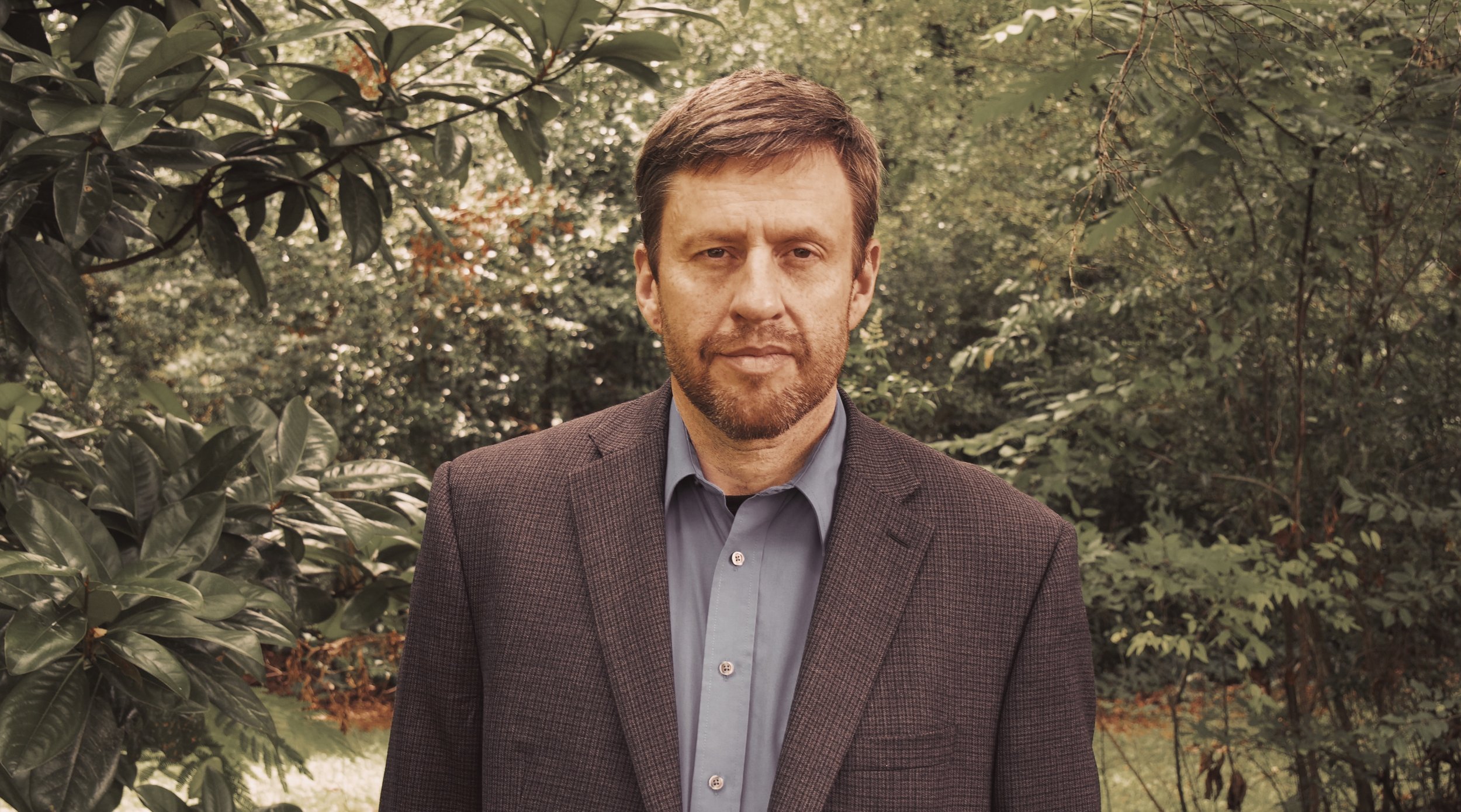
ARTICLES BY DEWAYNE
Christian Articles With A Purpose For Truth.
THE PRODIGAL SON
Luke 15
He took his portion and walked away, seeking freedom, pleasure, and the illusions of control. The father watched with a quiet heart, knowing that the road of rebellion would be paved with sorrow, yet he did not withhold his love. The younger son squandered all he had, faced hunger, shame, and the weight of his own choices, and finally remembered a home he had abandoned. It was not his effort, nor his repentance perfected in pride, that restored him, but the merciful embrace of a father who had never stopped loving.
When he returned, he did not find judgment awaiting him but a feast. Robes, rings, and shoes spoke of welcome, not rebuke. The father’s heart leapt with joy over what had been lost and now was found. The older brother stood at the edge, wounded by comparison and resentment, yet the father called him too, reminding him that mercy is not a matter of fairness, but of grace freely given.
This story calls us to look at our own hearts. How often do we wander after the fleeting promises of the world, forgetting the steadfast love of God? How often do we measure mercy by what we think is fair, instead of rejoicing that the lost are found? God’s embrace does not depend on the perfection of our steps but on the sincerity of our return.
The prodigal son teaches that no distance, no failure, no shame can separate us from the Father’s heart. It is a reminder that repentance is not a transaction, but a turning—a turning that meets a God already running toward us, arms open, ready to celebrate what had been thought forever lost.
____________
Lord Jesus, grant us hearts willing to turn, to come home, to receive Your mercy without hesitation. Help us rejoice in the grace You lavish on all who return, and teach us to love as You love, unearned and unending. Amen.
BDD
THE THIEF ON THE CROSS
As the sun dipped behind the hills and darkness settled over the earth, two men hung beside Jesus, suspended between earth and heaven. One mocked, one endured, and one, in his final hour, turned to Christ with a trembling faith. The thief on the cross, broken and defeated, saw in Jesus not condemnation but mercy, not judgment but grace. He did not come with prayers of preparation, nor with deeds of righteousness, yet his simple cry—“Lord, remember me when You come into Your kingdom”—was enough.
In that moment, eternity bent toward him. Jesus, looking upon him with eyes that saw through sin and shame, promised, “Today you will be with Me in paradise.” Salvation had never been about works, plans, or perfection. It had always been about turning to Christ, acknowledging our need, and trusting in His finished work on the cross. The thief teaches us that it is never too late, that no sin is beyond the reach of grace, and that the kingdom of God opens to the humble and the repentant.
Consider the thief’s courage. He faced the inevitability of death and yet recognized the authority of Christ. He admitted his guilt, his failure, his need, and he clung to hope when the world offered only despair. How often do we, in our pride or delay, forget that our own hearts are in need of the same humility and surrender? How often do we postpone turning fully to Christ, thinking we must first clean ourselves, when He stands ready to receive us exactly as we are?
The cross was never a place of despair for those who trusted, but a place of mercy unveiled. The thief reminds us that salvation is a gift, not a reward. His faith was simple, his understanding limited, yet it was enough to bring him into the presence of God. May we learn from him to turn from our own striving, to trust without hesitation, and to meet the Savior in the quiet surrender of our hearts.
____________
Let us pray: Lord Jesus, help us to see that Your mercy reaches us in every moment of our weakness. Teach us to turn to You with the honesty of the thief, to seek You without pretense, and to trust that Your grace is sufficient for all our failures. Amen.
BDD
HANK WILLIAMS — HOUSE OF GOLD
When Hank Williams sang “House of Gold” it felt like a front-porch sermon set to three chords. Simple. Direct. A question that will not leave you alone. Would you give up a house of gold for a home beyond this world?
That question reaches straight into the teachings of Jesus. “Do not store up treasures on earth where moth and rust destroy and where thieves break in and steal; store up treasures in heaven where none of that can touch them. Where your treasure rests, your heart settles there too” (Matthew 6:19-21). The song is not complicated because truth is not complicated. What you love most will shape you most.
“What profits a man if he gains the whole world and loses his own soul” (Mark 8:36). That line of Scripture sits quietly behind the melody. You can stack wealth high. You can build bigger barns. You can finally get the house you always wanted. If the soul is neglected, the balance sheet still reads empty.
“Better is a little with righteousness than great revenues without right” (Proverbs 16:8). A small life lived clean before God outweighs a glittering life hollow at the center. The Kingdom does not measure square footage. It measures surrender.
“Seek first the Kingdom of God and His righteousness, and all these things shall be added to you” (Matthew 6:33). That is the order. Not gold first and God later. Not comfort first and Christ squeezed in somewhere at the end. First things first.
The old song keeps asking the question because every generation needs to hear it again. What are you building? What are you chasing? What will matter when the music fades and the lights go down?
A house of gold shines for a moment. A life anchored in Christ shines forever.
___________
Lord, steady my heart. Teach me to value what lasts and loosen my grip on what fades. Let my treasure be in You, and let my life reflect it. Amen.
BDD
LOVE LIFTED ME
There is a depth in the human soul which no earthly comfort can fill. Beneath the noise, beneath the striving, there lies a quiet ache, the weight of separation from God. The Word of God tells us that all we like sheep have gone astray, each turning to his own way (Isaiah 53:6). We did not merely stumble; we departed. We chose distance. And distance from the Life-Giver is death.
Yet the marvel of the Gospel is this: the Lord did not wait for our ascent. He descended.
Love is not first our reaching up to God; it is God bending down to us. While we were still sinners, Christ died for us (Romans 5:8). Here is the fountain of redemption. Not awakened desire. Not spiritual effort. But divine initiative. Love moved first.
And how did it move? In humility.
The Eternal Son emptied Himself, taking the form of a servant, humbling Himself unto death, even the death of the cross (Philippians 2:6-8). Behold the condescension of heaven. The Holy One entering our frailty. The Righteous One bearing our guilt. Love went to the lowest place so that we might be raised to the highest.
We were not weak merely; we were lifeless. The Bible says that God, rich in mercy because of His great love, made us alive together with Christ (Ephesians 2:4-5). Resurrection is not cooperation; it is impartation. The life that now breathes within the believer is Christ’s own life. Love did not simply improve us. Love re-created us.
And this lifting is not only from judgment, but into fellowship. The Gospel assures us there is now no condemnation for those who are in Christ Jesus (Romans 8:1). The barrier is removed. The conscience is cleansed. The child stands before the Father, not trembling in fear, but resting in acceptance.
Yet love that lifts also draws us downward in holy surrender. For the more we behold such love, the more we bow. True elevation in Christ is found in deeper humility. As He humbled Himself, so we learn to take the low place of trusting, yielding, abiding. Love does not inflate the soul; it softens it.
O believer, trace every blessing back to this source: eternal love. Before you prayed, He loved. Before you sought, He pursued. Before you rose, He stooped. You were sinking—quietly, helplessly—and Love lifted you.
Let your heart remain there. Not striving to maintain what grace began, but resting in the love that both rescues and keeps. For the hand that raised you will not release you.
____________
Lord of eternal love, I bow before the mercy that sought me and the humility that saved me. Keep me near the cross and low at Your feet. Let the love that lifted me draw me into deeper surrender and fuller communion with You. Amen.
BDD
THE CROSS CHANGED EVERYTHING
Let’s talk about the cross. Not the jewelry. Not the artwork hanging on a wall. I mean the rough wood outside Jerusalem where the Son of God stretched out His hands and let the world do its worst. That cross.
The cross was not a tragic accident. It was not Rome flexing muscle. It was not history spinning out of control. It was the plan of God unfolding right on time. The Word of God says, “He was pierced because of our transgressions, He was crushed because of our iniquities; the punishment that secured our peace fell upon Him, and by His wounds we are healed. All we like sheep wandered away, each of us turning to his own path; and the Lord laid on Him the iniquity of us all” (Isaiah 53:5-6). That is not poetry for a greeting card. That is substitution. That is love with skin on it.
The cross tells the truth about us. We were not mostly fine. We were not just a little off course. “And you, being dead in your trespasses and the uncircumcision of your flesh, He made alive together with Him, having forgiven you all trespasses, having wiped out the handwritten record of debt that stood against us with its legal demands. He took it out of the way, nailing it to the cross. Having disarmed rulers and authorities, He made a public spectacle of them, triumphing over them in it” (Colossians 2:13-15). Dead means dead. But nailed means paid. And triumph means Jesus did not lose; He won.
The cross also tells the truth about God. He is holy beyond our categories and loving beyond our comprehension. He did not sweep sin aside. “The message of the cross is foolishness to those who are perishing, but to us who are being saved it is the power of God. As it is written, I will bring to nothing the understanding of the wise. Where is the wise? Where is the scholar? Where is the debater of this age? Has not God overturned the wisdom of this world? Since the world through its wisdom did not know God, it pleased God through the proclaimed message to save those who believe. The Jews ask for signs and the Greeks seek wisdom, but we preach Christ crucified, a stumbling block to some and foolishness to others, but to those who are called, Christ the power of God and the wisdom of God” (1 Corinthians 1:18-24). The world calls it weak. Heaven calls it power.
And here is where it gets personal.
Jesus did not stay at a safe distance from our pain. Paul writes, “Though He existed in the form of God, He did not cling to His equality with God, but emptied Himself, taking the form of a servant and being made in the likeness of men. Being found in appearance as a man, He humbled Himself and became obedient to the point of death, even death on a cross” (Philippians 2:6-8). He stepped down. He stepped in. He went all the way to the bottom so He could lift us all the way up.
That cross means your shame does not get the final word. Your past does not get the final word. Your worst day does not get the final word. “There is now no condemnation for those who are in Christ Jesus” (Romans 8:1). None means none. If you are in Him, the verdict has already been read.
But the cross is not just something to admire. It is something to carry. Jesus said, “If anyone desires to come after Me, let him deny himself, take up his cross daily, and follow Me” (Luke 9:23). The cross saves us, and then it shapes us. It teaches us to forgive when it costs. It teaches us to love when it hurts. It teaches us to trust when we cannot see the outcome.
The cross is not small. It is not tame. It is the place where justice and mercy embraced, where wrath and love met without canceling each other out, where the Lamb of God gave Himself for the sins of the world. And three days later, the empty tomb proved that the cross worked.
So when you look at the cross, do not see defeat. See payment. See victory. See the Son of God saying, It is finished.
____________
Lord Jesus, thank You for the cross. Thank You for bearing my sin, my shame, and my judgment in Your own body. Teach me to live in the freedom You purchased and to carry my cross with humility and courage. Let the power of the cross shape my heart until I look more like You. Amen.
BDD
CROSSING THE BRIDGE
February 27 makes me think of Selma, Alabama, and a bridge that changed the country. The Edmund Pettus Bridge isn’t famous because it’s pretty. It’s famous because people stood on it and faced hatred head-on.
On March 7, 1965, peaceful marchers walked across it demanding their God-given right to vote. They were beaten, bloodied, but they didn’t stop. Bloody Sunday forced the nation to wake up. That bridge became a symbol of courage, of faith in action, of what it means to risk everything for justice.
I grew up three hours from Selma, Alabama, and I’ll be honest. Most of us never really learned the stories that happened in our own backyard. We drove past places like that bridge without knowing how heavy the ground was.
But this is the Gospel. Jesus walked into hate without flinching. He went into the places no one wanted to go and showed what love looks like. Faith is crossing your own Pettus Bridge. It’s stepping into the hard moments, into the fear, into the places where love and justice are needed. Every act of mercy, every word spoken for the voiceless, every choice to do right even when it hurts is a step across that bridge.
Today, February 27, I think about that bridge and I think about my own life. Am I willing to walk into the hard places God calls me to? Am I willing to act when it’s uncomfortable? To love when it costs me? God’s Spirit is still calling. The bridge is still standing. The call is still the same.
____________
Lord, help me walk forward with courage. Let my faith carry me across the bridges You put in my path. Give me boldness to speak justice, strength to love the unlovable, and the heart to follow You without hesitation. Amen.
BDD
TALLADEGA COLLEGE DESERVED BETTER THAN OUR SILENCE
Let me tell you something that still doesn’t sit right with me.
I grew up about thirty minutes from Talladega College. Thirty minutes. Close enough to drive there for lunch and be home before supper. And nobody taught me about it. Not really. Not in any way that made it feel weighty. Not in any way that made it feel like sacred ground.
That’s wild when you think about it.
In 1865, right after the Civil War, formerly enslaved men and women in Talladega didn’t wait for someone to hand them a future. They built one. With help from the American Missionary Association they started a school in a church because they were hungry to read, to write, to understand the world that had denied them for generations. They had been punished for literacy. Now they pursued it like oxygen.
And we barely talk about it.
The school was chartered in 1867. It became Alabama’s oldest private historically Black liberal arts college. Think about that. While the South was still smoldering from war, while resentment and racism were hardening into law, Black men and women were sitting in classrooms in Talladega, Alabama, daring to believe their minds mattered.
Some of the campus buildings tell their own story. Swayne Hall, one of the most recognizable structures, was originally built with enslaved labor before the war. Later it became part of a college educating the descendants of enslaved people. History flipped the script right there in brick and mortar.
And then there are the Amistad Murals, painted by Hale Woodruff in the 1930s. They tell the story of revolt, resistance, and freedom. Not as theory. Not as abstraction. As blood-and-bones history. That art lives in Alabama. Thirty minutes from where I grew up. And I was never walked through it. Never told to stand in front of it and feel the weight of it.
That says something.
Talladega College survived Reconstruction. It survived Jim Crow. It survived decades when Black education was underfunded, undermined, and openly opposed. It produced teachers, preachers, professionals, leaders. It kept showing up. Quietly. Steadily.
Meanwhile, a lot of us grew up nearby and never really learned the story.
How does that happen? How do you live that close to living history and never be taught to see it? How do you graduate high school in Alabama and not understand what was built right down the road by people who had every reason to give up but did not?
That is not an accident. That is omission.
Talladega College is not just another small school. It is a testimony. It is what happens when people who were denied everything decide they will not be denied education. It is what freedom looks like when it picks up a book.
And maybe it’s time we admit this: if you can grow up thirty minutes away and never be taught its story, something is wrong with how we tell our own history.
We should have known. We should have been taken there. We should have been told who built it and why it matters.
Thirty minutes away. And it took adulthood to understand what was sitting in my own backyard.
BDD
SALVATION IS NOT A FORMULA. IT IS JESUS.
You have reduced the greatest news in the universe to a checklist. Hear. Believe. Repent. Confess. Be baptized. As if the kingdom of God were a sequence to master instead of a Savior to receive. As if eternal life were a transaction to complete instead of a Person to know.
Yes, the Scriptures call us to hear the gospel, for faith comes by hearing and hearing by the Word of God (Romans 10:17). Yes, we are commanded to repent, because unless we repent we will perish (Luke 13:3). Yes, we confess with the mouth the Lord Jesus and believe in the heart that God raised Him from the dead (Romans 10:9). Yes, we are baptized into Christ, buried with Him and raised to walk in newness of life (Romans 6:3-4). But none of these stand alone as a cold ritual. None of them save as isolated acts. They are not coins we insert into a machine to receive grace.
Salvation is not a sinner’s prayer whispered at an altar. Salvation is not water. Salvation is not perfect wording, flawless theology, or a moment we can circle on a calendar. Salvation is Jesus Christ Himself.
The angel did not say, “You shall call His name Method.” He said, “You shall call His name Jesus, for He will save His people from their sins” (Matthew 1:21). The apostles did not preach a system. They preached Christ crucified (1 Corinthians 1:23). They did not offer a transaction. They proclaimed a Person in whom we have redemption through His blood, the forgiveness of sins (Ephesians 1:7).
When the jailer in Philippi trembled and asked what he must do to be saved, the answer was not a formula recited in isolation. It was this: Believe on the Lord Jesus Christ, and you will be saved (Acts 16:31). Believe on Him. Trust Him. Surrender to Him. Enter into Him. For as many of you as were baptized into Christ have put on Christ (Galatians 3:27). The power is not in the water. The power is not in the words. The power is in Christ.
We must stop speaking as if we are saved by performing steps correctly. We are saved by union with the Son of God. Faith is not a box to check. Repentance is not a work to boast in. Confession is not a slogan. Baptism is not a mere symbol detached from reality. Each is an expression of surrender to the living Lord. Each is a doorway into communion with Him.
God’s plan of salvation is not mechanical. It is relational. Eternal life is this: that we may know the only true God, and Jesus Christ whom He has sent (John 17:3). Not merely know about Him. Know Him.
If we make it a transaction, we will always ask, Did I say it right? Did I do enough? Was I sincere enough? But when we see that salvation is Christ Himself, the question becomes, Am I in Him, and is He in me? For there is now no condemnation to those who are in Christ Jesus (Romans 8:1).
Brother, the gospel is not a script. It is a Savior. It is not about mastering a method. It is about bowing before a King. It is about dying with Him and rising with Him. It is about being found in Him, not having our own righteousness, but that which is through faith in Christ (Philippians 3:9).
The plan is a Person. The way is a Man. The life is Jesus.
BDD
JESUS FOR RIGHT NOW
Some days you do not need a lecture.
You need a Person.
Jesus is God stepping close. Not distant. Not observing from afar. Close enough to touch. Close enough to hear a whisper. The Word became flesh and lived among us, and we beheld His glory, full of grace and truth (John 1:14). God did not remain an idea. He came near.
When you read the Gospels, you feel it. Jesus looking at people. Jesus stopping for people. Jesus calling names in a crowd. He saw Matthew sitting at the tax booth and said, “Follow Me,” and Matthew got up and followed Him (Matthew 9:9). He noticed the woman who no one else wanted to notice. He welcomed children. He listened to blind men calling out from the roadside. This is the heart of God in motion.
He said, “Come to Me, all you who labor and are heavy laden, and I will give you rest” (Matthew 11:28). Not a program. Not steps to earn approval. Come to Me. Rest is found in relationship. Peace is found in presence.
Jesus is not just the doorway into faith. He is the daily bread of faith. “I am the bread of life. He who comes to Me shall never hunger, and he who believes in Me shall never thirst” (John 6:35). He sustains the soul the way food sustains the body. Quietly. Faithfully. Every day.
God’s gift to humanity has a face. “He who has seen Me has seen the Father” (John 14:9). If you want to know what God is like, watch Jesus forgive a sinner, steady a storm, weep at a grave, stretch out His hands on a cross. Love is not hidden. It is revealed in Him.
The gift is life. “I have come that they may have life, and that they may have it more abundantly” (John 10:10). Not just survival. Life with depth. Life with meaning. Life anchored in something eternal.
You do not have to climb to find Him. “The Son of Man has come to seek and to save that which was lost” (Luke 19:10). He moves toward us. He knows our frame. He understands weakness. He intercedes even now (Hebrews 7:25). His work did not end at the resurrection. His care continues.
Jesus is for right now. For this moment. For this season. For the questions you carry and the hope you are trying to hold on to. God has already given His Son. The invitation remains open.
Stay close to Him. Walk with Him. Trust Him.
_____________
Father, thank You for the gift of Your Son. Draw our hearts to Jesus. Teach us to walk with Him today and to receive the life He freely gives. Amen.
BDD
HEAVEN SENT
God did not send a concept. He did not send a philosophy, a better rulebook, or a self improvement plan.
He sent Jesus.
Not a distant rescue package dropped from the sky, but a Person who stepped into skin and breath and hunger and tears. The Word became flesh and moved into our neighborhood, full of grace and truth (John 1:14). That is not sentimental language. That is invasion. Holy love crossing the border into our broken world.
We talk about gifts like they are things you unwrap once and set on a shelf. Jesus is not like that. He is the gift that keeps unfolding. The light that shines in the darkness, and the darkness cannot overpower it (John 1:5). In a world that markets everything and monetizes everyone, God gave freely. No subscription. No hidden fees. Just mercy.
This is love. Not that we climbed our way up to Him, but that He loved us and sent His Son to be the atoning sacrifice for our sins (1 John 4:10). Jesus is not God’s reaction to humanity. He is God’s heart revealed to humanity. Every healing touch. Every table shared with sinners. Every word spoken to the weary. This is what God is like.
“For God so loved the world that He gave His only begotten Son, that whoever believes in Him should not perish but have everlasting life” (John 3:16). Gave. Heaven opened its hand. The Father did not send an angel. He did not send advice. He gave His Son.
And the gift was not wrapped in comfort. It was wrapped in humility. “Though He was rich, yet for your sakes He became poor, that you through His poverty might become rich” (2 Corinthians 8:9). He traded glory for a manger. He traded praise for a cross. He traded a throne for thorns.
Why?
So you would never again wonder if you matter.
God’s gift to humanity is not abstract. It has a name. Jesus. He is the image of the invisible God (Colossians 1:15). If you want to know what God thinks about the outsider, look at Jesus. If you want to know how God handles shame, look at Jesus. If you want to know whether grace is stronger than failure, look at Jesus walking out of a tomb.
“The wages of sin is death, but the gift of God is eternal life in Christ Jesus our Lord”(Romans 6:23). Death was earned. Life is given. You cannot manufacture it. You cannot deserve it. You receive it.
This is not seasonal. It is not just for December lights and soft songs. It is for hospital rooms and late night doubts and quiet mornings when you feel small. God has already spoken. He spoke in His Son (Hebrews 1:1-2). The message is not complicated.
You are loved. You are wanted. You are worth the cost of the cross.
Jesus is not just a gift offered. He is a gift held out. And the only way to dishonor a gift like that is to leave it unopened.
Open your heart. Receive Him. Let the Light in.
Because heaven already made the first move.
BDD
STANDING OUT FOR WHAT IS RIGHT IS STANDING UP FOR JESUS
Standing out for what is right is standing up for Jesus. It is not complicated. When you choose honesty over advantage, purity over pressure, courage over comfort, you are identifying yourself with Him.
There will be moments when doing the right thing makes you the odd one in the room. When the joke is crude and you do not laugh. When the deal is shady and you walk away. When someone is being mistreated and you speak. In those moments you are not just defending a principle. You are bearing the name of Christ. Jesus said, “Whoever confesses Me before men, him I will also confess before My Father who is in heaven” (Matthew 10:32).
He did not hide His love for you. “But God demonstrates His own love toward us, in that while we were still sinners, Christ died for us” (Romans 5:8). He stood in public shame, carried a public cross, and died a public death. “Greater love has no one than this, than to lay down one’s life for his friends” (John 15:13).
So when you stand alone for truth, you are walking in His steps. When you refuse to bend your convictions to fit the mood of the culture, you are honoring the One who never compromised righteousness. The apostles said, “For we cannot but speak the things which we have seen and heard” (Acts 4:20). They spoke because silence would have denied the reality of what Christ had done in them.
You do not need a platform to stand for Jesus. You need faithfulness. At work. At school. At home. In conversation. In private choices no one else sees. Every act of obedience says He is Lord.
Standing out for what is right may cost you approval, but it aligns you with heaven. And if He acknowledges you before the Father, that is worth more than the applause of any room.
BDD
HONEST QUESTIONS ON ABORTION
If abortion is morally equivalent to murder, why don’t you advocate charging women who obtain abortions with homicide the same way we charge any other person who hires a killer?
If every fertilized egg is fully a child, why don’t you push for criminal investigations of miscarriages to determine whether negligence played a role?
If you believe life begins at conception and must be protected at all costs, why oppose universal prenatal healthcare, paid maternity leave, and expanded child nutrition programs that would materially protect that life?
If abortion is a holocaust-level moral evil, why is it rarely your top voting issue when candidates contradict you on other biblical ethics like caring for the poor, welcoming the stranger, or racial justice?
If you argue government must stay out of healthcare decisions in nearly every other area, why is this the one medical decision where government control is not only acceptable but necessary?
If you claim to defend “small government,” how do you justify state surveillance of pregnancies, menstrual cycles, and medical records to enforce abortion bans?
If abortion is murder, why not support comprehensive sex education and free contraception, the two policies shown to reduce abortion rates the most?
If the unborn child has full constitutional rights, should pregnant women be allowed to claim them as dependents on taxes and receive child support from conception?
If you insist the fetus is a person from conception, how do you justify exceptions for rape or incest without implying that personhood depends on the circumstances of conception?
If you argue abortion bans protect women, why do maternal mortality rates often rise in states with the strictest restrictions?
If you believe in personal responsibility, why is the burden of an unplanned pregnancy almost entirely placed on the woman rather than legally enforced on the father from conception?
If your movement is truly pro-life, why is there often resistance to policies that reduce gun violence, expand healthcare access, or address poverty after a child is born?
BDD
JIMMIE LEE JACKSON — A DEACON WHO WANTED TO VOTE
On February 26, 1965, a brother in Christ laid down his life.
Jimmie Lee Jackson was not a rioter. He was not a criminal. He was not a threat to society. He was a Baptist deacon—a servant in the house of God. He was a veteran of the United States Army. He had worn his nation’s uniform. He had stood beneath its flag. He had done what many call the highest form of citizenship: he had served.
And yet when he returned home to Marion, Alabama the simple act of seeking to register to vote was treated as defiance.
On the night he was shot, February 18, he was doing something profoundly Christian. He was protecting his mother and his grandfather from blows. When violence broke out and state troopers descended on peaceful demonstrators, Jimmie did not strike back. He shielded. He stood between harm and his family. And a bullet tore into his body.
Eight days later, he died.
What was his crime?
He wanted to vote.
That sentence should sit heavy on us. A deacon—a churchman—a man who had fought for his country—died because he believed that the promises written on paper should apply to him too.
Don’t talk about it? Forget the past on issues like this? What if that had been your son, your brother, your father? What if it had been you lying in a hospital bed because you dared to ask for the right to vote? Would you want to be forgotten? Jimmie Lee Jackson‘a name is still unknown to many even in Alabama. If that were your flesh and blood, would you not want him remembered? Would you not want his story told with dignity? Silence is easy when the grave is not in your family, but remembrance is a small act of justice we owe to those whose only “crime” was believing the promises written on paper applied to them too.
I grew up learning about Robert E. Lee, his strategy, his honor, his legacy. Streets bore his name. Statues bore his likeness. Textbooks treated him with gravity and care. Yet how many of us were taught about Jimmie Lee Jackson? How many Sunday school classes mentioned the deacon whose blood helped water the soil of voting rights? And now you say we shouldn’t talk about it?
Memory is not neutral. What we choose to remember says something about what we value.
One man fought for a Confederacy formed to preserve slavery. Another fought for his country and later stood peacefully asking that his constitutional rights be honored. One became marble and bronze. The other became a footnote.
But Heaven does not measure history the way nations do. The Lord said, “Blessed are those who hunger and thirst for righteousness, for they shall be filled” (Matthew 5:6). Jimmie Lee Jackson hungered for righteousness—not vengeance, not chaos—but justice. He desired participation in a system that claimed to be of the people. That desire cost him his life.
And yet his death was not wasted. His killing stirred the conscience of a nation and helped ignite the Selma-to-Montgomery marches that would press the country toward the Voting Rights Act of 1965. The blood of a deacon became seed.
As pastors, as church members, as believers, we must remember him not merely as a symbol, but as a brother. A man baptized into Christ. A man who loved his family. A man who believed that civic dignity and Christian faith were not enemies.
We do not remember him to stir anger. We remember him to stir conscience. We remember him because the Church must tell the whole story, not just the comfortable parts.
And perhaps today we ask ourselves a gentle but searching question: Who do we honor? Whose sacrifices do we teach our children? And are we willing to stand—peacefully, faithfully—for righteousness, even when it costs?
May we never forget the deacon who only wanted to vote. And may we be found worthy of the freedom purchased at such a price.
He was not organizing a revolt against whiteness, nor preaching retaliation, nor calling for violence in return for violence. Jimmie Lee Jackson was a Baptist deacon, a veteran, a young Black man who believed that the promises of American democracy he fought for and would have died for should apply to him as well.
On that night in Alabama he was not carrying a weapon or inciting chaos; he was shielding his mother from blows and seeking the simple dignity of the ballot. He did not ask to lynch white men; he asked to vote beside them. That is what makes his death so sobering—not that he died in rebellion, but that he died pursuing a right that should never have required martyrdom.
And I resent not learning about him until I was an adult, even though I live in the state of Alabama.
______________
Lord Jesus, You are the righteous Judge who sees every hidden wound and forgotten grave. Teach us to remember rightly. Give us courage to stand for what is just, and hearts tender enough to call every suffering believer our brother. Amen.
BDD
LET ME HELP YOU, BRO
Brother, let me speak plainly and with love.
No reasonable person of goodwill is asking you to carry personal guilt for sins you did not commit. You did not own slaves. You did not write Jim Crow laws. You did not stand in the schoolhouse door. That is not the burden being placed on your shoulders. The call is not to inherited shame; it is to present compassion.
What many are asking—especially our Black brothers and sisters—is something far simpler and far more Christlike: concern. A willingness to say, “Even if I did not cause this wound, I care that it still hurts you.” The Apostle Paul told us to “bear one another’s burdens” (Galatians 6:2). He did not add a footnote saying, “Only if you personally created the burden.” Love does not argue technicalities; love draws near.
When someone says that a Confederate flag represents pain to their family, they are not trying to rewrite your personal story. They are telling you about theirs. You may see “heritage.” They may see chains. You may see “tradition.” They may see terror. You may see a piece of cloth. They may see generations of humiliation. The question for the Christian is not, “Do I feel guilty?” but, “Do I love enough to listen?”
The Bible tells us, “Let no one seek his own, but each one the other’s well-being” (1 Corinthians 10:24). That means my preferences—my symbols, my traditions, even my sense of defiance—must bow to the higher law of love. If holding onto something causes my brother grief, even if I believe I have a right to it, love asks whether that right is worth the wound.
This is not about erasing history. History cannot be erased; it can only be remembered honestly. Nor is it about forcing anyone to grovel for crimes they never committed. It is about deciding what kind of people we want to be now. Will we be people who say, “I didn’t do it, so it’s not my problem”? Or will we be people who say, “I didn’t do it—but I refuse to add to the hurt”?
Real strength is not found in clinging to a symbol out of stubborn pride. Real strength is found in the humility to say, “My brother’s heart matters more than my banner.” Jesus told us that the world would know we are His disciples by our love for one another (John 13:35). Not by our ability to win arguments. Not by how fiercely we defend tradition. By love.
So no, you are not being asked to confess to crimes you never committed. You are being asked to care. To consider how your actions, your words, your public loyalties affect people who share your pew, your workplace, your neighborhood.
Even if you had nothing to do with the past, you have everything to do with the present. And love—real, biblical, Christ-shaped love—always asks, “How does this affect my brother?”
That is not guilt. That is grace in action.
BDD
MARTIN LUTHER KING JR. — ORDAINED FOR A CALLING GREATER THAN A PULPIT
At just nineteen years old, on February 25, 1948, Martin Luther King Jr. was formally ordained and installed as associate minister of Ebenezer Baptist Church in Atlanta, where his father, Martin Luther King Sr., served as pastor. Though he had preached his first sermon from that pulpit months before, this moment signified far more than another opportunity to speak; it was a sacred dedication of his life to the ministry and a wholehearted embrace of a calling that would shape his future.
That day was not merely a ceremonial moment in a local church. It was the quiet unfolding of a purpose that heaven had been shaping long before microphones and marches would make his name known around the world. A young man knelt in obedience; history would one day rise in response.
For Dr. King, ministry was never confined to stained glass windows or Sunday mornings. The Gospel he proclaimed demanded more than eloquence—it demanded embodiment. Love was not sentiment; it was action. Justice was not an abstract ideal; it was a moral necessity. Nonviolence was not weakness; it was strength disciplined by conviction. His calling would carry him from the pulpit to the streets, from local pastor to national conscience.
Black History Month invites us to remember more than speeches and headlines. It calls us to reflect on the courage it takes to answer God when He calls, especially when that calling comes early, and the road ahead is uncertain. At nineteen, Dr. King could not yet see the bridges he would cross, the jail cells he would endure, or the mountaintop vision he would proclaim. But he said yes.
And that yes changed the world.
Every generation faces its own moment of ordination—perhaps not with hands laid upon us in a sanctuary, but with a quiet conviction in the heart. The question is not whether we are called; it is whether we will respond. The obedience of one young man reminds us that purpose is powerful, and that faithfulness in small beginnings can reshape a nation.
This February 25, we remember that before there was a movement, there was a commitment. Before there was a legacy, there was obedience. And before there was a dream shared with millions, there was a young preacher who chose to answer the call of God.
May we have the courage to do the same.
BDD
START WHERE THE WOUND IS DEEPEST
Lately I’ve had white people say to me, “Why do you only preach against white racism? Why don’t you preach against Black racism too?” That’s a fair question if it’s asked honestly. So let me answer it plainly.
First, I do not believe prejudice belongs to one race. Any human being can be prejudiced. I’ve lived in diverse spaces. I’ve built real relationships across racial lines. I’ve worked and moved in circles with many people of color. And yes—I have experienced hostility and bias myself. Not from television. Not hypothetically. In real life.
So I’m not naïve. And I’m not pretending prejudice only flows in one direction.
But here is where clarity matters.
There is a difference between personal prejudice and systemic racism. There is a difference between an insult and an institution. There is a difference between being treated unfairly by someone and being historically shut out of housing, voting access, lending, education, and generational wealth by laws and policies that carried the force of government.
When I preach strongly against white racism, it is not because I think white people are uniquely evil. It is because, in American history, racism backed by law, culture, and institutional power overwhelmingly operated in one direction—and its consequences are still measurable.
We have to be adult enough to hold two truths at once:
Yes, Black people can be prejudiced.
Yes, I have experienced bias personally.
And yes, the most pervasive, historically entrenched racial injustice in this country has disproportionately harmed Black Americans.
Those statements are not contradictions.
So when someone says, “Why don’t you preach about Black racism?” my response is this: If you are serious about fighting racism, then join me in confronting the most deeply rooted and historically powerful forms first.
Stand against the legacy of redlining that shaped neighborhoods.
Stand against disparities in sentencing and incarceration.
Stand against inequities in education and access to capital.
Stand against the generational wealth gap that did not appear out of thin air.
Show me that your concern is grounded in justice—not discomfort.
Once you show that consistency—once I see the same passion directed at the racism that carried institutional backing for centuries—then I am more than willing to have broader conversations about other forms of prejudice. Because if we are truly committed to justice, we oppose all racism.
But we start where the wound is deepest. This is not a competition of suffering. It is a matter of proportion and power.
I have even had the mother of a Black woman tell me her daughter was not going to date a white man—and she knew nothing about me. That was prejudice. It was real, and it stung. But I have never been denied a job because I am white. I have never lost an educational opportunity because of my race. I have never had my skin color function as a systemic barrier to housing, lending, or advancement.
And when I preach, I am primarily speaking to the church. In the American church, the racial sin that has been historically entrenched, institutionally reinforced, and culturally protected has overwhelmingly flowed from white Christians toward Black Christians. And it still does. It remains one of the most widespread, familiar, and overlooked sins in the church—so common that many no longer see it, so normalized that it often goes unconfessed. That is the wound inside the body of Christ I feel compelled to address—not because other prejudice does not exist, but because this is the deeper, older infection within our own house.
A rude comment is not the same as a redlined neighborhood. A social media insult is not the same as policy-supported exclusion. Hurt feelings matter—but they are not equivalent to structural barriers.
If we blur those distinctions, we weaken the moral seriousness of the conversation.
Acknowledging systemic racism against Black Americans is not self-hatred. It is not betrayal. It is honesty. I do not hate white people. I reject racism wherever it appears. But I refuse to pretend that every expression of prejudice carries the same historical and institutional weight.
Justice requires discernment.
If someone genuinely wants to fight racism against white people, I am willing to listen. But credibility in that conversation comes from consistency. If we cannot confront the most pervasive injustice first, then we are not really talking about justice—we are protecting comfort.
Fight all racism. Absolutely.
But start where the fire has burned the longest and hottest.
That is not bias.
That is moral clarity.
There are also those who say, “Well, there’s racism on all sides, so I don’t feel compelled to speak against it.” That sounds balanced, but in practice it becomes a convenient escape hatch. If racism is everywhere, then no one feels responsible to confront it anywhere. That isn’t neutrality—it’s avoidance.
The existence of prejudice in multiple directions does not cancel out the responsibility to confront the most damaging forms of it. In fact, it makes moral clarity even more necessary. Saying “everyone is guilty” can quickly become a way of doing nothing at all. And when silence settles in, the deeper, more entrenched injustices remain undisturbed. Calling out pervasive, systemic racism is not partiality—it is refusing to let complexity become an excuse for inaction.
Stand with us on this issue. This is something the Bible is clear about. Take a stand.
BDD
JESUS IN ROMANS
The letter to the Romans is often described as the Apostle Paul’s theological masterpiece, but it is more than a system of doctrine; it is a revelation of Jesus Christ. From the opening lines to the closing doxology, the Son of God stands at the center. Romans is not merely about sin, law, wrath, or justification. It is about Christ—who He is, what He has done, and what He is doing even now.
Paul begins by declaring that the gospel of God concerns His Son, Jesus Christ our Lord, descended from David according to the flesh and declared to be the Son of God with power by the resurrection from the dead (Romans 1:3-4). Before we ever reach the great statements about faith and righteousness, we meet a Person. Jesus is both fully human and fully divine, rooted in Israel’s story and vindicated by resurrection power. The gospel is not advice; it is news about Him.
In Romans 3, after Paul exposes the universal problem of sin—that both Jew and Gentile stand guilty before God—the light breaks through: we are justified freely by His grace through the redemption that is in Christ Jesus (Romans 3:24). Jesus is presented as the atoning sacrifice, the One who bears the weight of divine justice so that God might be just and the justifier of the one who has faith in Him. The cross is not an afterthought in Romans; it is the hinge upon which the entire letter turns.
In Romans 5, Jesus is the second Adam. Where the first man brought sin and death into the world, Christ brings righteousness and life. Through one man’s disobedience many were made sinners, but through the obedience of One many will be made righteous (Romans 5:19). Paul shows us that Jesus does not merely patch up the old humanity—He inaugurates a new one. In Him, grace reigns through righteousness unto eternal life.
Romans 6 and 7 reveal that Jesus does not only forgive our guilt; He breaks sin’s dominion. We were buried with Him through baptism into death, so that just as Christ was raised from the dead, we also should walk in newness of life (Romans 6:4). Union with Christ means participation in His death and resurrection. We are not only declared righteous; we are joined to the Righteous One.
Then comes Romans8–perhaps the most triumphant chapter in all Scripture. There is now no condemnation to those who are in Christ Jesus (Romans 8:1). The Spirit testifies that we are children of God, co-heirs with Christ. And at the crescendo, Paul asks: Who shall separate us from the love of Christ? Tribulation? Distress? Persecution? No, in all these things we are more than conquerors through Him who loved us (Romans 8:35-37). Jesus in Romans is not distant; He is the One who intercedes for us at the right hand of God (Romans 8:34).
Even in Romans 9-11, where Paul wrestles with Israel’s story and God’s sovereign purposes, Christ remains central. He is the stumbling stone to some and the cornerstone to others (Romans 9:33; 10:11). Everyone who calls on the name of the Lord shall be saved (Romans 10:13). Salvation is not ethnic; it is Christ-centered.
By the time we reach Romans 12-15, Jesus shapes the Christian life. Present your bodies as living sacrifices (Romans 12:1). Love without hypocrisy. Overcome evil with good. Welcome one another, just as Christ also welcomed us (Romans 15:7). The theology of Romans becomes the ethics of love—all flowing from what Christ has done.
And the letter closes where it began: with glory to God through Jesus Christ forever (Romans 16:27).
Jesus in Romans is the Son of David and the Son of God. He is the atoning sacrifice, the second Adam, the risen Lord, the interceding High Priest, the cornerstone, and the coming King. Romans is not merely about how to be saved; it is about the Savior Himself—His righteousness, His grace, His reign.
To read Romans rightly is to see Christ on every page—crucified, risen, reigning—and to bow before Him in faith.
BDD
WHAT ARE YOU AFRAID OF?
The word “snowflake” has been thrown around for years now—a label for those who supposedly cannot handle discomfort, disagreement, or cultural change. It has been used as shorthand for fragility; for the need to retreat from ideas that offend; for the desire to be shielded from anything unsettling. But perhaps it is time, quietly and honestly, to ask a harder question: what are we afraid of?
We live in a moment saturated with alarm. Immigrants are spoken of as existential threats. LGBTQ neighbors are described as civilization’s undoing. Muslims are cast, broadly and carelessly, as enemies within. Every demographic shift becomes a warning flare; every cultural moment a sign of collapse. Even something as ordinary as a Super Bowl halftime show can provoke such anxiety that an alternative broadcast is offered as a kind of cultural refuge. And here the irony presses gently but firmly upon us: if “snowflake” behavior means constructing protective spaces to avoid what unsettles us, how is this different?
This is not written to mock. It is written to examine the heart.
Fear is not a partisan problem; it is a human one. The left fears losing justice. The right fears losing order. Some fear oppression; others fear erasure. But Christians are called to something higher than reaction. The earliest believers lived under Rome, a government far more pagan, far more hostile, far more morally alien than anything most of us have known. They had no voting bloc, no media platforms, no cultural dominance. Yet they were not frantic. They did not demand Rome reflect their values before they could breathe. They proclaimed Christ in the middle of the spectacle.
God does not speak in code on this matter; He speaks plainly. God has not given us a spirit of fear, but of power, love, and a sound mind (2 Timothy 1:7). Perfect love casts out fear (1 John 4:18). Do not fear those who can harm the body but cannot touch the soul (Matthew 10:28). These are not sentimental phrases; they are commands rooted in the sovereignty of Christ.
If immigration rises, Christ is still Lord.
If culture shifts, Christ is still Lord.
If halftime shows offend our sensibilities, Christ is still Lord.
The Kingdom of God is not fragile. It does not require a curated environment to survive. It has endured emperors, revolutions, persecutions, and ideologies far stronger than cable news cycles.
So before we point at others and say, “You are afraid,” we might look inward and ask, “What am I afraid of?” What future do I imagine that Christ cannot govern? What change do I assume His gospel cannot withstand? What group of people do I fear more than I trust the power of love?
Christians are not called to cultural panic. We are called to courage—the steady, quiet confidence that the risen Christ reigns. We do not need safe spaces to preserve the gospel. We need faithful hearts that trust the One who said, “All authority has been given to Me.”
Fear shrinks the soul. Love enlarges it. And perfect love casts out fear.
BDD
THE QUIET STRENGTH OF DOING GOOD
There is a holy nobility in the simplest act of goodness. Heaven takes note of what earth ignores. A cup of cold water given in mercy, a word fitly spoken to steady a trembling heart, a firm refusal to join hands with injustice—these are not small things in the courts above. The Lord of glory, who sees in secret, delights in those who choose righteousness when compromise would be easier. To do good is not weakness; it is the fruit of a heart made alive by grace.
Yet doing right will test us. The current of this world runs swift and strong, and it presses hard against the swimmer who aims for the narrow shore. There will be moments when obedience feels lonely, when truth seems costly, when kindness is mistaken for folly. But what is the frown of men compared to the smile of God? Better to stand with a clean conscience in the minority than to feast with the crowd at the table of error. The strength of the believer is not found in numbers, but in the steadfastness of the One who walks beside him.
Consider our blessed Redeemer. He went about doing good, though His goodness was repaid with scorn. He healed, yet was hated; He spoke truth, yet was crucified. Still He did not turn aside from the path appointed for Him. The cross itself, that emblem of shame, became the throne of triumph because He would not cease from doing the will of His Father. If such love endured such contradiction, shall we grow weary in well-doing?
Take heart, then, dear soul. Your labor in goodness is not wasted. The seeds you sow in faith may lie long beneath the soil, but the harvest belongs to God. Stand firm today; choose what is right; speak what is true; love without measure. For in the end, it is not the applause of the crowd but the commendation of the Master that will satisfy the heart. And when He says, “Well done,” every sacrifice will shine like gold refined in fire.
BDD
THE TREE OF LIFE — A SYMBOL OF GOD’S GIFT AND PROMISE
In the garden of beginnings, God planted the Tree of Life, and with it, He placed a promise: that life, true life, flows from Him alone. The Tree of Life is more than a symbol; it is a testament to God’s provision, His design for abundance, and His desire for fellowship with humanity. Its fruit was a gift, freely offered to nourish, sustain, and remind mankind of the Source of all that is good.
The Tree of Life appears at the beginning of Scripture and again at the end, bookending the story of redemption with hope. In the Garden of Eden, it stood as a picture of communion with God, a life that depended not on human striving, but on obedience, trust, and reliance on the Creator. And in the visions of Revelation, the Tree of Life reappears, bearing twelve kinds of fruit, leaves for the healing of the nations, and a reminder that God’s provision is eternal, restorative, and complete (Revelation 22:2).
Through the Tree of Life, we see a pattern for living: God invites us to partake of His goodness, to root ourselves in His wisdom, and to bear fruit that blesses others. Just as the tree’s branches reach outward and its roots grow deep, our lives are meant to extend into the world with love, mercy, and justice, drawing sustenance from God alone. It is a call to remember that nourishment for body, mind, and soul flows only from the Source who gives life freely.
The Tree of Life is also a reminder of the consequences of turning from God. When Adam and Eve disobeyed, the access to the tree was lost, teaching us that life apart from God is fragile and fleeting. Yet even in this loss, God’s mercy is evident: the story of redemption leads us back to the Tree, where Christ, the true Bread of Life, restores the fellowship lost in Eden.
Today, the Tree of Life invites reflection, hope, and action. It calls us to seek God first, to live rooted in His Word, and to offer the fruits of love, patience, and faithfulness to the world around us. It is a symbol that life, in its fullest and most enduring sense, is a gift—a divine inheritance for all who walk in trust and obedience.
May we remember the Tree of Life not as a distant symbol, but as a living call: to draw near to God, to bear fruit for His glory, and to drink deeply from the eternal wellspring of His love.
BDD