

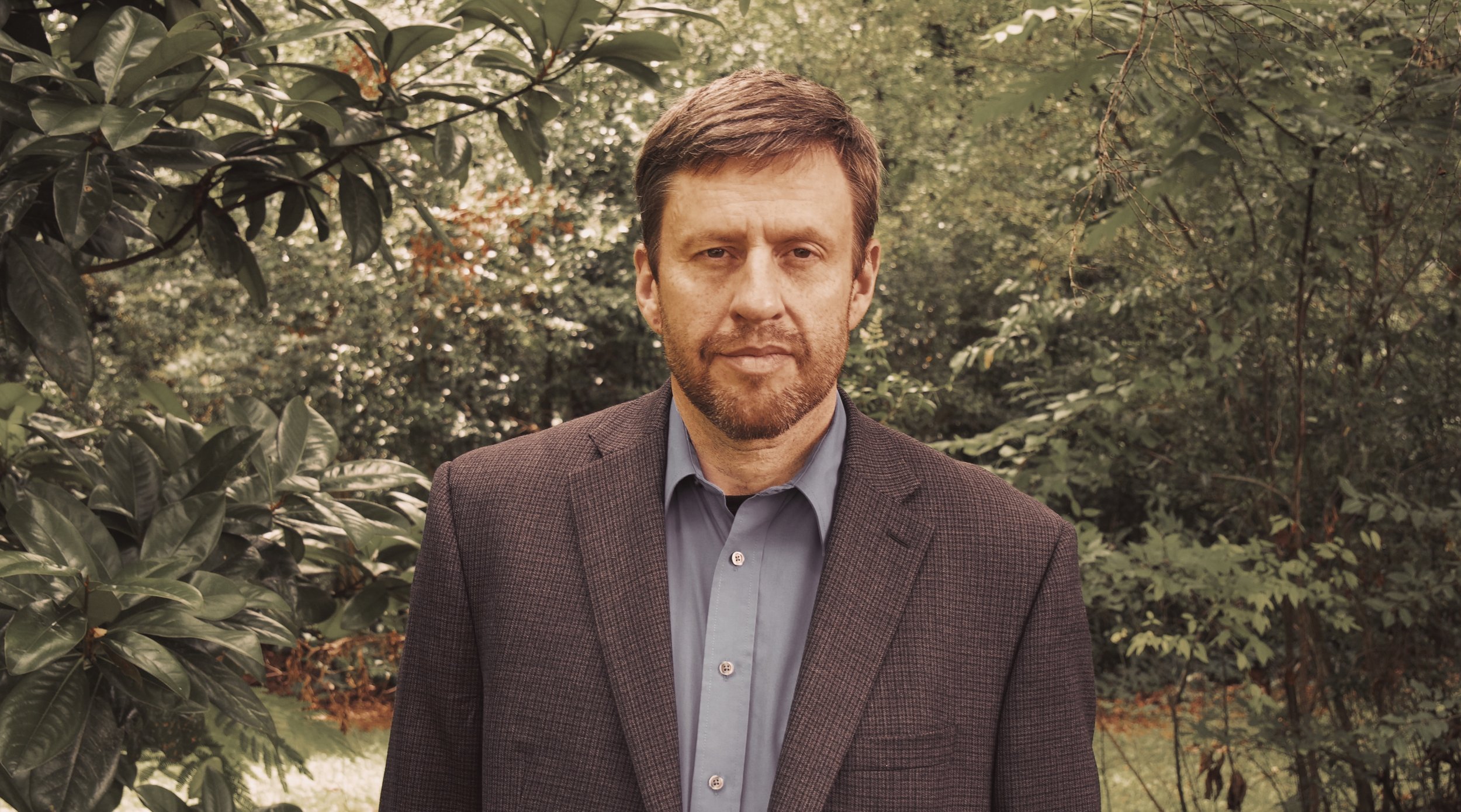
ARTICLES BY DEWAYNE
Christian Articles With A Purpose For Truth.
THE GOSPEL IN MUSIC — THE GREATEST CHRISTMAS SONGS OF ALL TIME (PART THREE)
Some Christmas songs feel like doctrine set to melody; others feel like testimony—truth learned the hard way, sung gently so it can be received. These are not hymns, yet they preach. They do not quote Scripture, yet they lean on it—sometimes without even knowing its name.
“This Christmas” — Donny Hathaway.
This is joy that has passed through grief and come out warmer on the other side. Not naïve celebration, but seasoned gladness—love promised with scars still visible. It sounds like light that knows what darkness feels like and shines anyway (John 1:5). For many of us, this song is Christmas.
“Silver Bells” — Elvis Presley.
Elvis slows Christmas down. The bells do not rush; they walk the streets. There is tenderness here—an awareness that holiness often hides in ordinary places, city sidewalks and quiet moments (Luke 2:7).
“There’s No Place Like Home for the Holidays” — Perry Como.
Few songs understand the ache beneath the season like this one. Home is not always perfect—but it is longed for. And that longing is deeply Christian; it reminds us that even our best homes are signposts pointing toward a better country (Hebrews 11:13-16).
“The Little Drummer Boy” — Bing Crosby.
This is the gospel sung by empty hands. No speech, no offering, no résumé—only what is already there. And the Child receives it gladly. Grace has always loved the poor gift offered honestly (2 Corinthians 8:9).
“If We Make It Through December” — Merle Haggard.
This is Christmas without tinsel—faith tested by bills, layoffs, and tired hearts. Yet hope still breathes. Perseverance becomes its own prayer; endurance its own hymn (Romans 8:18).
“White Christmas” — Bing Crosby.
A song of memory and yearning. It does not demand that the present be perfect—it remembers goodness and waits for its return. In that waiting, it quietly joins Christmas’s ancient cry (Isaiah 9:6).
“Christmas Time Is Here” — Vince Guaraldi Trio.
Hope and fear side by side—just like Bethlehem. The melody knows that joy often arrives trembling, and peace sometimes comes softly (Luke 2:10-14).
“Joy to the World” — Aretha Franklin.
This is not background music—it is proclamation. Aretha does not decorate the song; she announces it. The joy here is cosmic, defiant, unashamed—creation answering its King (Psalm 98:4-6).
“Do You Hear What I Hear?” — Whitney Houston.
This is Christmas as revelation—rumor becoming truth, whisper becoming proclamation. A question turns into a confession, just as it always does when heaven interrupts earth (Matthew 2:9-11).
“Merry Christmas Strait to You” — George Strait.
Plainspoken, faithful, unpretentious. Like a front-porch benediction. Sometimes Christmas sounds like steadiness—love that stayed (Lamentations 3:22–23).
“Santa Looked a Lot Like Daddy” — Buck Owens.
A song of laughter and love, reminding us that joy is not unspiritual. God entered family life, silliness and all. Grace often wears a smile (Ecclesiastes 3:4).
These songs remind us that Christmas does not demand perfection—only presence. Christ did not wait for the world to be ready; He entered it while it was still weary. And somehow, the music remembers.
BDD
THE GOSPEL IN MUSIC — THE GREATEST CHRISTMAS SONGS OF ALL TIME (PART TWO)
Christmas does not belong to one voice, one genre, or one generation. It belongs to the whole human family because it announces that God has entered the human story. Some songs say this plainly; others say it sideways—through longing, joy, memory, or community. All of them, in their own way, bring the same glad news: light has come.
“THE MOST WONDERFUL TIME OF THE YEAR” — Andy Williams
This song feels like the calendar turning holy. It gathers laughter, stories, cold weather, and warm hearts into one communal confession—that this season is different. Not perfect, but set apart. Christmas teaches us to notice time as gift, not burden (Ecclesiastes 3:1).
“I’LL BE HOME FOR CHRISTMAS” — Elvis Presley
Here Christmas becomes a promise spoken through distance. Home is not merely a place; it is a hope. The song resonates because the gospel tells the same story—God coming home to us, and preparing a home for us in return (John 14:2-3).
“THE WONDERFUL WORLD OF CHRISTMAS” — Elvis Presley
Joy rings freely here, unashamed and generous. The world feels briefly healed, as if grace has slipped through the cracks of ordinary life. That is what the Incarnation does—it blesses the common world with uncommon light (Luke 2:14).
“HAVE YOURSELF A MERRY LITTLE CHRISTMAS” — Frank Sinatra
Not as good as Lena Horne’s version but still Sinatra sings hope with restraint. He’s one of the voices of Christmas. This is not triumphal joy, but patient joy—one that believes tomorrow can still be good. Christmas does not deny hardship; it promises presence in the midst of it (2 Corinthians 1:3-4).
“SANTA CLAUS IS COMIN’ TO TOWN” — Frank Sinatra
Playful, rhythmic, and bright, this song reminds us that anticipation is part of celebration. Waiting is not wasted time at Christmas—it is holy preparation (Isaiah 40:3).
“THE CHRISTMAS SONG (CHESTNUTS ROASTING ON AN OPEN FIRE)” — Nat “King” Cole
Few recordings sound like peace itself. This song feels like memory warmed by grace. It celebrates family, blessing, and goodwill—the quiet fruits of a world touched by Christ’s coming (James 1:17).
“SANTA CLAUS GO STRAIGHT TO THE GHETTO” — James Brown
This song carries a prophetic edge. Christmas that ignores the poor is not fully Christian. Brown reminds us that good news must travel to the margins, because that is where it began (Luke 4:18).
“I ONLY WANT YOU FOR CHRISTMAS” — Alan Jackson
Country music understands Christmas instinctively: faith, family, and fidelity. This song strips away excess and names what matters most—presence over presents, love over luxury (1 Corinthians 13:13).
“CHRISTMAS IN HOLLIS” — Run-DMC
Community, generosity, and shared joy fill this song. It places Christmas in a neighborhood, not a sanctuary—and that is fitting. The Word became flesh and dwelt among us (John 1:14).
“HARD CANDY CHRISTMAS” — Dolly Parton
Here Christmas speaks honestly. Life is not always soft, but grace still carries us through. This is Advent realism—hope that survives because God has already come once, and will come again (Romans 15:13).
These songs do not compete with the gospel; they circle it. Some sing joy, others longing, others justice—but all of them assume that Christmas matters, that this season changes the air we breathe.
And that is why they endure.
BDD
THE GOSPEL AND ATTACHMENT
Before we learn language, before we understand rules or reasons, we learn one thing first: whether we are safe.
Psychology tells us that human beings are wired for attachment. From infancy, the brain forms around presence—around a face that stays, a voice that responds, arms that return us to calm. Secure attachment produces peace, resilience, and trust. Broken attachment produces anxiety, fear, and restless striving. We do not merely want connection; we are formed by it.
The Bible says the same thing in older words.
In the beginning, humanity walked with God. There was no hiding, no fear, no distance. Presence was normal. Trust was effortless. But when sin entered the world, the first emotion named in Scripture is fear: “I was afraid…and I hid myself” (Genesis 3:10). Separation precedes disobedience; hiding comes before judgment. Attachment is broken, and the human soul begins to ache.
From that moment forward, the Bible is the story of displaced attachment. We cling to idols, power, approval, pleasure—anything that promises security but cannot hold us. Even good things become false anchors. “All we like sheep have gone astray” (Isaiah 53:6)—not charging into rebellion, but wandering in search of safety.
The law can identify what is wrong, but it cannot restore closeness. Commands do not create attachment; presence does. What the human heart needs is not better instruction, but reconciliation.
This is why the Gospel is not God shouting from heaven, but God drawing near. “The Word became flesh and dwelt among us” (John 1:14). The eternal Son enters our fear-filled world and calls us by name. Jesus touches the untouchable. He eats with sinners. He allows children to climb into His arms. Again and again, He communicates the same truth: you are not abandoned.
At the cross, Jesus experiences the deepest rupture of attachment: “My God, My God, why have You forsaken Me?” (Matthew 27:46). He enters the terror of separation so that we would never have to. The secure bond we lost in Adam is restored in Christ. “Having been justified by faith, we have peace with God through our Lord Jesus Christ” (Romans 5:1).
The resurrection is the Father’s answer to the Son—and to us. The bond holds. Love remains. Death does not get the final word.
Now the Gospel speaks in the language our nervous systems understand: “I will never leave you nor forsake you” (Hebrews 13:5). “Abide in Me, and I in you” (John 15:4).
Salvation is not merely legal forgiveness; it is secure attachment. We are adopted, not tolerated. Held, not merely helped. “You received the Spirit of adoption by whom we cry out, ‘Abba, Father’” (Romans 8:15).
The Christian life, then, is learning to rest where we once ran. Prayer becomes returning. Obedience becomes trust. Worship becomes staying.
And one day, attachment will be complete: “The tabernacle of God is with men, and He will dwell with them” (Revelation 21:3). No anxiety. No distance. No fear of abandonment.
Until then, the Gospel continues to speak to the deepest human need—not merely to be right, but to be held.
___________
Father, draw me back into Your presence. Where fear has taught me to hide, teach me to rest. Let my soul find its security in You alone, through Jesus Christ. Amen.
BDD
THE GOSPEL AND INFORMATION
Nothing meaningful comes from noise.
In every field that studies information—whether genetics, computer science, or communication—one principle stands firm: information does not create itself.
Randomness produces static; structure requires a source. A signal always points beyond itself to a sender. Code implies mind. Meaning presupposes intention.
The universe is not silent noise. It speaks.
From the precise instructions written into DNA to the mathematical order governing the stars, reality is saturated with information. The world is not merely there; it is intelligible. We can read it, study it, and understand it because it is written—layer upon layer—with coherence and purpose.
Scripture begins where information theory ends: “In the beginning was the Word, and the Word was with God, and the Word was God” (John 1:1). Before matter, before energy, before time—there was meaning. Not a force, not an impulse, but a Word.
The Greek term Logos speaks of reason, order, communication. Reality has grammar because God speaks.
Sin, then, is not merely moral failure; it is distortion. The signal becomes corrupted. Truth is exchanged for lies. The image is blurred. “Although they knew God, they did not glorify Him as God…and their foolish hearts were darkened” (Romans 1:21). Information remains, but clarity is lost; meaning fractures into confusion.
The law exposes the corruption, but it cannot restore the signal. Commands without life only amplify the noise. What humanity needs is not more data, but a living Word—truth embodied, not merely spoken.
“And the Word became flesh and dwelt among us” (John 1:14). The message did not arrive as a scroll from heaven, but as a man walking among fishermen and sinners. God did not shout across the distance; He stepped into the transmission. Truth put on skin. Meaning breathed our air.
Jesus does not merely teach information about God; He is the information. “I am the way, the truth, and the life” (John 14:6). In Him, the signal is pure—no distortion, no corruption, no loss. To see Him is to see the Father (John 14:9). To hear Him is to hear God speak.
At the cross, it appears that the Word is silenced. The message seems cut off. Yet what looks like failure is the ultimate communication: “God demonstrates His own love toward us, in that while we were still sinners, Christ died for us” (Romans 5:8). The clearest sentence God has ever spoken is written in blood.
The resurrection is the confirmation that the message was received. Death could not corrupt it. The signal could not be erased. The Word still speaks.
Salvation, then, is not downloading new information—it is being re-written. “You are our epistle written in our hearts…known and read by all men” (2 Corinthians 3:2). Grace does not merely inform the mind; it transforms the heart. The Spirit restores clarity where sin produced noise.
One day, the communication will be complete. “They shall see His face, and His name shall be on their foreheads” (Revelation 22:4). No distortion. No misunderstanding. No silence.
Until then, the Word continues to speak—calling, correcting, healing, saving.
___________
Lord Jesus, Living Word, speak into the noise within me. Rewrite what sin has distorted. Let my life become a clear witness to Your truth, until the day I hear You face to face. Amen.
BDD
THE GOSPEL HIDDEN IN GREEK MYTHOLOGY
The ancient Greeks did not know the name of Jesus of Nazareth; yet they lived with a deep ache—a holy restlessness—for redemption. Their myths were not Scripture, not revelation, not truth in the saving sense; but they were confessions of longing. They were humanity reaching upward in the dark, grasping for meaning, justice, sacrifice, and hope—groping, as Paul would later say, “if perhaps they might feel after Him and find Him” (Acts 17:27).
And when you read those stories carefully—honestly, soberly—you begin to hear echoes.
Not the Gospel itself; but the need for it.
Consider Prometheus—the titan who loved humanity enough to suffer for them. He steals fire from the gods, gives it to mankind, and is punished—bound to a rock, enduring unending torment. The Greeks admired him because he suffered for humanity. They sensed that love must cost something; that salvation, even imagined salvation, is never cheap. Yet Prometheus remains bound forever. His suffering redeems nothing. The Gospel answers the ache Prometheus could not—Christ suffers once, willingly, and declares, “It is finished” (John 19:30).
Or look to Heracles—Hercules—the mighty hero born of divine origin, sent to perform impossible labors, cleansing corruption, battling monsters, restoring order. The Greeks longed for a strong savior—one who could do what ordinary men could not. Yet Heracles saves by strength alone; Jesus saves by weakness embraced—“the power of God” revealed through the cross (1 Corinthians 1:18). The myth points forward; the Gospel fulfills.
Then there is Orpheus—the lover who descends into the underworld to rescue his bride from death itself. He sings; the gates open; even Hades is moved. But Orpheus fails—he looks back, and death wins again. The Greeks knew what we all know: love should be stronger than death—but somehow always falls short. The Gospel stands where Orpheus falters—Christ descends, not with song but with blood, and rises without losing His bride (Ephesians 4:8-10)
Even the idea of sacrifice permeates Greek thought. Blood offerings. Appeasing wrath. A sense that guilt must be dealt with, not ignored. Yet their sacrifices never cleansed the conscience—only delayed fear. The Gospel declares what myth could only whisper: “Behold! The Lamb of God who takes away the sin of the world!” (John 1:29).
And perhaps the clearest echo of all is found in the Greek concept of the Logos—the rational ordering principle behind the universe. Greek philosophers spoke of the Logos as reason, meaning, coherence—the invisible Word holding reality together. John does not borrow the idea; he redeems it. “In the beginning was the Word [Logos]…and the Word became flesh and dwelt among us” (John 1:1, 14). What the Greeks intuited abstractly, God revealed personally.
This is not to say Greek mythology preached Christ. It did not. It needed Him.
Myth says, We long for a savior. The Gospel says, He has come.
Myth says, A god should suffer for us. The Gospel says, God did.
Myth says, Death must be undone. The Gospel says, It has been.
And so the Gospel does not fear mythology; it fulfills the hunger beneath it. Christ is not one more hero in the pantheon—He is the answer to the question the pantheon was asking. He does not climb Olympus; He empties Himself. He does not demand sacrifice; He becomes it. He does not remain legend; He enters history—crucified under Pontius Pilate, risen on the third day, reigning forever.
The myths were humanity’s broken mirror. The Gospel is the face itself.
BDD
THE GOSPEL IN LOGIC — BELIEVING BEYOND WHAT THE EYES CAN SEE
One of the most common reasons people give for not believing in God sounds very simple—“I don’t believe in anything I cannot see.”
At first glance, that feels sensible, practical, even scientific. But when we slow down and think carefully—without slogans, without sermons, without pressure—we discover that this idea does not actually come from science or logic at all.
In fact, it quietly contradicts both.
Science itself is built on realities that cannot be seen with the naked eye. Gravity has never been photographed, yet every step we take assumes it is real.
No one has ever seen a magnetic field, but we trust it every time a compass points north.
Radio waves fill the room you are sitting in right now—music, voices, data—passing through walls and bodies unseen. We do not see them, yet we build entire civilizations around their presence.
Even more personally, we live daily by faith in invisible things. You cannot see your thoughts, yet you trust that you are thinking. You cannot see love, but you know when it has changed your life. You cannot see justice, meaning, or moral obligation, yet we appeal to them constantly—especially when we believe something is wrong.
To say, “I only believe what I can see,” would require abandoning reason, relationships, science, and even the idea that truth exists at all.
The irony is this: the statement itself is not visible. You cannot see the belief “I only believe what I can see.” It is a philosophical claim—an invisible conviction used to deny invisible realities. That alone shows the problem.
The Bible speaks plainly and without embarrassment about this. “Faith is the substance of things hoped for, the evidence of things not seen” (Hebrews 11:1). Notice what it does not say. It does not say faith is wishful thinking. It does not say faith ignores evidence. It says faith deals with evidence of a different kind—real, substantial, but not always visible.
Scripture also reminds us that the invisible does not mean the unreal. “For since the creation of the world His invisible attributes are clearly seen, being understood by the things that are made” (Romans 1:20). In other words, we do not see God the way we see a tree—but we see His fingerprints everywhere: order, reason, beauty, conscience, life itself.
The Christian claim is not that belief in God is anti-science. It is that science, by its very nature, points beyond itself. Science can tell us how things work—but it cannot tell us why anything exists at all. It can describe the universe, but it cannot explain why there is something instead of nothing, or why human beings hunger for meaning, truth, and love in a world that supposedly does not owe us any of those things.
Belief in God is not a rejection of logic; it is the recognition that logic itself rests on unseen foundations. The Christian faith does not ask us to close our eyes—it asks us to open them wider. To admit that reality is larger than what we can hold, measure, or photograph.
And in the end, the gospel tells us something even more remarkable: the unseen God made Himself seen. “And the Word became flesh and dwelt among us” (John 1:14). Christianity does not rest on an abstract idea alone—it rests on a historical Person, Jesus Christ, who lived, loved, suffered, died, and rose again in time and space.
We do not believe because we can see everything. We believe because we see enough—and because truth, like love, has never required visibility to be real.
_________
Lord Jesus, open our eyes to see beyond the surface of things—to trust truth, love, and You, even when sight is limited. Teach us that faith is not blindness, but deeper vision. Amen.
BDD
THE GOSPEL IN MUSIC — THE GREATEST CHRISTMAS SONGS OF ALL TIME (PART ONE)
Christmas has a sound.
Not merely a style or a season—but a voice that rises once a year to remind us that God entered time gently, wrapped in flesh and melody. These songs do more than decorate the air; they catechize the heart. They preach—sometimes more softly than a sermon, sometimes more powerfully than one.
Below is Part One of what I am calling The Greatest Christmas Songs of All Time—not ranked, not argued, just received with gratitude; each one carrying a little theology, a little memory, and a lot of grace.
“O HOLY NIGHT” — Nat “King” Cole
Few songs capture the trembling wonder of the Incarnation like O Holy Night. Nat King Cole does not rush it; he lets the night breathe. The lyrics stand beneath a starlit sky and confess what the gospel announces—that “the soul felt its worth.” This is Christmas theology at its highest pitch: heaven descending low, dignity restored, chains broken (Luke 2:10-11). When Cole sings it, the song feels less performed and more testified.
“HOLLY LEAVES AND CHRISTMAS TREES” — Elvis Presley
Elvis understood nostalgia—not as sentimentality, but as longing. This song aches with memory: familiar streets, childhood faith, the smell of pine and the warmth of belonging. It reminds us that Christmas is not only about Bethlehem long ago; it is about God meeting us in remembered places, sanctifying even our homes and histories (Deuteronomy 6:10-12).
“ALL I WANT FOR CHRISTMAS IS YOU” — Mariah Carey
Joy can be loud—and still holy. Mariah Carey’s modern classic is exuberant, playful, and unapologetically glad. Beneath the glitter is a simple truth: presence matters more than presents. Love outweighs luxury. Even here, Christmas whispers the gospel principle—relationship over reward, nearness over novelty (Matthew 1:23).
“SILENT NIGHT” — The Temptations
This is Silent Night as a lullaby sung by heaven itself. The Temptations bring warmth, reverence, and harmony that feels like candlelight. The stillness of the song reflects the mystery of a God who enters quietly—no fanfare, no violence—just a Child, just a promise (Luke 2:15-16).
“O COME, ALL YE FAITHFUL” — Elvis Presley
Here Christmas becomes a summons. “Come and behold Him.” Elvis sings with conviction, as though the invitation is urgent and personal. This is worship set to melody—calling believers not merely to admire the manger, but to adore the Christ (John 1:14). Backed by J.D. Sumner and the Stamps Quartet, the gospel harmony on this is absolutely magical.
“IF I GET HOME ON CHRISTMAS DAY” — Elvis Presley
This song carries the ache of distance and the hope of reunion. Christmas reveals how deeply we long to be home—not just geographically, but spiritually. It reflects the gospel promise that no separation is final, and no journey is wasted (Luke 15:20).
“IF EVERY DAY WAS JUST LIKE CHRISTMAS” — Elvis Presley
Here Elvis touches something profound: what if the posture of Christmas—peace, generosity, goodwill—lasted all year? The song gently exposes our inconsistency while inviting us to imagine a life shaped by grace daily, not seasonally (Colossians 3:15-17).
“LET IT SNOW! LET IT SNOW! LET IT SNOW!” — Dean Martin
Dean Martin reminds us that joy often blooms indoors, while the storm rages outside. There is something deeply Christian here: warmth in the midst of cold, fellowship against the darkness. Grace does not remove the storm; it teaches us how to sing while it falls (Isaiah 9:2).
“HAVE YOURSELF A MERRY LITTLE CHRISTMAS” — Lena Horne
Tender, restrained, and honest—Lena Horne sings hope without denial. This is not forced cheer; it is faithful endurance. “Through the years we all will be together, if the fates allow.” Christmas hope is realistic, yet resolute—light shining, even if dimly, in a weary world (John 1:5).
“A FEW OF MY FAVORITE THINGS” — The Supremes
Though not born as a Christmas song, it has become one by adoption—and rightly so. Gratitude transforms fear. The Supremes teach us to count blessings as an act of resistance against despair. Christmas trains the heart to notice good gifts, even in anxious times (James 1:17).
These songs remind us that Christmas is not fragile.
It survives war, loneliness, cultural shifts, and changing tastes—because its center holds. Christ has come. Christ is near. Christ is still sung.
And this is only Part One.
BDD
CHRISTIANITY MADE SIMPLE
At its heart—beneath the layers, the labels, the footnotes, the centuries of earnest debate—Christianity is not complicated. It is not a maze with hidden doors, nor a test designed to trick the sincere.
It is trust.
It is believing in Jesus Christ; leaning the full weight of your soul upon Him; resting, not in how well you understand God, but in how deeply God has made Himself known in His Son (John 1:18).
Take the Bible itself.
There are different views of inspiration. Some speak of verbal plenary inspiration—that every word is breathed out by God. Others speak of dynamic inspiration—God guiding human authors while allowing personality and style to shine through. Some emphasize inerrancy, others infallibility; some focus on Scripture as a library of Spirit-shaped testimonies, others as a unified, divinely ordered Word. The discussions can be thoughtful, even helpful.
But here is the simplicity: if you believe that God wrote this Book—and that this is how He speaks to us—you’ll be good. You don’t need to solve every question about how inspiration works; you only need to listen when God speaks (2 Timothy 3:16-17).
Then there is the death of Christ. Here the waters grow deep—rich, theological, and sometimes intimidating. Some speak of penal substitution: Christ bearing our penalty. Others emphasize Christus Victor: Jesus defeating sin, death, and the devil. Some speak of moral influence, others of recapitulation, others of sacrifice, ransom, reconciliation.
The church has pondered the cross from many angles, like light refracting through a diamond.
But here is the heart of it: if you believe that Jesus loves you and died for your sins—you’re good to go. You may not know how the atonement works in every dimension, but you can know that it works (Romans 5:8; 1 Corinthians 15:3-4).
Then we come to salvation itself—those long-standing family debates. Calvinism and Arminianism. Election and free will. Sovereignty and response. Systems carefully built, verses carefully arranged. Faithful believers land in different places, often with deep conviction and genuine love for God.
But here is the simple center: if you believe that Jesus loves you no matter who you are; that you can be saved no matter who you are; that everyone can be saved no matter who they are; and that God gets all the credit for salvation—you’re good. The gospel does not require a philosophical map; it requires trust in a faithful Savior (Ephesians 2:8-9; 1 Timothy 2:3-4).
We could go on.
Church government—bishop, elder, congregational rule. If you believe Christ is the Head of the Church, and you are called to love His body, you’re good (Colossians 1:18).
Baptism—timing, mode, meaning? If you believe it points us to Christ’s death and resurrection, and you obey Him in faith, you’re walking in the right direction (Romans 6:3-4).
End times—millennium, tribulation, symbols and timelines. If you believe Jesus will return, evil will not win, and hope has the final word—you’re anchored where it matters (Revelation 22:20).
Christianity is not shallow—but it is simple. It is deep enough to occupy a lifetime of study, and clear enough for a child to enter. The door is not guarded by perfect theology; it is opened by a perfect Christ.
Believe Him. Trust Him. Follow Him. And you will find that the gospel, for all its glory, is wonderfully—mercifully—easy to receive (John 3:16).
__________
Lord Jesus, keep us from complicating what You have made clear. Teach us to trust You more than our systems, to love You more than our arguments, and to rest our hope fully in Your finished work. Amen.
BDD
THE GOSPEL IN HISTORY — JIMMY LEE JACKSON, A MARTYR FOR JUSTICE
History often remembers movements and marches, dates and decisions—but the gospel reminds us that history turns on people; ordinary men and women whose faith quietly shaped extraordinary moments.
Jimmy Lee Jackson was one of those people. He did not set out to become a symbol. He set out to be faithful.
Jimmy Lee Jackson was born in 1938 in Marion, Alabama, in the heart of the Black Belt. He was raised in a Christian home and became a deacon at St. James Baptist Church while still a young man. Those who knew him remembered him not as loud or violent, but as gentle, dependable, and deeply committed to his faith. Church was not a costume he wore on Sundays—it was the center of his life. He served God in the ordinary ways that rarely make headlines: prayer, service, faithfulness, and love for his family.
Before his life was taken, Jimmy Lee Jackson also served his country. He was a veteran of the United States Army, having worn the uniform at a time when the military itself was still marked by segregation and inequality. He fought for freedoms abroad that he himself was denied at home. Like many Black veterans of his generation, he returned from service hoping that sacrifice might finally be met with dignity—but instead found the same closed doors and unjust laws.
In February of 1965, Jackson joined a peaceful nighttime march in Marion, Alabama, protesting the arrest of civil rights worker James Orange and the systematic denial of voting rights to Black citizens. The march was prayerful and nonviolent. But it was met with force. Alabama state troopers and local police moved in, beating demonstrators and driving them into the surrounding streets.
Jimmy Lee Jackson fled into a small café with his mother and grandfather, seeking safety. Inside that cramped space, chaos erupted. His elderly grandfather was beaten. His mother was threatened. And when Jimmy Lee stepped forward—unarmed—to shield them, State Trooper James Bonard Fowler shot him at close range. Jackson was only twenty-six years old. He died days later from his wounds.
Jesus once said, “Blessed are those who hunger and thirst for righteousness, for they shall be filled” (Matthew 5:6). Jimmy Lee Jackson hungered for righteousness—not as an abstraction, but as a lived reality. He believed that faith demanded something more than quiet endurance; it demanded truth, courage, and love in the face of injustice.
His death was not meaningless. It became a turning point. When Dr. Martin Luther King Jr. learned how Jimmy Lee Jackson was killed—how a peaceful deacon protecting his family was shot for daring to stand—he knew silence was no longer an option. Jackson’s death directly inspired the Selma to Montgomery marches, which ultimately led to the passage of the Voting Rights Act of 1965. The blood of a faithful servant watered the ground from which justice finally broke through.
The gospel has always moved forward this way—not through power alone, but through sacrificial love. Jimmy Lee Jackson did not carry a sword. He carried faith. He did not shout slogans. He lived a quiet obedience that, in the end, cost him his life. Scripture tells us, “Greater love has no one than this, than to lay down one’s life for his friends” (John 15:13). Jimmy Lee Jackson laid down his life protecting those he loved and standing for what was right.
His story reminds us that Christian faith is not detached from history; it steps into it. The cross itself stands at the center of human injustice, and yet it becomes the doorway to redemption. So it was with Jimmy Lee Jackson. His death exposed the darkness—but it also lit the way forward.
BDD
ALREADY THERE—ETERNITY, TIME, AND THE BETTER-THAN-IMAGINED HOPE
There is a conviction that has settled into my mind—not as dogma to be demanded, but as hope to be held gently; when we die, we do not drift into a long hallway of waiting, nor do we wander in some dim in-between—we step into eternity itself. And if eternity is not bound by clocks and calendars, then those we love who have gone on before us are not “ahead” of us in any meaningful sense; they are already there—and, in a mystery deeper still, we are already there too.
The Bible tells us that God is not measured by time as we are. “With the Lord one day is as a thousand years, and a thousand years as one day” (2 Peter 3:8). This is not a math equation; it is an unveiling. Time bends before Him. Moments do not line up in a neat row when they stand in the presence of the Eternal One. What we experience as sequence—before and after, waiting and arriving—may dissolve when we pass beyond the veil.
Jesus Himself spoke of death not as delay, but as arrival. “Today you will be with Me in Paradise” (Luke 23:43). Not after a long pause. Not after centuries of waiting. Today. Paul echoes the same confidence when he writes, “To be absent from the body [is] to be present with the Lord” (2 Corinthians 5:8). Presence—not postponement—marks the believer’s hope.
Here is where even modern science, without intending to preach, quietly humbles us. Einstein showed that time is not absolute; it stretches and compresses, slowing as one approaches the speed of light. At light-speed—at least theoretically—time ceases to move forward as we know it. While we cannot turn physics into theology, the implication is sobering and beautiful: time is not the unbreakable law we once assumed it to be. It is part of creation—flexible, contingent, and limited.
If time itself can bend within the created order, what must it do when creation gives way to eternity?
We speak of “going to heaven,” as though it were a destination on a future calendar. But eternity may not be later—it may be other. When death loosens us from time, we do not step into tomorrow; we step into the now of God. The risen Christ calls Himself “the Alpha and the Omega, the Beginning and the End” (Revelation 1:8). In Him, beginnings and endings are gathered together. What we call future is already held, already complete, already alive in His presence.
So perhaps our loved ones are not waiting for us in line; perhaps they are welcoming us from a fullness we cannot yet describe. And perhaps, when we arrive, we will discover that the reunion was never late—only hidden.
And if this personal conviction proves incomplete—if the reality of God’s design unfolds differently than my imagination allows—I rest easy still. The Word of God has already prepared me for that surprise with this lifelong principle: “Eye has not seen, nor ear heard, nor have entered into the heart of man the things which God has prepared for those who love Him” (1 Corinthians 2:9).
Whatever eternity looks like, it will not be thinner than our hope—it will be fuller. It will not correct us downward—it will overwhelm us upward. If my understanding of time and eternity is imperfect, then the correction will not be disappointment, but astonishment. God has never been less generous than we imagined; He has always been more. What waits for us beyond death is not colder, not lonelier, not smaller—but brighter, deeper, and truer than anything we have known here.
We will not arrive late. We will not arrive alone. We will arrive home—into the presence of Jesus, where love is complete, time is no longer a tyrant, and every separation finally makes sense. When you cross over, you will not be leaving anything behind. You will enter into a whole new dimension where you are immediately in the presence of Christ and all of your loved ones, past and present. That is my personal view. You don’t have to hold it. But I can say this confidently: if I’m wrong, it will be even better than that.
_________
Lord Jesus, You who stand outside of time and yet stepped into it for us—steady our hearts when we think of death, and soften our fears with hope. Whether we understand eternity rightly or only dimly, we trust that what You have prepared is better than we can imagine. Hold our loved ones in Your presence, and when our time comes, receive us with joy. We place our hope not in theories or timelines, but in You. Amen.
BDD
THE GOSPEL IN THERMODYNAMICS — ORDER, DECAY, AND THE PROMISE OF NEW CREATION
In the quiet laws of nature, God whispers His truth. The Second Law of Thermodynamics is one of those whispers: in any closed system, disorder increases; energy disperses; decay is inevitable. Stars burn out, rivers silt, bodies age, machines rust. Left to itself, creation runs down. There is honesty here—scientific, observable, unflinching—and yet, within this honesty, the Gospel shines brighter than any equation.
The Bible too bears witness to decay. “For the creation was subjected to futility, not willingly, but because of Him who subjected it, in hope that the creation itself also will be set free from its bondage to corruption into the glorious liberty of the children of God” (Romans 8:20-21). Sin, like entropy, spreads naturally; corruption advances; death exerts its dominion. Left to ourselves, there is no reversal, no repair, no ultimate hope. But God has entered the system—not to rearrange the old, but to redeem, renew, and restore.
Christ is the energy from outside the system. Where the universe trends toward disorder, He brings order; where humanity trends toward decay, He brings life; where the law of sin demands death, He brings resurrection (Romans 8:11). The cross absorbs the cost of entropy—the ultimate disruption of creation’s order—while the resurrection inaugurates a new creation that cannot decay. This is not mere maintenance; this is transformation. This is not repair; this is redemption.
Even the Spirit is like an ongoing infusion of energy, keeping our weary hearts alive, sustaining our faith, renewing our minds, and pointing us beyond what is temporary to what is eternal. We live amid decay, but we do not despair. We breathe amid entropy, but we hope in the One who will remake all things. “He who was seated on the throne said, ‘Behold, I am making all things new’” (Revelation 21:5).
The quiet law of decay in nature, when seen through the lens of faith, is a mirror of our own mortality—but it also magnifies the glory of Christ. He enters our broken world, absorbs its destruction, and promises that the ultimate outcome is life, order, and beauty beyond measure. Even in the relentless march of entropy, God’s hand is not slack; His promise is sure; His power is supreme.
Lord Jesus, You who entered a decaying world to bring life, remind us that even when all seems to be falling apart, You are working to renew and restore. Help us trust Your sovereign power amid the entropy around us, and let our hearts cling to the hope of Your new creation. Sustain us with Your Spirit, that we may live with courage, joy, and faith, knowing that You make all things new. Amen.
BDD
JESUS IN THE BOOK OF ESTHER
The Book of Esther is the quietest room in the house of Scripture—and yet it is never empty. God’s name is never spoken; heaven never thunders; miracles never announce themselves. And still, every page breathes with providence. This is the book where God is unseen—but never absent. And it is precisely here, in the silence, that we learn to recognize Jesus.
Esther opens with a throne—but not the true one. Ahasuerus rules Persia with feasts, decrees, and pride (Esther 1:1-4). Yet behind the glittering court stands Another King, unseen yet sovereign, guiding history without spectacle. Jesus often works the same way—quietly, patiently, invisibly—governing hearts while the world imagines itself in control (Proverbs 21:1).
Esther herself is chosen, not by ambition, but by providence. An orphan girl, hidden among the exiles, lifted into royal favor (Esther 2:7, 17). She does not seize power; power is entrusted to her. Here we glimpse the humility of Christ—who did not grasp at glory, but received it through obedience (Philippians 2:6-8). Esther wears a crown she did not seek; Jesus bore a cross He did not deserve.
Then comes the crisis. A death sentence is written—sealed with the king’s signet—and it cannot be revoked (Esther 3:12-13). All the Jews are condemned, not for what they have done, but for who they are. Is this not the story of the human race? A law stands against us; a verdict looms; death is scheduled. And like the Jews of Persia, we cannot undo it ourselves.
Mordecai’s words pierce the heart of the book—and the soul of the believer:
“Yet who knows whether you have come to the kingdom for such a time as this?” (Esther 4:14).
This is the hinge of redemption. Esther must approach the king without invitation. The law says death; mercy alone can save. She fasts, she prays, and she offers herself—“If I perish, I perish” (Esther 4:16). In this moment, Esther becomes a shadow of Christ, who stepped into the throne room of judgment on our behalf, knowing the cost, embracing it fully.
But Esther only risks death—Jesus enters it.
Esther stands before the king, and the golden scepter is extended (Esther 5:2). Favor triumphs over law. Grace interrupts judgment. The condemned are spared, and the enemy is exposed. In Christ, the greater scepter is extended—not of gold, but of mercy—where the law that stood against us is answered by a pierced hand (Colossians 2:14).
Haman builds gallows for another—and hangs upon them himself (Esther 7:10). The enemy’s weapon becomes his defeat. Is this not the cross? Satan schemes, death is prepared, and yet the very instrument meant for destruction becomes the means of victory (Hebrews 2:14).
The story ends not with silence, but with joy. Mourning turns to feasting; fear gives way to gladness; deliverance is remembered and celebrated (Esther 9:20-22). Purim is born—a feast of reversal, a memorial of salvation. And so it is with the Gospel: sorrow turned to song; ashes exchanged for beauty; death swallowed up by life.
Jesus is not named in Esther—but He is everywhere present. He is the unseen King. He is the intercessor who risks everything. He is the One who enters the court when law condemns and grace alone can save. He is the Savior who works quietly, faithfully, perfectly—even when heaven seems silent.
And perhaps that is the comfort Esther gives us most: when God seems hidden, He is still writing the story. When His name is not spoken, His hand is still moving. And when the night is darkest, the unseen King is already preparing deliverance.
BDD
IN PRAISE OF SCHOLARSHIP — A GIFT TO THE CHURCH
We should pause—and genuinely thank God for scholarship.
In some corners of the church, there is a quiet suspicion of scholars; as though education dulls faith, as though study competes with devotion, as though learning somehow threatens the simplicity of the gospel. But this suspicion is misplaced. The Church does not flourish in spite of scholarship; it flourishes because of it.
Every Bible we hold in our hands is a testimony to men and women who gave their lives to careful study—languages learned slowly, manuscripts examined patiently, history weighed honestly, texts compared reverently. Without scholars, we would not have Hebrew Scriptures faithfully preserved; we would not have Greek New Testaments carefully transmitted; we would not have translations that allow the Word of God to be read aloud by a child or whispered by a dying saint. God used scholarship to place His Word within reach of ordinary people—and that alone should end the argument.
“The scribe who has been trained for the kingdom of heaven is like a master of a house, who brings out of his treasure what is new and what is old” (Matthew 13:52). Jesus did not despise learning; He redeemed it.
This does not mean scholars are infallible. They know this better than anyone. I read scholars regularly—and I do not always agree with their conclusions; nor do they require me to.
Scholarship does not demand unquestioning allegiance; it invites informed engagement. It teaches us how to ask better questions, how to listen before speaking, how to recognize the difference between conviction and certainty.
And we should say this plainly: education is not arrogance. Doing homework is not pride. Taking time to understand before making declarations is not compromise—it is wisdom. “Be diligent to present yourself approved to God, a worker who does not need to be ashamed, rightly dividing the word of truth” (2 Timothy 2:15). That diligence looks different for different callings—but it is diligence nonetheless.
At the same time, let us be equally clear: you do not need a degree to share Jesus. You do not need to know Greek verbs or Hebrew syntax to preach Christ crucified. The gospel is gloriously simple—so simple that a child can believe it and a dying thief can cling to it. “For I determined not to know anything among you except Jesus Christ and Him crucified” (1 Corinthians 2:2). Salvation is not reserved for the educated; it is offered freely to all.
But here is where gentleness must meet honesty.
There is a difference between proclaiming the gospel and pontificating on deep, technical, and controversial matters. Not every believer is called to wrestle publicly with textual criticism, Second Temple Judaism, eschatological systems, or historical theology—and that is not a failure. The body of Christ has many members, not many heads. When people speak confidently on complex subjects without the necessary grounding, it does not strengthen the Church; it confuses it.
“If anyone thinks that he knows anything, he knows nothing yet as he ought to know” (1 Corinthians 8:2).
This is where our moment struggles. Meme-prophets, algorithm-driven outrage, YouTube certainty, and dime-store blogging thrive on speed, not accuracy; confidence, not competence; provocation, not truth. These platforms reward novelty over faithfulness and controversy over wisdom. They do not serve the cause of Christ—even when they claim to defend it.
To hold views that the entire weight of global scholarship—across cultures, denominations, centuries, and languages—has carefully examined and rejected is not courage; it is carelessness. Scholarship is not a conspiracy; it is a conversation—one that spans generations and disciplines, marked by peer review, self-correction, and humility before the text. Disagree if you must, but disagree informed, not insulated.
The Church needs evangelists—and thank God for them. The Church also needs teachers, historians, linguists, archaeologists, and theologians—and thank God for them too. “And God has appointed these in the church: first apostles, second prophets, third teachers…” (1 Corinthians 12:28). To despise any gift God has given is to impoverish ourselves.
So let us be grateful. Let us read widely, listen carefully, and speak humbly. Let us proclaim Christ boldly—and leave the deep waters to those called to swim in them. Faith is not weakened by learning; it is refined by it. Truth does not fear scrutiny; it invites it.
And above all, let us remember: the same Lord who saves sinners also calls scholars—and He wastes nothing in His Church.
Lord, Thank You for faithful men and women who labor in study for the sake of Your Church. Give us humble hearts—eager to learn, slow to speak, quick to love. Help us honor every gift You have given, proclaim Your gospel simply, and handle Your truth carefully. Keep us from pride without knowledge, and from knowledge without love. Amen.
BDD
WHAT IS WRONG WITH ADVENT? NOT A THING IN THE WORLD
Advent did not begin as a command, a test of orthodoxy, or a spiritual hurdle to clear. It began as a longing.
In the early centuries of Christianity, believers set aside time before Christmas to remember two great truths held together in reverent tension: Christ has come, and Christ will come again. Like Israel watching for the dawn, the Church learned to wait—not with anxiety, but with hope. Advent was shaped as a season of preparation, reflection, and expectation; not unlike Lent in its sobriety, yet warmer with promise, lit by candles instead of shadows.
There is nothing unbiblical about remembering the incarnation with intention. The Bible itself is full of holy remembrance—stones set by rivers, feasts appointed by God, psalms that call us to remember the works of the Lord (Psalm 77:11). To pause and rehearse the wonder that the Word became flesh and dwelt among us (John 1:14) is not ritualism; it is gratitude with a calendar. The problem is never the practice—it is the heart. Advent, like any good gift, can be received freely or mishandled foolishly.
The danger comes only when a help becomes a measure, when a tradition becomes a test, when what is meant to point us to Christ begins to replace Him. The gospel is clear: no day is holier than another by necessity, and no believer is made righteous by observing seasons or neglecting them (Romans 14:5-6; Colossians 2:16-17).
Advent is not law; it is liberty. It is not required; it is offered. And where there is no law, there is no condemnation—only wisdom, if we choose to use it well.
At its best, Advent gently tutors the soul. It slows us down in a hurried world, teaches us to wait in a culture of immediacy, and reminds us that salvation entered history quietly—through a womb, a cradle, a manger.
The candles do not save us; Christ does. The calendar does not sanctify us; the Spirit does. Advent simply whispers what the gospel has always said aloud: Light has come into the darkness, and the darkness did not overcome it (John 1:5).
So what is wrong with Advent? Nothing at all—unless we idolize it, weaponize it, or bind consciences where God has left them free. Used humbly, it serves love. Used rigidly, it forgets grace. The Church is never holier for keeping it, nor less faithful for passing it by. Christ is our righteousness in every season.
And that is what makes Advent beautiful: it points beyond itself—to Emmanuel, God with us—yesterday, today, and forever.
Lord Jesus, teach us to receive good gifts without turning them into burdens. Whether we mark the days or let them pass, fix our hearts on You alone. Help us to wait with hope, worship with freedom, and live every season in the light of Your coming. Amen.
BDD
THE CROSS LEAVES NO ROOM FOR RACISM
There is a subtle, deadly lie that has haunted the Church at times, and it must be named and rebuked plainly: “They killed Jesus.”
When that sentence is used to justify hatred—especially antisemitism—it reveals not zeal for truth, but a failure to understand the gospel itself.
If someone insists on saying “they killed Jesus,” while refusing to acknowledge that it was their own sin that placed Him on the cross, that way of thinking stands in direct contradiction to the gospel itself. Salvation rests on trusting Christ as the One who died for our sins—not someone else’s guilt. Where personal repentance is absent, saving faith has not yet taken root.
The Bible is clear that Jesus was not a helpless victim of one ethnic group; He was the willing Savior who laid down His life. If I do not believe that my sins put Him on the cross, then He did not die for me—and if He did not die for me, then I have no Savior (Isaiah 53:5; 1 Peter 2:24).
Jesus was a Jew. Mary was Jewish. The apostles were Jewish. The early Church was overwhelmingly Jewish. Paul—the apostle to the Gentiles—was a Jew who never ceased to love his people, even willing to be accursed himself if it meant their salvation (Romans 9:1-5). Christianity did not emerge in spite of the Jewish people; it was born through them. The Scriptures we cherish, the Messiah we worship, and the gospel we proclaim all came to us through Israel.
Yes, some Jewish leaders rejected Jesus—just as Gentile rulers condemned Him, Gentile soldiers crucified Him, and Gentile crowds mocked Him. Rejection of Christ is not a Jewish problem or a Gentile problem; it is a human problem.
And just as some rejected Him, many thousands of Jewish men and women believed—so many that the faith spread from Jerusalem to Judea, Samaria, and to the ends of the earth (Acts 2:41; Acts 4:4). We are Christians today because Jewish believers first confessed, “Jesus is Lord.”
Racism of any kind collapses at the foot of the cross. The ground there is level. No one gets to boast, and no one gets to blame. The gospel humbles us all: Christ died for sinners—not for one race, not against another, but for the world (2 Corinthians 5:14-15). To hate the Jewish people while claiming allegiance to a Jewish Messiah is not Christianity; it is a denial of it.
If the cross teaches us anything, it is this: grace leaves no room for hatred, and salvation leaves no place for pride.
BDD
Christmas 2025: THE GREAT MYSTERY MADE VISIBLE
“And without controversy great is the mystery of godliness: God was manifested in the flesh, Justified in the Spirit, Seen by angels, Preached among the Gentiles, Believed on in the world, Received up in glory” (1 Timothy 3:16).
Paul does not argue this truth; he announces it. Without controversy—as though the Church, from her earliest breath, stood in awe and said together, This is the center of everything.
Christianity does not begin with an ethic, a philosophy, or a moral ladder to climb; it begins with a Person who came down. God was manifested in the flesh—not explained, not softened, not reduced, but manifested. The invisible stepped into visibility; eternity wrapped itself in time; holiness walked our dusty roads.
Here is the wonder: Jesus did not merely visit humanity—He joined it. Bone of our bone, breath of our breath; weary at wells, asleep in storms, touched by grief, yet without sin.
And in that flesh He was justified in the Spirit—vindicated by resurrection power, declared righteous not by human courts but by the Spirit who raised Him from the dead. The cross did not defeat Him; it unveiled Him.
He was seen by angels—those blazing servants who watched Him leave heaven, guarded His cradle, strengthened Him in Gethsemane, and stood astonished at the empty tomb.
Yet He was also preached among the Gentiles—to outsiders, sinners, idolaters, people like us. Heaven gazed; earth heard. Glory stooped low enough to be proclaimed in ordinary voices.
And still He is believed on in the world. Faith is born wherever Christ is lifted up—not faith in an idea, but trust in a living Savior. The mystery does not shrink when believed; it deepens. Each soul that rests in Him becomes another witness that the incarnation was not in vain.
Finally, He was received up in glory—not escaping humanity, but carrying it with Him. The Man Christ Jesus reigns. Our nature, once fallen, now sits enthroned. The mystery of godliness ends not in obscurity, but in glory—and it pulls us upward with hope.
This is Jesus: God made near; heaven made touchable; the mystery that saves.
Lord Jesus, mystery made flesh, anchor my faith again in who You are. Let wonder replace familiarity, and worship rise where words fail. Draw my heart upward to Your glory, and teach me to live daily in the light of Your incarnation. Amen.
BDD
ROMANS 9 AND ROMANS 11 — WHEN SYSTEMS CAMP WHERE PAUL KEEPS WALKING
Romans chapters 9 through 11 were never meant to be separated; they are one long, winding argument—Paul thinking out loud under the inspiration of the Spirit, wrestling with Israel, election, mercy, judgment, and hope. The tragedy is not that Christians read these chapters differently; it is that we often stop reading where our systems feel most at home.
If I were a Calvinist, I would likely stay in Romans chapter 9.
If I were a universalist, I would likely stay in Romans chapter 11.
And Paul would gently ask both of us why we stopped walking with him.
ROMANS 9 — THE GRAVITY OF GOD’S FREEDOM
Romans chapter 9 presses hard upon the reader. God chooses Isaac and not Ishmael; Jacob and not Esau—before they were born, before they had done good or evil (Romans 9:11). Mercy is God’s to give; compassion is not owed but bestowed (Romans 9:15). The potter has rights over the clay (Romans 9:21). These are not soft images. They are meant to humble us.
From this chapter alone, one can build a strong case for unconditional election, divine sovereignty, and God’s freedom to show mercy as He wills. Paul does not apologize for God’s authority; he defends it. And he does so in language that resists being tamed.
But Paul is not writing a systematic theology chapter. He is lamenting—with great sorrow and continual grief—over Israel (Romans 9:2). This is not cold determinism; it is a broken apostle trying to understand why the covenant people have stumbled.
Romans 9, read in isolation, can sound like a closed courtroom—verdicts rendered, destinies sealed. And if one stays there long enough, the entire New Testament will begin to sound like an echo of that one chapter.
ROMANS 11 — THE SHOCK OF GOD’S MERCY
Now walk forward with Paul.
Romans chapter 11 opens with a question that changes the tone: “Has God cast away His people?” (Romans 11:1). Paul’s answer is immediate and emphatic—“Certainly not!” The hardening described earlier is now revealed to be partial and temporary (Romans 11:25).
Then comes language that universalists understandably cling to:
“For God has committed them all to disobedience, that He might have mercy on all” (Romans 11:32).
Here, judgment is not the final word—mercy is. Hardening serves a purpose; stumbling is not the end of the story. Israel’s rejection becomes the means of Gentile inclusion, and Gentile inclusion becomes the means of Israel’s restoration (Romans 11:11-12). The entire chapter breathes with hope, reversal, and divine strategy.
Read alone, Romans 11 can sound like a guarantee of universal restoration, a sweeping promise that mercy will finally swallow judgment whole. And if one camps here, every warning passage in the New Testament will slowly lose its edge.
THE PROBLEM IS NOT PAUL — IT IS OUR CAMPSITES
Here is the uncomfortable truth: both Calvinism and universalism can be read into Romans—if we stop reading where we want to stop.
Paul does not write in theological slogans; he writes in tensions.
God is absolutely sovereign—and human responsibility is real.
Judgment is severe—and mercy is wider than we expect.
Some are hardened—and the story is not finished.
Romans 9 without Romans 11 becomes fatalism.
Romans 11 without Romans 9 becomes sentimentality.
Paul refuses both.
That is why he ends this section not with a conclusion, but with worship:
“Oh, the depth of the riches both of the wisdom and knowledge of God!” (Romans 11:33).
Doxology is Paul’s way of telling us we have reached the edge of what can be systematized.
READING ROMANS WITH THE REST OF THE NEW TESTAMENT
Paul himself refuses to let Romans 9-11 stand alone. The same apostle who speaks of election also pleads with sinners to be reconciled to God (2 Corinthians 5:20). The same writer who speaks of vessels of wrath also insists that God “desires all men to be saved and to come to the knowledge of the truth” (1 Timothy 2:4). The same Paul who teaches divine hardening warns believers not to fall through unbelief (Romans 11:20-22).
And beyond Paul, Jesus stands at the center—lamenting over Jerusalem, inviting all who are weary, warning of judgment, and dying for the world. Any reading of Romans that cannot live peacefully with the Gospels has misunderstood Romans.
Paul is not building a fence for theologians to live behind; he is opening a mystery for the Church to stand before—with humility, fear, hope, and love.
CONCLUSION — KEEP WALKING WITH PAUL
Romans 9 humbles us.
Romans 11 comforts us.
Together, they teach us to trust God without pretending we fully understand Him.
When we freeze Paul mid-thought, we turn mystery into ideology. When we walk with him through the whole argument, we are led not to certainty—but to worship.
And perhaps that was always the point.
_________
Lord of mercy and mystery, Save us from shrinking Your Word to fit our systems. Teach us to tremble where You speak of judgment, and to hope where You promise mercy. Give us the humility to keep walking with You until our arguments give way to worship. Amen.
BDD
THE TESTING OF YOUR FAITH AND THE QUIET WORK OF PATIENCE
“Knowing this, that the testing of your faith produces patience” (James 1:3).
The Bible does not say that God delights in bruising His children, nor that He invents sorrow as a craftsman invents a tool. The testing of faith is not the cruel hand of heaven arranging disasters for the sake of an experiment. Rather, it is the wise hand of a Father who knows how to take what is already broken in this world and use it to form something beautiful within His people.
Faith is tested not because God is uncertain of its reality, but because faith—like gold—must pass through fire if its strength is to be revealed. The fire does not create the gold; it exposes it. The flame does not add value; it removes what does not belong. So it is with faith. Trials do not manufacture trust in God; they uncover whether we will cling to Him when all other supports are stripped away.
James does not say the testing of your faith produces despair, bitterness, or spiritual exhaustion. He says it produces patience—holy endurance; the quiet strength that remains when circumstances refuse to change. This patience is not passive resignation; it is active trust. It is the soul learning to rest its full weight upon God, even when the ground beneath seems unsteady.
Consider the farmer who plants his seed in the earth. He does not test the seed by uprooting it every morning to see whether it has grown. The testing comes in the waiting—the long days of sun and rain, heat and cold. The seed breaks in the darkness before it ever bears fruit in the light. So also the soul must learn that growth often happens unseen, beneath the surface, where only God is watching.
God does not need to send storms to teach us patience; storms are already part of a fallen world. But He does enter those storms with purpose. What the enemy means for harm, God bends toward healing. What feels like delay becomes preparation. What feels like loss becomes the soil in which deeper faith takes root.
Patience, when allowed to have its “perfect work,” reshapes the inner life. James continues, “But let patience have its perfect work, that you may be perfect and complete, lacking nothing” (James 1:4). The word “perfect” does not mean flawless; it means mature, whole, fully formed. A faith that has never been tested is often loud but shallow. A faith that has endured quietly tends to be deep, steady, and unshakable.
There is a gentleness in how God works here. He does not rush the process. He does not scold the trembling heart. He waits with us, teaching us to wait with Him. In time, we discover that patience was not merely something produced by the trial—it was Christ being formed in us through it.
So when hardship comes, we need not say, “God is doing this to me.” Instead, we may say, “God is with me in this.” He is not the author of evil, but He is the Redeemer of it. And in His hands, even sorrow can become a servant—teaching the soul how to trust, how to endure, and how to hope without hurry.
Lord, teach me to trust You in the waiting. When my faith is tested, let patience grow—not through bitterness, but through quiet confidence in Your goodness. Help me believe that You are at work even when I cannot see it; shaping me, steadying me, and making me whole. Amen.
BDD
LOVING BEYOND POLITICS
It is easy, in our time, to mistake political allegiance for moral superiority. To think that one party holds all virtue, and the other, all error. Yet Jesus, who looked upon a world divided and sinful, calls His followers to a higher way: the way of love.
Consider the company He kept. Among His disciples were zealots and tax collectors—men whose convictions and lifestyles were worlds apart. The zealot sought freedom through rebellion; the tax collector often enriched himself at the expense of others. Yet both were called to walk together, learn together, and bear witness to the kingdom. If Jesus could unite them in purpose, can we not learn to love those whose political views clash with our own?
The problem is rarely merely political. Each of us believes we are standing for righteousness, for justice, for truth. Yet all too often, we overlook the sin, the weakness, the blind spots in our own hearts and in our own party. We shout for justice while nursing pride; we work for freedom while harboring contempt.
To love beyond politics requires humility. It requires seeing others not as enemies to defeat, but as souls made in the image of God. It requires listening more than arguing, extending grace more than condemnation, and seeking unity in Christ more than victory in debate.
We must remember that the gospel does not belong to the left or the right. It belongs to Jesus Christ alone. Our allegiance to Him surpasses our allegiance to any ideology. And it is His love—patient, kind, uncompromising in mercy—that should shape the way we speak, vote, and interact with those around us.
Let us strive, then, to emulate the radical love of our Savior: to embrace the awkward, the irritating, the stubborn, even those whose opinions make our blood pressure rise. Let us ask, “How would Jesus love this person?” and act on that question, even when it costs us pride, comfort, or convenience. For in this, we witness not merely to the truth of our convictions, but to the surpassing power of the love of God.
Lord, teach us to love beyond our politics. Give us eyes to see others as You see them, hearts to extend grace where anger tempts, and lips to speak truth in love. May our witness reflect not our ideology, but Your kingdom. Amen.
BDD
THE GOSPEL IN SPORT — SUGAR RAY ROBINSON
Sugar Ray Robinson must be spoken of with both awe and careful respect. Long before Muhammad Ali captured the imagination of the world, Robinson had already set a standard in boxing that has never been surpassed.
Some will argue that Ali was the greatest heavyweight ever—and in that division, his greatness is undeniable—but when one looks at boxing as a whole, considering skill, versatility, and sustained excellence across weight classes, there is no contest: Sugar Ray Robinson stands alone as the greatest boxer of all time.
His record speaks volumes: 173 wins, 19 losses, and 6 draws, with 108 victories coming by knockout. He won championships in both the welterweight and middleweight divisions, often moving between them with ease, and fought—and defeated—some of the toughest men of his era over a career that spanned more than two decades. To witness his style, his timing, and the sheer artistry of his movements is to see boxing as it was meant to be—an elegant combination of power, speed, intelligence, and heart.
But Robinson’s story is more than a record. It is the story of a man shaped by discipline, challenged by fame, and refined by adversity. He rose from humble beginnings, grew in skill under the harsh tutelage of trainers who demanded perfection, and faced every opponent with both courage and strategy.
Yet he was human. Wealth, attention, and the temptations of celebrity often drew him into excess; he suffered setbacks outside the ring, and even his own body would betray him at times.
Still, Robinson returned again and again, demonstrating that greatness is not only measured in wins, but in persistence and resilience. The gospel reminds us that character is revealed in the midst of trials, and that perseverance is a kind of quiet glory (James 1:12; Proverbs 24:16).
What set Robinson apart was not just his victories, but the manner in which he fought. He was a master of every part of the ring, a poet of motion whose combinations seemed to come from instinct and preparation at once. He could adapt to any style, exploit any weakness, and recover from mistakes with grace.
He respected his craft and his opponents, understanding that true mastery required humility, focus, and continual learning. This is a reflection of gospel truth: the disciplined life, the life submitted to training and correction, produces lasting excellence (1 Corinthians 9:24-27).
Even as his speed slowed and his reflexes dulled with age, Robinson’s wisdom carried him forward. He learned to rely on strategy and timing, proving that the depth of a man’s skill is not measured solely by youth or brute force.
In this, his life mirrors the gospel message: what is fleeting outwardly can grow stronger inwardly, and the fruit of endurance and humility outlasts the fleeting applause of the crowd (2 Corinthians 4:16-17).
Sugar Ray Robinson’s legacy must also be seen in the broader context of the sport. While Ali may claim the crown as the greatest heavyweight, Robinson’s command of multiple weight classes, his longevity, and his unmatched record leave no room for serious dispute regarding his place as the greatest boxer overall. He combined athletic genius with heart, courage with intelligence, and talent with discipline. He fought for glory in the ring, but he also revealed through his story the gospel of perseverance, humility, and the refining power of trial.
The life of Sugar Ray Robinson reminds us that greatness is never accidental. It is forged in discipline, tested by challenge, and perfected through persistence. In every jab, every combination, every comeback, we see reflected a gospel truth: life is sustained and perfected by grace, patience, and faithfulness (Matthew 23:12).
Robinson’s victories were his own, but his life continues to teach all who study it that true greatness bows to humility, endures by perseverance, and points beyond itself to a higher standard of excellence.
BDD