

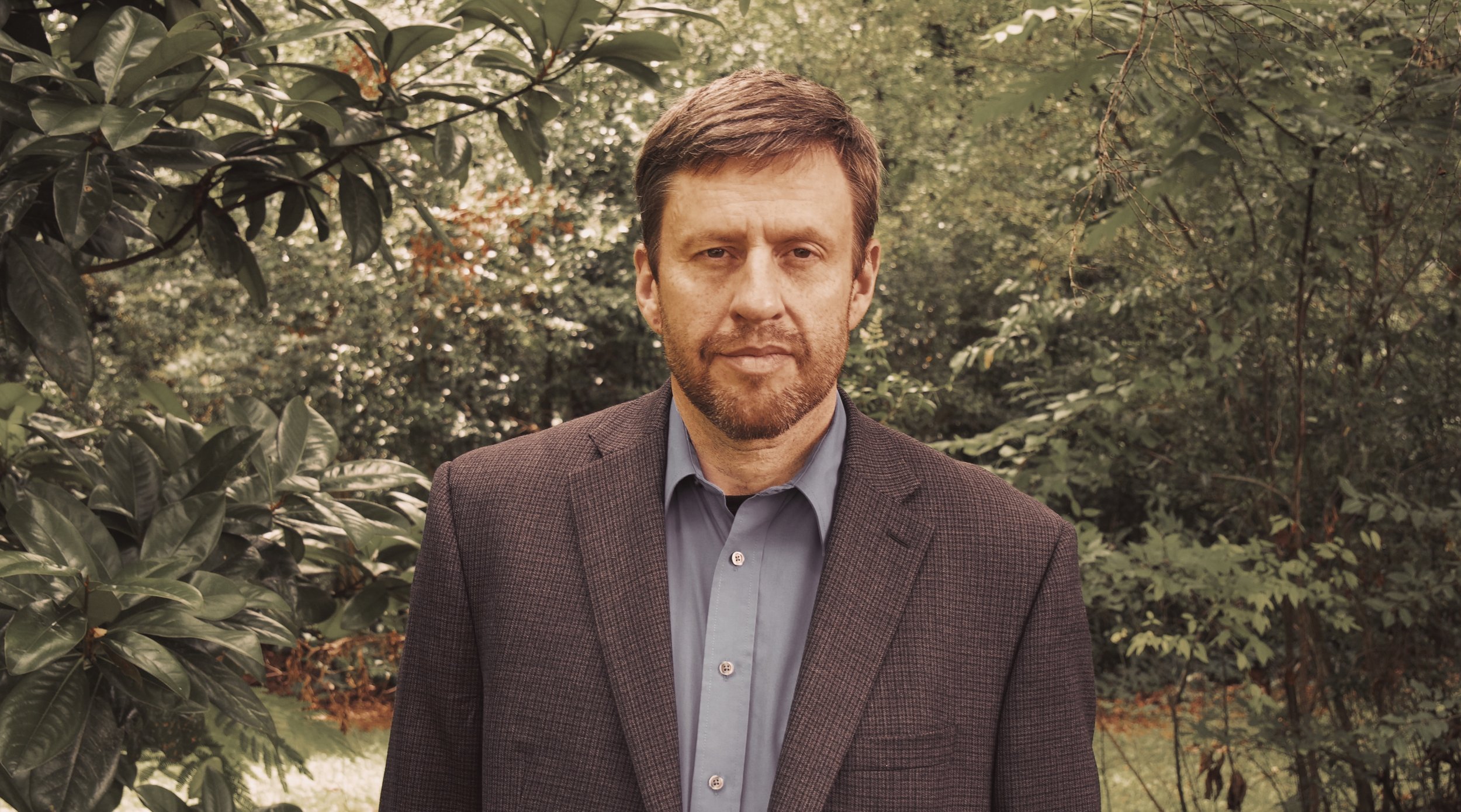
ARTICLES BY DEWAYNE
Christian Articles With A Purpose For Truth.
JESUS IN THE BOOK OF JOSHUA
Jesus shines through the book of Joshua not as a distant shadow but as a living promise, a holy presence guiding His people into the land of rest.
When Joshua stands near Jericho and lifts his eyes, he sees a Man with a drawn sword, the “Commander of the army of the Lord” (Joshua 5:13–15). Joshua falls at His feet, removing his sandals on holy ground—an encounter far too exalted for a mere angel. It is Christ before Bethlehem, the Captain of salvation, the One who goes before His people, not only commanding the battle but winning it.
In Joshua, we see Jesus as our greater Joshua, for even the names tell the story: Joshua—Yehoshua, “The Lord saves”—is the Old Testament sound of the name Jesus (Matthew 1:21).
Joshua led the people into the promised land; Jesus leads us into the greater inheritance, “an eternal salvation” (Hebrews 5:9).
Joshua broke down walls with trumpets and faith; Jesus breaks down the walls of sin and shame with the power of His cross.
Joshua gave Israel rest from their enemies; Jesus gives the rest that no enemy can steal, the rest of forgiveness, freedom, and life in His Spirit (Matthew 11:28–29).
We also see Christ in Rahab’s scarlet cord—a simple thread stretched from a window, yet deeper than any strategy or sword (Joshua 2:18–21). That scarlet line points to the blood of Jesus, the Lamb who shields all who trust in Him.
The day of judgment came to Jericho, but the house marked with the crimson sign stood untouched; so it is with every heart washed in the blood of Christ (1 Peter 1:18–19).
And Jesus appears again in the distribution of the land, for Joshua divides an earthly inheritance, but Christ grants “an inheritance incorruptible and undefiled” (1 Peter 1:4).
He is the One who fights for us, stands with us, saves us, shelters us, and leads us into everlasting rest.
In every conquest, every promise, every victory, and every mercy within the book of Joshua, the whisper grows clear: the Lord Himself goes before you—Jesus, our Captain, our Savior, our eternal Joshua.
BDD
THE LIGHT THAT WILL NOT GO OUT
There is a strange irony in reading The Portable Atheist, Christopher Hitchens’ curated anthology of disbelief. Page after page argues that the universe is empty of God, that faith is a human projection, that Scripture is an ancient reflection of tribal fear.
Yet the very intensity of the argument reveals that the human mind cannot escape the question of origins, morality, meaning, and purpose; the cosmos is too vast, too intricate, too symmetrical in its laws to silence the whisper of transcendence. Hitchens attempts to build a world without God, but like a spacecraft trying to outrun gravity, the very effort shows the inescapable pull of the One who made us (Psalm 19:1).
The universe itself behaves like a devotional text—an ordered system governed by constants so precise that even slight variations would collapse stars, atoms, and life itself. The rational mind instinctively traces patterns back to a Mind, order back to a Designer, moral motion back to a Lawgiver.
Remove God, and you must still explain why human conscience accuses and comforts (Romans 2:15), why beauty stirs longing, and why love refuses to fit inside the cold calculations of matter. Atheism can bring brilliant critique, but it cannot provide the warmth of meaning. It explains the machine but not the music.
And this is where the gospel shines with a brilliance no anthology of doubt can extinguish: God does not merely exist; He speaks, He seeks, He stoops.
In Christ, the Infinite entered the finite; the Author stepped into His own story; the Word became flesh and dwelt among us (John 1:14).
The God that Hitchens thought too distant, too harsh, too improbable is the God who washed feet, wept at graves, welcomed doubters, and stretched His hands across a wooden cross to pull a broken world back to Himself. No philosophical argument can match the personal beauty of Jesus Christ—the One who is simultaneously the explanation for the universe and the healer of the human heart (Colossians 1:16-17).
So let The Portable Atheist do what it does best—raise questions. Let it challenge the mind, stir the dust, push against complacency. But then let those questions lead you to the only One who answers with both truth and tenderness.
Faith does not fear the shadows because Christ is the Light (John 8:12); it does not fear the void because Christ fills all things (Ephesians 1:23); it does not fear doubt because Christ walks beside the doubter until the dawn breaks. In Him the cosmos finds coherence, the conscience finds cleansing, and the soul finds its center.
The atheist may carry a portable anthology of unbelief—but the believer carries something better: the living presence of Jesus Christ, the One who holds atoms together and hearts together, the One who stands when every argument collapses, the One who remains when every star burns out, the One who says, “I am with you always” (Matthew 28:20).
BDD
HE WILL BE WITH YOU IN THE WATERS
Isaiah’s words rise like a steadying hand to the trembling heart: “When you pass through the waters, I will be with you…when you walk through the fire, you shall not be burned” (Isaiah 43:2). God never promised a life free of deep waters or fierce flames, but He promised His presence in every one of them.
The trial is real, but so is the Deliverer; the pressure is heavy, but so is His glory; the fear is loud, but His faithfulness is louder. The very waters that threaten to overwhelm us become the place where His nearness becomes unmistakable.
And it is in those waters that the simplest cry becomes the strongest lifeline. When Peter began to sink, he did not offer a long prayer or a perfect one; he simply said, “Lord, save me!”—and “immediately Jesus stretched out His hand” (Matthew 14:30–31).
That one moment is a picture of the promise God has given to every believer: calling on the name of the Lord is not complicated; it is not ceremony; it is not ritual. It is the desperate heart reaching for the willing Savior—and finding that His hand is already reaching back.
This is why the Bible says, “Whoever calls on the name of the Lord shall be saved” (Romans 10:13). Not “whoever understands everything,” not “whoever gets their life together first,” not “whoever impresses God with spiritual strength”—but whoever calls.
The cry of faith may be weak, but the arm of the Lord is mighty; the heart may be trembling, but His compassion is unwavering; the storm may be violent, but His rescue is certain. The shortest prayer in the Bible remains one of the most powerful: “Lord, save me.”
And you can pray that anytime—right now, in fact.
Don’t wait for calm waters; don’t wait for steady footing; don’t wait for the perfect words. Decide to do it now. Call to Him from the middle of the waves, because He is the God who comes walking on the very storm that frightens you.
He is near, He is ready, and He is reaching for you even now.
BDD
CAN TWO WALK TOGETHER?
“Can two walk together, unless they are agreed?” (Amos 3:3).
This small sentence stands like a granite pillar in the prophecy of Amos. In the Hebrew text, the meaning is unmistakable: two travelers cannot share a path unless they have agreed on the journey. The verb carries the idea of intentional mutual commitment—a chosen harmony of direction, purpose, and destination.
Amos used it to confront Israel: God had entered covenant with them, but they were walking in a totally different direction. The prophet’s question was not philosophical; it was painful and practical—How can you claim to walk with the Lord when you have chosen another road?
But beyond its immediate context, the principle shines with a timeless spiritual light: walking together requires agreement—not the agreement of identical opinions, but the agreement of a united heart.
If we are going to walk in unity with Christ Himself, we must agree with Him about the direction of our lives. He does not bend His path toward ours; He calls us to His—“Follow Me” (John 21:19).
We do not negotiate terms with the King of Glory; we gladly surrender to His voice, His will, His way. To walk with Jesus is to say, with quiet, joyful resolve, “Lord, where You go, I will go” (Ruth 1:16). It is the agreement of love, not the agreement of doctrinal diagrams; the agreement of surrender, not the agreement of intellectual sameness.
And if we are going to walk in unity with one another, the same truth stands: we cannot walk together unless we have agreed to walk together.
Not agreed on interpretations.
Not agreed on every secondary teaching.
Not agreed on the latest debate, the latest emphasis, or the latest theological trend.
The early church did not stay together because they had perfect uniformity—they stayed together because “they continued steadfastly in the apostles’ doctrine and fellowship” (Acts 2:42). Doctrine gave them foundation; fellowship gave them warmth; but Christ Himself gave them unity.
We walk together because we have agreed—not on every point of doctrine—but on our love for Jesus.
We agree that He is Lord (Romans 10:9). We agree that He alone is our righteousness (2 Corinthians 5:21).
We agree that He is the Vine, and we are the branches, and apart from Him we can do nothing (John 15:5).
We agree that He is the Shepherd, and we are the sheep of His pasture (John 10:11).
This is the agreement that binds hearts in a way no theological chart ever could—the agreement that Jesus is everything.
When Christ is the center, disagreement cannot divide us; it only humbles us. When Christ is the aim, we walk in step even when we don’t walk in sync on every issue.
When Christ is the treasure, fellowship becomes a melody, not a battlefield.
And when Christ is the life, the church becomes what she was meant to be—a people gathered, held, and guided by the One who said, “I am the way” (John 14:6).
Two cannot walk together unless they have agreed.
Let our agreement be this: we belong to Jesus, we love Jesus, and we are following Jesus.
And on that holy ground, unity will flourish.
BDD
SIMPLY JESUS — THE CENTER THAT NEVER SHIFTS
Trends rise like waves and vanish like mist; doctrines flare, cool, and are replaced by the next idea that promises to give weary Christians a shortcut to holiness or a formula for spiritual stability. But through every generation one truth has remained immovable, unshaken, radiant with the same undiminished glory: Jesus Himself is the life of His people.
The call of the gospel is not to chase Christian trends but to cling to a Person—“looking unto Jesus, the author and finisher of our faith” (Hebrews 12:2). Every other focus eventually fractures the heart, but Christ gathers its scattered pieces and makes them whole.
The church has always been tempted to fix its attention on something about Christ rather than on Christ. We drift toward favorite teachings, impressive personalities, or movements that promise deeper insight.
But when Paul wrote from prison, he did not say, “For to me, to live is ministry,” nor “to live is theology.” He wrote, “For to me, to live is Christ” (Philippians 1:21). Not truth detached from Him; not systems that describe Him; but Christ Himself—the living Christ, the indwelling Christ, the Christ who holds the universe together and still stoops low enough to hold the trembling heart (Colossians 1:17).
Every trend eventually asks for loyalty. Christ alone is worthy of it. Every doctrine eventually becomes a lens. Christ alone is the Light.
When the apostles preached, they did not announce a program—they proclaimed a Person.
Philip “preached Jesus to him” (Acts 8:35). Paul declared, “Him we preach” (Colossians 1:28). And to the Corinthians, caught up in competing voices, he wrote that he had determined “not to know anything among you except Jesus Christ and Him crucified” (1 Corinthians 2:2). Their world was full of spiritual ideas; Paul answered with a crucified Savior.
The latest trend might stir the imagination, but only Jesus steadies the soul. The latest doctrinal excitement might entertain the mind, but only Jesus renews it. The latest movement might fill a conference hall, but only Jesus fills the heart “with all the fullness of God” (Ephesians 3:19).
It is possible to memorize every theological term and yet drift far from the One who said, “Abide in Me” (John 15:4). It is possible to defend a system and yet neglect the Shepherd. It is possible to be fascinated by Christian culture and yet forget the Christ who is “our life” (Colossians 3:4).
So let your mind breathe the name of Jesus. Let the heart return—again and again and again—to the One who never changes. Trends will fade; Christ remains. Ideas will clash; Christ unites. Movements will splinter; Christ restores.
And when all is said and done, when history folds and the ages bow, the Christian will discover what he was made for all along—“that I may know Him” (Philippians 3:10). Christ in you, the hope of glory (Colossians 1:27). Christ before you, the path of life (John 14:6). Christ above you, the risen Lord who reigns forever (Revelation 1:18).
Not the trend. Not the noise. Not the doctrine detached from its Source.
Only Jesus—always Jesus—ever Jesus.
BDD
Christmas 2025: GOD WITH US
Christmas stands like a quiet, holy reminder that God has never been content to love us from a distance. When Matthew tells us that the Child’s name shall be Immanuel—“God with us”—he is not merely giving us a title to recite during December; he is unfolding the great width of God’s desire, the boundless reach of His compassion, the immeasurable span of His heart stretched wide across the ages (Matthew 1:23).
Christmas is the end of isolation; it is the death of distance. It is the moment heaven said, I will not watch from afar; I will walk beside you.
And oh, the width of that word—us. Not the deserving. Not the wise. Not the righteous. Us. The tired, the frightened, the grieving, the guilty, the forgotten, the overlooked, the spiritually empty—He has come for us.
The cradle in Bethlehem is the great announcement that God has tethered Himself to our story; that He has stepped into our world not as a visitor but as a Savior; that He has folded Himself into our weakness with the gentle strength of redeeming love.
The width of His nearness stretches into every room we think is too dark, every chapter we think is too ruined, every future we fear might collapse. His presence leaves nothing untouched.
It is easy at Christmas to think of what has gone from us—joy, time, people we loved, hopes that once burned brightly. But the gospel tells a different story: what we feared was gone is now gone with us, swallowed up by the presence of the One who has entered our world.
Our failures are not gone alone—they are gone with us into the arms of grace.
Our losses are not gone alone—they are gone with us into the comfort of the Shepherd who walks through every valley beside His sheep (Psalm 23:4).
Our sins are not gone alone—they are gone with us into a cross where mercy triumphs and new life begins.
So how do we make it at Christmas, when the world shines but the heart groans? We make it because God is with us, and that phrase holds more weight than galaxies.
We make it because His nearness is not seasonal and His love is not fragile.
We make it because the Child in the manger became the Man of Sorrows, and the Man of Sorrows became the risen Lord who said, “I am with you always” (Matthew 28:20).
The God who came in swaddling cloths now walks in resurrection glory—and still, He is with us.
This is the width of Christmas: not that God watched, but that God came; not that God advised, but that God accompanied; not that God loved from heaven, but that God moved into our humanity and carried our burdens in His own flesh. His presence is our courage. His nearness is our peace. And His “with us” is the promise that whatever we must face—we never face it alone.
So rejoice—not because life is easy, but because God is with us; not because the path is smooth, but because the Shepherd walks it with His sheep; not because sorrow disappears, but because love accompanies us through it.
This is Christmas—holy, wondrous, and wide. The God who came then is the God who stays now, stretching His arms across the breadth of our world, whispering again and again, “My child, I am with you.”
BDD
CHRIST ALONE — THE HOLY FOCUS OF THE CHRISTIAN LIFE
The Christian life loses its fire the moment it loses its focus—its gaze—its holy obsession with Jesus Himself. Doctrine matters, truth matters, theology matters, but none of it replaces the Person who stands at the center of our faith.
The Scriptures refuse to let us treat Jesus as an accessory to Christianity; they insist He is our very life (Colossians 3:4). Paul said without hesitation, “For to me, to live is Christ” (Philippians 1:21). Not doctrine. Not ideas. Not comforting concepts. Christ. The living, breathing, redeeming Savior in whom all fullness dwells (Colossians 1:19).
Christianity is not first about what we believe—it is about Whom we behold.
Paul’s heartbeat sounds again in another passage: “I also count all things loss…that I may know Him” (Philippians 3:8-10). Not merely know about Him—know Him. This is the blazing center of Christian experience, the pursuit that makes all others pale.
He is the One who loved us and gave Himself for us (Galatians 2:20), the One who intercedes for us (Hebrews 7:25), the One in whom all treasures of wisdom and knowledge are hidden (Colossians 2:3). And Paul, that giant of doctrine, confesses that the highest mountain he ever climbed was simply the desire to “know Christ.”
The gospel we preach is not a philosophy; it is a Person. Paul said, “Him we preach” (Colossians 1:28). Not systems, not speculations, not the novelty of new insights—Him.
When Philip went down to Samaria, the Scripture does not say he preached morality, or culture, or unity; “he preached Christ to them” (Acts 8:5). The early church did not spread because they were clever; they spread because they could not stop speaking the name that had saved them, healed them, forgiven them, and filled them. Jesus was not their topic—He was their life (John 14:6).
And what of that glorious phrase: “Christ in you, the hope of glory” (Colossians 1:27)? This is not an idea to admire; this is a reality to live in.
The indwelling Christ—forming us, shaping us, guiding us, holding us—is the pulse of the believer’s existence. Our hope is not in our wisdom, but in His presence; not in our understanding, but in His nearness.
Every command of Scripture becomes joy when we see the One who walks beside us and lives within us (Galatians 2:20). He is the Vine; we are the branches (John 15:5). Without Him, we can do nothing—and with Him, we have everything.
This is why Paul resolved “to know nothing… except Jesus Christ and Him crucified” (1 Corinthians 2:2). That was not a rejection of doctrine; it was a confession that all doctrine finds its meaning in Christ.
When our hearts drift, it is always because our focus shifts—from Christ to concepts, from Jesus to ideas, from the Person to the presentation. But the Scriptures pull us back with relentless clarity: “Looking unto Jesus, the author and finisher of our faith” (Hebrews 12:2).
Faith begins with Him and ends with Him. He is Alpha and Omega (Revelation 22:13). He is the center and the circumference. Everything else is light only because He is the sun.
So let the believer fix their thoughts on Christ (Hebrews 3:1), meditate on Christ, delight in Christ, follow Christ, worship Christ, treasure Christ. Let your theology be warm because He is near; let your doctrine be alive because He is its heart; let your mind be filled not simply with truth, but with the One who is “the truth” (John 14:6).
Christ is not merely part of the Christian life—Christ is the Christian life (Colossians 3:4). And when He is our focus, our joy, our hope, our passion, our meditation—then faith becomes fire, worship becomes wonder, and life becomes a holy walk with the Person who loved us first (1 John 4:19).
BDD
Christmas 2025: CHRIST THE SEED OF WOMAN
Long before shepherds heard angels sing, long before wise men traced a star across the night, long before Bethlehem breathed its holy welcome, there was a promise whispered in Eden’s shadows. Humanity had fallen, the world had fractured, the serpent had struck—and into that devastation God spoke the first gospel: “The seed of the woman shall bruise the serpent’s head” (Genesis 3:15).
Christmas did not begin with a manger; it began with a promise. It began with God declaring that evil would not write the last chapter, that sin would not reign forever, that darkness would not have the final word. The seed would come—fragile, humble, unexpected—and through that seed the world would be healed.
And how wondrous that God said the seed of the woman. Not the strength of man, not the genius of humanity, not the might of kingdoms, but the quiet, miraculous work of God in a woman’s womb. In that single phrase, the Lord revealed that salvation would come in weakness, not power; in humility, not pride; in flesh, not force.
The seed of the woman would arrive with vulnerability in His veins, yet victory in His mission. He would look ordinary, yet carry eternity. He would lie in a manger, yet bear a crown no earthly throne could contain.
Christmas is the unfolding of that ancient promise—not hurried, not forced, but fulfilled with the gentle precision of grace. When Mary heard Gabriel’s words, the seed long promised took form; when Joseph trusted the angel’s message, the seed’s arrival drew near; when the Child was born, the serpent felt the first tremor of his defeat.
The One wrapped in swaddling cloths was heaven’s answer to Eden’s curse; the tiny hands that rested on Mary’s chest were the same hands destined to crush the serpent’s head through a cross and an empty tomb.
So when you look upon the Christmas story, see more than a Baby—see the Keeper of promises, the Warrior in weakness, the Seed who grows into the Savior. See the faithfulness of a God who refuses to forget His word, refuses to abandon His people, refuses to let creation die without redemption.
Christmas is the proof that God finishes what He starts; that He brings life out of barrenness; that He brings hope out of despair; that He brings victory out of vulnerability.
The Seed of the Woman has come. The serpent’s head has been crushed. And the promise spoken in Eden now sings in every redeemed heart: “Unto us a Child is born, unto us a Son is given” (Isaiah 9:6).
The ancient promise has become a living Person, and in Him—through Him—because of Him—Christmas becomes the language of hope forever.
BDD
JESUS IN DEUTERONOMY
Deuteronomy stands like a preacher on the edge of the promised land—earnest, persuasive, full of warning and full of hope. It is Moses’ final call for Israel to remember the God who carried them, to love the God who chose them, and to obey the God who redeemed them.
But woven through its ancient words is the unmistakable silhouette of Jesus; for Deuteronomy is not only a book of law—it is a book of longing, pointing us toward the One who would fulfill the law, embody its heart, and lead His people into a deeper obedience shaped by grace.
We see Jesus in the Prophet greater than Moses, promised with tenderness and authority: “The Lord your God will raise up for you a Prophet like me…Him you shall hear” (Deuteronomy 18:15).
Moses could speak for God, but Jesus speaks as God; Moses could teach the covenant, but Jesus Himself is the covenant—faithful, steadfast, unbreakable. In Him, God’s voice is no longer distant thunder but a Shepherd calling His sheep by name.
We see Jesus in the God who draws near, the One Moses describes as “your life and the length of your days” (Deuteronomy 30:20).
The law taught Israel how to walk; Jesus gives the power to walk.
The law warned them not to turn aside; Jesus holds us when we would fall.
Deuteronomy urges the heart to choose life, and Jesus later declares, “I am the life,” revealing that the very choice Moses called for is fulfilled in the One who gives Himself to us without measure.
We see Jesus in the call to love the Lord with all the heart, soul, and strength (Deuteronomy 6:5). This is not cold duty; it is warm devotion.
And Jesus embodies that kind of love perfectly—loving the Father with all His heart, all His soul, all His strength—so that we, in Him, may learn to love with a sincerity we could never produce on our own.
The great commandment becomes not a burden but a blessing when we see it through the face of the One who loves us first.
We see Jesus in the God who carries His people as a father carries a child (Deuteronomy 1:31). Wildernesses break our illusions of strength, and Deuteronomy reminds us that every step has been upheld by divine mercy.
And when Jesus comes, He shows us that same mercy in flesh and blood—lifting the weary, forgiving the guilty, binding the broken, and carrying us when our knees give way. Moses wrote of a God who bears us; Jesus is the God who bears our sins, sorrows, and burdens all the way to victory.
Deuteronomy ends with a glimpse from the mountain—a land Moses cannot enter but can see. And there, too, is a whisper of Christ: the One who brings His people where Moses could not, the One who completes what the law began, the One who leads us not to a strip of earthly soil but to the fullness of life in God.
The book that begins with reminders ends with hope, because the God of Deuteronomy is the God who finishes what He starts.
BDD
CHRIST OUR SABBATH IN PERSON
The Sabbath was never meant to be the destination; it was the signpost pointing toward Someone greater. It was a weekly reminder that human strength has limits, but divine mercy does not; that bodies need rest and souls need restoration; that we were never meant to carry the weight of our own existence.
And into that longing steps Jesus—the One who takes the shadow of Sabbath and fills it with living light. When He said, “The Son of Man is Lord even of the Sabbath” (Matthew 12:8), He was unveiling the truth that rest is not merely something God gives; rest is Someone God sent.
In Jesus, the restless finally find home. The hurried breath slows. The anxious heart unclenches. The wounds we hide behind busyness are touched with the gentleness of the One who calls us to Himself—not to a ritual, not to a rule, but to a relationship full of mercy, full of patience, full of grace. He takes the weight of our guilt and replaces it with the weightlessness of forgiveness; He takes the exhaustion of our striving and wraps us in the peace that flows from His finished work.
The Sabbath was a weekly gift, but Christ is an eternal one—the rest that cannot be shaken, the stillness that never ends.
So today, let your soul settle beneath the banner of His love. Let your mind breathe in the truth that you are held. Let your heart rest—not merely because it is Saturday, but because the Savior who fulfilled the Sabbath still whispers, “Come to Me…and I will give you rest” (Matthew 11:28).
Every burden finds its place at His feet; every fear bows before His presence; every weary corner of life is met by His mercy. In Jesus, rest is not a pause in the journey—it is the One who walks beside you.
Lord Jesus, my Sabbath and my peace, draw my tired heart into Your gentleness today. Let the noise inside me quiet in the presence of Your mercy. Teach me to lay down every burden—my fears, my failures, my hurried thoughts—and place them in Your nail-scarred hands. Thank You that rest is no longer a day I must reach for, but a Person who has reached for me. Help me walk in Your stillness, trust in Your strength, and breathe in the grace You freely give. Keep me near You, Lord—near the rest that satisfies and the love that never leaves. Amen.
BDD
JESUS IN NUMBERS
Numbers is a wilderness book—wind-worn, dust-covered, honest about the frailty of the human heart. It is a story of wandering people, murmuring crowds, fearful spies, and a God who refuses to abandon the ones He loves.
And if we listen closely, its chapters breathe the name of Jesus—quietly at times, boldly at others—echoing through tents, deserts, complaints, and promises. Numbers whispers that the Christ of Bethlehem is the Lord of the wilderness, the Redeemer who meets us where our strength runs out and our sand-covered prayers rise weakly toward heaven.
We see Jesus in the pillar of cloud by day and fire by night—the presence that refused to leave Israel alone for even a single step (Numbers 9:15-23). That pillar is a shadow of the Christ who not only guides us but indwells us; not only leads us but carries us.
He is the Light that does not flicker, the Presence that does not withdraw, the Shepherd who does not abandon His flock when the terrain turns cruel. In every step of Israel’s journey, He was saying, *“I am with you”—*the same promise whispered at Christmas and thundered at the empty tomb.
We see Jesus in the manna, heaven’s bread falling upon earth’s barrenness (Numbers 11:7-9). Israel tasted mercy every morning before they tasted anything else. How could that not point to the Christ who said, “I am the bread of life” (John 6:35)?
The wilderness teaches us what prosperity sometimes hides—that our souls are fed not by success or strength or certainty, but by the daily faithfulness of the God who provides Himself. The manna was temporary, but Christ is eternal; the manna sustained a day, but Christ sustains forever.
We see Jesus in the bronze serpent lifted high—a symbol as strange as it is glorious (Numbers 21:4-9). Poison pulsed through Israel’s veins; death crept into their tents; judgment hovered over them.
But the remedy was not in their effort—it was in looking. Simply looking.
And Jesus Himself said that this moment foreshadowed His cross, where the curse would be lifted onto the shoulders of the sinless One, and all who look to Him in faith would live (John 3:14-15). The serpent on the pole was grace in silhouette; Calvary was grace in full glory.
We see Jesus in the rock that gave water—struck once, supplying life to a thirsty nation (Numbers 20:11). Paul tells us plainly, “that Rock was Christ” (1 Corinthians 10:4).
And how like Christ it is—silent, struck, poured out for a people who grumbled even while they drank. The water flowed freely, undeservedly, abundantly; and so does the salvation that streams from the wounds of the Savior who was struck once for all.
And through it all—through rebels and wanderers, victories and failures—we see Jesus in the One who never gave up on His people.
Numbers tells us more about Israel’s sin than their strength, but it tells us even more about God’s perseverance. The wilderness was not just their testing—it was His testimony.
He remained faithful when they were faithless. He remained near when they drifted far. He remained God-with-them when they scarcely remembered His name.
This is the Christ we worship—the God who walks into deserts, who feeds the hungry, who heals the dying, who carries the broken, who leads the wandering, who loves the unlovely.
He is in Numbers, as surely as He is in Matthew; He is in the wilderness, as surely as He is in the manger.
And if He walked faithfully beside Israel through their long, hard journey, then He will walk faithfully beside you through yours—until the journey ends, and the wilderness becomes home.
BDD
WHEN OUR SILENCE WEAKENS OUR WITNESS
Christians must sometimes confess, with trembling honesty, that they forfeited their moral authority long before the present battle ever arrived. And one of those moments is this: we wonder why our voice carries so little weight in the debate over same-sex marriage, yet we forget that many stopped listening to us years ago—not because we preached truth, but because we preached “truth” bent and bruised by cultural prejudice rather than shaped entirely by the Word of God.
For generations, far too many believers opposed interracial marriage with a zeal the Bible never blessed. They quoted Scripture without context; they defended boundaries God never drew; they protected traditions God never sanctified. And in doing so, they added a burden to the gospel and placed a dividing wall where Jesus had torn one down (Ephesians 2:14).
The Scriptures are clear: God’s requirement for marriage has never been skin color—it has always been covenant, always been fidelity, always been one man and one woman bound together under the blessing of their Creator (Genesis 2:24). But when we elevated our preferences to the level of divine decree, we spoke where God was silent, and we were silent where God had spoken.
Is it any wonder, then, that when we now defend the biblical design for marriage, some shrug us off as inconsistent? Why should they trust our convictions today,they ask, when we were wrong—and loudly wrong—yesterday?
People remember when the church defended the indefensible. They remember when we acted as though ethnicity mattered more than righteousness, more than faithfulness, more than love. And so when we speak now about the beauty of God’s design—about the sacred covenant of one man and one woman—they hear echoes of an older argument, one we should have repented of far earlier and far more publicly.
But regret is not the end of the story. Grace never leaves us where it finds us. The same Christ who corrected Peter’s prejudice at the house of Cornelius (Acts 10:34–35) is the Christ who corrects ours today. And the same gospel that calls us to repent of yesterday’s distortions is the gospel that empowers us to speak clearly, humbly, and faithfully today.
Our failure in one generation does not excuse surrender in the next; it simply means we must speak with tears in our eyes and truth in our mouths.
So let the church confess the past without fear, and proclaim the present without apology. Let us say, with sincerity and Scripture in our hands, that marriage belongs to God—not to culture, not to politics, not to shifting winds of opinion. He made it, He defined it, and He blessed it: one man, one woman, joined as one flesh (Matthew 19:4–6).
But let us also say, with equal clarity, that He never restricted that union by race, and we were wrong when we did.
And perhaps—just perhaps—when a watching world sees a church that can repent of old sins while standing firm on eternal truth, they will hear us again. Not because our voice is loud, but because our hearts are clean; not because we are flawless, but because we are faithful; not because we seek to win arguments, but because we seek to honor Christ.
BD
Devotional in Song BLACK OR WHITE
In Christ, color fades and glory shines.
Sometimes a simple lyric reaches deeper than a thousand debates, and Michael Jackson’s “Black or White” does exactly that. “If you’re thinking of being my baby, it don’t matter if you’re black or white.” In a world that still trembles under the weight of prejudice and suspicion, such a declaration feels almost prophetic.
And yet, long before pop stars sang about unity, the Spirit of God thundered it from the pages of Scripture—declaring that the ground around the cross is not just level, but sacred; and in that holy place, color melts into glory, and ethnicity bows before a crucified King.
Jesus did not come to build a monochrome church; He came to build a blood-bought family, gathered “out of every tribe and tongue and people and nation” (Revelation 5:9). His heart was never confined to one people group, one shade of skin, or one cultural pattern.
The Christ who touched Samaritans, healed Gentiles, praised a Roman centurion, and welcomed Ethiopians is the Christ who stands today—arms wide, scars visible—saying, “Come to Me…all.” And in that word all, every earthly distinction dissolves in the light of His love.
Paul echoes this melody when he says, “There is neither Jew nor Greek…for you are all one in Christ Jesus” (Galatians 3:28). He is not denying ethnicity—He is redeeming it; He is not erasing culture—He is sanctifying it. In Christ, identity is not diminished; it is transformed.
The skin we wear becomes a canvas upon which grace is painted, a reminder that God delights in variety. Just as the heavens are not beautiful because every star is the same, the church is not beautiful because every face matches; the church is beautiful because redemption has woven a tapestry that only the cross could create.
Michael Jackson’s refrain—“It don’t matter if you’re black or white”—rings true because it speaks to something eternal. Racism is not merely a social problem; it is a spiritual rebellion against the image of God. It is sin dressed in pride.
But when the gospel takes hold of the soul, love becomes the new instinct. Walls fall. Suspicion fades. And the church begins to look a little more like heaven, where every voice blends into a single song: “Salvation belongs to our God” (Revelation 7:10).
So let your heart say what Scripture has already declared: in Christ, color is never a barrier—only a blessing; never a wall—only a window through which we see the creativity of the God who made us. And may the church once again be the place where the world looks in and hears, with fresh wonder, the song of a kingdom where grace reigns—and where every brother and sister, black or white, stands equal beneath the shadow of the same redeeming cross.
BDD
Devotional in Song IRMA JACKSON
I’ve loved Merle Haggard since I first listened to his records in my uncle’s basement at the age of two (slight exaggeration). A lot of people say they “love Haggard and Jones” to get country cred, but I really do. Always have.
To me, one of Merle’s greatest songs is Irma Jackson, one that arrests the soul; a whispered protest against the walls men build, the divisions they defend, the hatred they inherit. It is the story of two hearts drawn together, and a world determined to keep them apart.
And somewhere beneath the melody, you can almost hear another Voice—gentle, steady, holy—calling us back to what we were meant to be. For Christ did not come to keep us separated by skin or heritage; He came to gather us into one new humanity, where the hostility we inherited is slain by the blood of the cross (Ephesians 2:14–16).
Racism is not merely a social problem; it is a spiritual wound—deep, ancient, and deadly. It is the sound of Cain rising up against Abel, the old lie that some lives matter more than others, the poison that blinds us to the image of God stamped on every face.
But the gospel breaks its power. Jesus Christ—our peace, our reconciliation, our Brother—refuses to let the dividing lines of the world stand unchallenged. In His kingdom the Samaritan becomes a neighbor (Luke 10:33–37), the Ethiopian is welcomed with joy (Acts 8:26–39), and the church at Antioch becomes a mosaic of races, cultures, and languages—worshiping as one, serving as one (Acts 13:1–3).
Where Christ is present, unity is not optional; it is inevitable.
And so Irma Jackson becomes more than a song—it becomes a parable. It reminds us that prejudice is loud, but love is stronger; that fear builds fences, but grace builds families; that the church must never echo the world’s hatred, but must stand as a living witness to Calvary’s reconciling power.
When Jesus walked the earth, He never once asked about a man’s background—only his faith. Never once did He measure a woman by her heritage—only her heart. And He calls us to do the same, for “God shows no partiality” (Acts 10:34). The ground at the foot of the cross is wonderfully, gloriously level.
Friends, let us allow the Spirit to search us; to wash away the hidden prejudice, the quiet suspicion, the subtle pride that lingers in the corners of the soul. Let us speak peace where others speak division, let us sow gentleness where others sow suspicion, let us stand with the heart of Christ—who gathers the children of God from every tribe, every tongue, every corner of the earth (Revelation 7:9).
And as we do, may our lives sing a better song than the world has ever heard—a song where love is stronger than fear, where mercy is wider than tradition, where the family of God is bound not by color but by the crimson grace of the Lamb.
Jesus calls us brothers and sisters (Hebrews 2:11), and if He calls us brethren, we dare not call each other anything less.
BDD
JESUS IN LEVITICUS
When we open the book of Leviticus, we often expect a wilderness of rules; yet if we listen closely, we begin to hear a single Name whispering through every sacrifice, every priestly garment, every drop of atoning blood. The Holy Spirit did not give us this book to burden us with ritual, but to unveil—through shadows and symbols—the coming Christ who would walk among us, full of grace and truth (John 1:14).
Leviticus is not a dusty manual of ancient worship; it is a portrait gallery in which every frame catches a different angle of the same radiant face.
Every sacrifice points to Him. The burnt offering rises like a picture of total surrender—Jesus giving Himself without reservation upon the cross, a sweet aroma to the Father (Ephesians 5:2).
The peace offering whispers of reconciliation—our once-broken fellowship restored, our wandering hearts drawn home by the blood of a spotless Lamb (Colossians 1:20).
The sin offering and the trespass offering show us the horror of our guilt, yet they show us even more the gentleness of the One who “bore our sins in His own body on the tree” (First Peter 2:24).
Page after page, the smoke of the altar curls upward and spells His name.
And there in the tabernacle—the tent of meeting—we see Jesus again. The veil, heavy and solemn, reminds us that sin creates distance; but it also reminds us that One would come to tear it from top to bottom, opening the way into the holiest presence of God (Hebrews 10:19–20).
The lampstand glows with a quiet, steady light, pointing to the Christ who stands among His people as the Light of the World (John 8:12).
The table of showbread speaks of the One who feeds our souls, the bread that came down from heaven, nourishing faith in every wilderness (John 6:35).
Even the high priest—clothed in glory and beauty—foreshadows the greater Priest who carries our names upon His heart forevermore (Hebrews 7:25).
Holiness shines through every chapter—yet not as a threat, but as an invitation. “Be holy, for I am holy,” the Lord says (1 Peter 1:16), and we hear in those words not condemnation but calling; for the One who commands holiness also provides it. Jesus cleanses what we cannot cleanse, fills what we cannot fill, and completes what our trembling hands could never finish.
The rituals of Leviticus remind us that we cannot approach God on our own terms—but Jesus reminds us that God has approached us on His terms: mercy, righteousness, sacrifice, love.
And so Leviticus becomes a gospel in symbols, a promise in patterns, a prophecy in smoke and blood. When we read it with Christ before our eyes, we are not trudging through an ancient lawbook—we are walking through a sanctuary where every detail sings of the Savior.
He is the Lamb, the Priest, the Offering, the Tabernacle; He is the fire on the altar and the glory above the mercy seat.
He is the God who dwells with His people and the God who makes His people fit to dwell with Him.
And because He has come—because the shadows have found their Substance—our hearts bow low, our voices rise high, and our souls whisper with wonder:
Jesus is on every page.
BDD
WILL WE KNOW ONE ANOTHER IN HEAVEN?
One of the tender questions that rises in the hearts of God’s people is this: Will we know our loved ones in heaven? The gospel of Christ reminds us that Jesus came to bring us home, not only to Himself but to a redeemed family gathered in glory.
The Bible does not leave us to guess or hope vaguely; it speaks with a quiet, steady assurance that our identities will endure and our relationships will be richer, purer, and more joy-filled than ever before. Heaven is not a place of holy amnesia—it is a place of fulfilled love.
Jesus Himself gave us one of the clearest glimpses when He said that many will sit down with Abraham, Isaac, and Jacob in the kingdom of heaven (Matthew 8:11). These patriarchs are not faceless spirits lost in the mists of eternity—they are known, named, and recognized.
In the same way, we shall be known. Identity does not vanish in glory; it is perfected. On the Mount of Transfiguration, the disciples recognized Moses and Elijah instantly, though neither had walked the earth for centuries (Matthew 17:1–3). How did they know them? Scripture does not say—but it does show that heavenly knowledge is clear, immediate, and real.
In heaven, the fog lifts. We will not only recognize the saints of old—we will know fully, with minds uncluttered, hearts unhindered, and love unbroken by sin or sorrow. And when David’s child died, the grieving father rested his hope in this promise: “I shall go to him” (2 Samuel 12:23). David believed he would meet his child again—not in a vague spiritual sense, but with real recognition. The gospel places this comfort directly into the hands of God’s people who grieve.
The relationships we cherish in Christ are not erased by death; they are redeemed. The God who made us relational, who made families, friendships, and holy affections, will not discard these gifts in the world to come. Instead, He purifies and completes them.
In heaven, we will know one another—not through the clouded lens of earthly frailty, but with the clarity of perfected love. The mother reunited with her child, the husband with his believing wife, the friend with the friend who walked with Christ—all will gather around the Lamb with joy that cannot be stolen.
So when your heart aches with the longing to see someone you miss, let Scripture speak its quiet comfort: we shall know one another there. Our stories do not end at the grave; they continue in the presence of the One who conquered it.
The gospel tells us that Jesus came to bring us to Himself, but He also came to gather a family—recognizable, restored, rejoicing together forever. In His kingdom, memory is not lost; it is redeemed. And in that redeemed world, love only grows.
BDD
THE WOMAN WHO BORE THE WORD
Christmas begins not only with angels singing in the heavens but with a woman—quiet, faithful, courageous—carrying the hope of the world beneath her heart. We speak often about the deity of Jesus, and rightly so; He is God of God, Light of Light, the eternal Word who was in the beginning with God.
Yet Christmas draws our eyes to another truth just as astonishing: the Savior of the world came through a woman. The eternal Son did not bypass humanity; He entered through the very gate every one of us entered—born of a woman (Galatians 4:4). In this He dignifies humanity, yes—but He also dignifies womanhood itself.
From the first promise in Eden, God declared that the Messiah would come through “the seed of the woman” (Genesis 3:15). Long before shepherds saw a star or wise men brought gold, God placed honor upon the daughters of Eve, choosing a woman’s body as the sacred doorway for redemption.
And when the fullness of time had come, that woman was Mary—a teenager, unknown, unseen, yet chosen. She trembled before Gabriel’s words, yet she surrendered with faith that still echoes across the centuries: “Behold the maidservant of the Lord” (Luke 1:38). And she was right when she said, “All generations will call me blessed,” not because she was divine, but because God bestowed on her the privilege of bearing His Son.
In the incarnation, Jesus did not enter the world as a warrior descending from the clouds; He entered through the labor, risk, pain, and strength of a woman. He drew His first breath because a woman pushed Him into the world. He was fed, held, wrapped, comforted, and protected by female hands.
The Son of God entrusted Himself to a mother before He entrusted Himself to a crowd. He began His earthly life in the warmth of a woman’s arms, and with His dying breath He honored a woman again—“Behold your mother” (John 19:27). In all this, Christ does not diminish womanhood but lifts it with tenderness and truth.
So when a man belittles a woman, he forgets the very biology of his existence. When someone speaks as if women are lesser, they speak against the design of God Himself. Every man who walks the earth first lived beneath the heart of a woman. Every prophet, every apostle, every king—and yes, even the King of Kings—entered through the same sacred passage.
Christmas reminds us that womanhood is not incidental; it is instrumental. It is woven intentionally into God’s saving story. If it were not for the faith and courage of women—Mary among them—the Savior would not have come into the world.
This Christmas, let us honor not only the Christ-child but the women through whom God moves with quiet strength. We see the miracle of womanhood in the birth of Christ, but childbirth is not the only path to glory for a woman. She brings majesty and balance and honor into the equation by simply existing.
Women have things to offer the kingdom of God simply because they are women. A man cannot become a woman, and it diminishes the beauty and dignity of womanhood to suggest he can. The reverse is also true. Men and women have things to offer, unique perspectives that matter. It is by women that we come into the world, but a woman who never bears a child is just as useful and glorious because she is a woman, created in the image of God just like the man is. (Genesis 1:26-27).
Let us remember that God chose a woman to bear His Son, chose women to be the first witnesses of the resurrection, and continues to use women mightily in His Kingdom. Celebrate the beauty of their faith, the depth of their sacrifice, the dignity of their calling.
And if discouragement comes—if a man looks down on you—lift your heart and remember: a woman carried him into the world. Christmas is God’s own testimony that womanhood is honored, cherished, and woven into the very heart of redemption.
For in the birth of Jesus, God exalted both humanity and womanhood—and through the obedience of a young girl, salvation entered the world wrapped in flesh and glory.
BDD
Christmas 2025: HEAVEN IN A WOMB
Christmas begins with a trembling heartbeat—not in the heavens, but in the hidden, holy shadows of a young woman’s womb. We often speak of the incarnation in grand, sweeping language: “God became flesh.” But sometimes we forget what that truly means. It means the Maker of galaxies chose to begin His earthly life in the same place every one of us began: the quiet sanctuary of a mother’s body.
Jesus did not merely appear—He entered the world through the same fragile doorway every child must pass. The eternal Son stepped into humanity through the biology He Himself designed.
Consider the astonishing miracle of the womb—a sacred chamber only God could have imagined. Within that hidden place, cells multiply with breathtaking speed; strands of DNA—those tiny scrolls of divine handwriting—unfold the blueprint of a new life. The placenta forms like a living bridge, nourishing and protecting; the amniotic fluid cushions each movement; the tiny heart, no larger than a grain of rice at first, begins to pulse with a rhythm God set long before its first beat.
The womb is not merely an organ—it is a sanctuary of creation, a quiet cathedral where life is knit together in secret (Psalm 139:13).
And into that holy place, Jesus came.
Imagine Mary—still a teenager, nerves humming beneath her skin—feeling the first flutter of movement from the Savior of the world. She was not a queen in a palace, nor a scholar in a temple. She was a village girl with calloused hands, wide eyes, and questions she could not fully voice.
Yet in her body, the eternal Word was being woven into flesh, receiving nutrients, oxygen, and protection from the very one He created. The One who formed Eve now rested beneath the ribs of a daughter of Eve. The God who spoke light into existence grew fingernails, eyelids, and soft, newborn skin. The Child who would still storms was Himself cradled in water. The One who sustains the universe became dependent on the bloodstream of a nervous, faithful girl.
This is the wonder of Christmas—that the Almighty did not merely dip His toe into humanity; He plunged into its deepest, most vulnerable beginnings. Jesus was not half-human or symbolic-human; He was a real human baby. He hiccupped. He stretched. He listened through the womb’s watery silence to the rhythm of His mother’s heartbeat. He entered the world through the pain, blood, and labor that marks every natural birth. The King who holds the stars chose to arrive wrapped not in royal robes but in the warmth of a young woman’s embrace.
And all of this whispers a truth too beautiful to ignore: Jesus did not come simply to visit humanity; He came to share it. To feel it. To redeem it from the inside out. The incarnation means He has sanctified every stage of human life—from embryo to infancy to adulthood—with His presence. It means no heart is too small for His notice, no beginning too humble for His glory, no womb too hidden for His divine purpose. The God who became a child understands every frailty of our flesh, because He has worn it Himself.
So when you look at the manger this Christmas, look deeper. See the One who once lay beneath His mother’s heart, tiny and unseen, choosing the slow, sacred path of human development.
See the Creator who became a creature, the Infinite who became infant, the eternal “I AM” who once was no bigger than a seed. Let that truth steady you, comfort you, and draw your worship near—because the God who came that close has come close to you still.
__________
Lord Jesus, draw my heart close to Yours today. Let the wonder of Your coming—Your humility, Your nearness, Your love—settle over my spirit like a gentle light. Remind me that You stepped into our world not from a distance, but from within, choosing weakness, choosing tenderness, choosing to walk among us with grace. Breathe peace into my thoughts, steady my steps, and deepen my trust. May Your presence warm every corner of my soul, and may Your mercy shape every word I speak. Stay near, Lord—near enough to guide, near enough to comfort, near enough to change me. Amen.
BDD
JESUS IN EXODUS
Exodus opens with the groan of a people crushed beneath the weight of bondage, yet even in those first sighs of suffering, the fragrance of Christ is already in the air. For the God who hears the cries of Israel is the same God who would one day walk among us, moved with compassion for the multitudes weary and scattered like sheep without a shepherd.
The burning bush—the flame that burned but did not consume—whispers of the eternal Son, blazing with divine glory yet stooping in humility to call Moses by name (Exodus 3). When God declares, “I AM WHO I AM,” we hear the voice of the One who would later say, “Before Abraham was, I AM” (John 8:58), revealing Himself as the Living God who steps into human history.
As the story unfolds, the plagues crash against Egypt like waves of judgment, but woven through the darkness is the shining thread of redemption. Jesus stands behind the Passover, the lamb without blemish whose blood shields the guilty from wrath (Exodus 12:13).
The lintels painted red are a doorway into the Gospel, pointing forward to the cross where the true Passover Lamb would bleed, not so one night of judgment might pass over, but so the eternal judgment might be forever removed. In that night of deliverance—the hurried meal, the roasted lamb, the unleavened bread—every detail becomes a prophecy wrapped in simplicity, announcing the Lamb of God who takes away the sin of the world.
Then comes the journey through the sea. With walls of water rising like crystal towers, Israel walks the path carved by the hand of the Lord, and in that moment we behold Christ as the Captain of our salvation. He is the One who breaks the chains of Pharaoh, who leads His people through the waters, who drowns the captor and brings His children to the other side with a song on their lips.
In the baptism of the Red Sea, the shadow is unmistakable—death behind, life ahead, bondage buried, freedom born. The God who saves with an outstretched arm is the same Christ who stretches His arms on the cross, making a way where none could be found.
In the wilderness, Jesus shines again like manna on the morning ground—bread from heaven, given freely to sustain weary travelers (Exodus 16:4). He is the water from the rock, struck once, pouring out life for a thirsty people (Exodus 17:6). Paul does not hesitate to pull back the veil and say, “That Rock was Christ” (1 Corinthians 10:4).
In every provision, every mercy, every stream flowing across the desert sands, we see the kindness of the Savior who knows the frailty of His people and meets them with grace upon grace. The tabernacle, too—golden, fragrant, glowing with holy light—is a portrait of Jesus dwelling among us, full of glory and truth.
And so Exodus, though rugged and wandering, is a Gospel in motion. Jesus is the burning bush that calls us, the Lamb that covers us, the Captain who delivers us, the Bread that sustains us, the Rock that refreshes us, the Tabernacle that draws us near.
Every step of Israel’s journey—from the mud pits of Egypt to the foot of Sinai—whispers His name. The book that begins with bondage ends with glory filling the tent, for wherever Christ is revealed, the story always ends in glory.
Exodus does not merely recount the deliverance of a nation; it reveals the Redeemer who leads us out of sin, through the waters, across the wilderness, and into the presence of the living God.
BDD
JESUS IN GENESIS
From the very first breath of Scripture, the presence of Jesus moves like a quiet fire across the pages—burning, warming, illuminating. Genesis is not merely the beginning of the world; it is the beginning of the story of Christ, for “all things were made through Him, and without Him nothing was made that was made” (John 1:3).
When God spoke light into the darkness, the voice that thundered across the void was the eternal Word, the Son who would one day walk in the cool of the day among the very creatures He formed. Creation itself bears His fingerprints; every sunrise is a whisper of His power, every star a testimony to His majesty.
Yet in Genesis we also watch the world fracture under the weight of sin, and here again, Christ steps into view—not as a distant shadow, but as the promised Redeemer. When Adam and Eve hid among the trees, clothed in fig leaves and fear, the Lord fashioned for them garments of skin, soft with mercy and heavy with meaning (Genesis 3:21).
An animal had to die; blood had to be shed; innocence had to cover guilt. This was no mere act of kindness—it was the first whisper of Calvary. In the trembling of that first sacrifice, we hear the far-off echo of the Lamb slain from the foundation of the world, wrapping sinners in a righteousness they could never weave for themselves.
As the story marches forward, glimpses of Jesus continue to rise from the ancient soil of Genesis. Melchizedek—mysterious, timeless, king of Salem and priest of God Most High—steps onto the stage with bread in one hand and wine in the other (Genesis 14:18). He blesses Abram, receives tithes, and disappears into the mist of history.
Yet the Bible later tells us he is a type of Christ—without father or mother, without beginning of days nor end of life—a priesthood not born from lineage but from eternity (Hebrews 7:3). In Melchizedek we see the silhouette of our eternal High Priest, who brings peace, offers blessing, and stands in a priesthood unbroken and unending.
Then comes the prophecy of the Shiloh—the one to whom the scepter truly belongs (Genesis 49:10). Spoken by the dying lips of Jacob, this promise points forward to the One who would rise from the tribe of Judah, whose rule would bring obedience, peace, gathering, and glory.
Shiloh is no mere ruler; He is the Rest-Giver, the One in whom every wandering heart finds its home. In Bethlehem’s cradle the promise grows flesh; on Golgotha’s hill the promise is sealed; in the empty tomb the promise stands forever.
And so Genesis, though ancient and earthy, is alive with Christ. He is the Creator who shapes the worlds with a word, the Lamb whose blood covers the guilty, the Priest who blesses with bread and wine, the King whose scepter never fades. From the garden’s tragedy to the patriarchs’ promises, from the shedding of the first blood to the hope of the final blessing—Jesus stands at the heart of the first book, just as He stands at the heart of all Scripture.
Genesis is not merely the beginning of the world; it is the beginning of the Gospel, whispering from its earliest lines that salvation would one day wear a human name, and that name would be Jesus.
BDD