

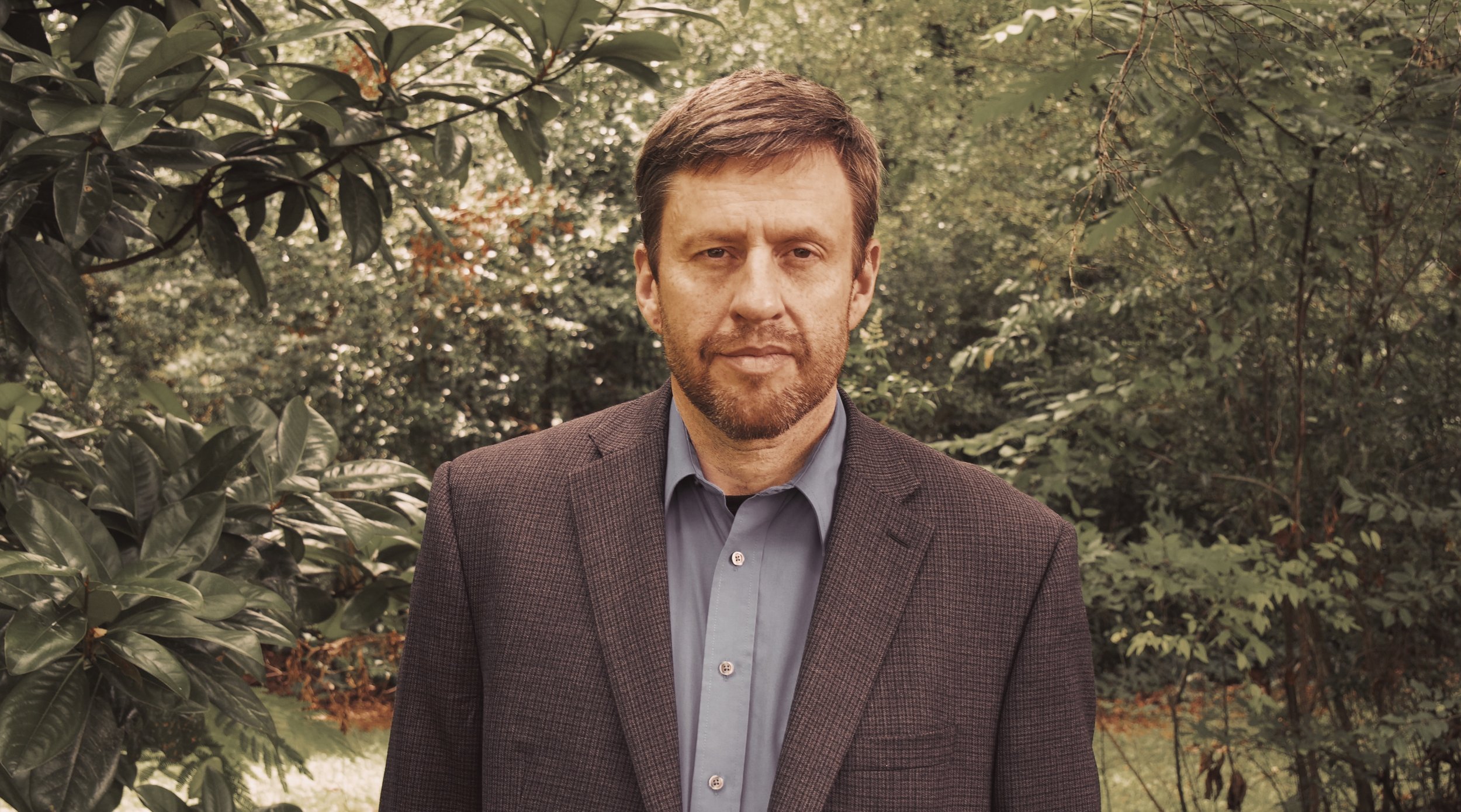
ARTICLES BY DEWAYNE
Christian Articles With A Purpose For Truth.
CHRIST FORMED WITHIN
God’s purpose for us is not only that we be forgiven, but that Christ be formed within. Salvation is the beginning of a far greater journey—the shaping of the soul into the likeness of the Savior. The Father’s desire is not just to make us better, but to make us His. Paul wrote with holy yearning, “My little children, for whom I labor in birth again until Christ is formed in you” (Galatians 4:19). This is the mystery of the Christian life—not us trying to be like Him, but Him living in us, expressing His life through clay vessels.
This forming comes through the Cross. The Cross is not only the place where Christ died for us; it is where we die with Him. It is where pride is broken, where self-will is surrendered, and where our hearts are emptied so His Spirit can fill them. Each time we yield our way for His way, His image grows clearer in us. “I have been crucified with Christ; it is no longer I who live, but Christ lives in me” (Galatians 2:20). The Cross is not the end of life—it is the beginning of His life in us.
Christ in us is the secret to all fruitfulness. Without Him, we can do nothing (John 15:5). But when we abide in Him, His love flows through us like living water. Our words become softer, our service becomes purer, and our hearts begin to reflect His patience and peace. We do not strain to bear fruit; we simply stay near the Vine, and His life produces what our effort never could. The more we rest in His presence, the more His beauty begins to shine through.
This is the true work of grace—not achievement, but transformation. God’s goal is not to make us famous, but faithful. Not powerful in the eyes of men, but pure in the sight of Heaven. Day by day, the Holy Spirit shapes us, often quietly, through trials, tears, and tender mercies, until the life of Christ is seen. And when that happens, heaven touches earth. The fragrance of His life fills our days, and the world sees not us, but Him who lives within.
Lord Jesus,
Let Your life be formed within me. Shape my heart to mirror Yours. Teach me to yield where I once resisted, to love where I once judged, to trust where I once feared. May the Cross do its holy work in me until pride is broken and Your peace reigns. Let my life be a reflection of Your gentleness and strength. Abide in me as the Vine in the branch. Let Your words find a home in my heart, and let Your Spirit breathe through my days. When I am weak, be my strength. When I am silent, speak through me. When I am still, fill me. And when I stand before You at last, may the world have seen not me, but You living in me.
Amen.
Bryan Dewayne Dunaway
THE SPIRIT WHO GIVES LIFE
The Spirit of God has always been moving—hovering over the waters in the beginning, breathing life into creation, whispering truth through prophets, and filling hearts with holy fire. From Genesis to Revelation, His presence marks the heartbeat of God’s work among men. Wherever the Spirit moves, death yields to life, despair gives way to hope, and dry ground blossoms again.
In the Old Testament, we see the Spirit at work in promise and power. The prophets spoke of His coming as rain upon the wilderness. Isaiah said, “The Spirit of the Lord shall rest upon Him—the Spirit of wisdom and understanding” (Isaiah 11:2). Ezekiel heard God say, “I will put My Spirit within you and cause you to walk in My statutes” (Ezekiel 36:27). Joel declared, “I will pour out My Spirit on all flesh” (Joel 2:28). The same breath that hovered over the deep in creation now enters the hearts of the redeemed in new creation.
Few scenes portray this better than Ezekiel’s vision in the valley of dry bones (Ezekiel 37:1–14). The prophet stands amid lifeless remains—symbols of a people without hope. Yet when God commands him to speak, the bones begin to rattle, the sinews stretch, the flesh returns, and finally the breath of God fills them. What was once dead stands alive, an army raised by the Spirit’s breath. So it is with every believer who receives the Spirit of Christ. We who were dead in sin are made alive unto God, not by effort, but by the indwelling breath of Heaven.
In the New Testament, the promise becomes personal. Jesus calls the Spirit a Helper, Teacher, and Comforter (John 14:26). He guided first century men into all truth (John 16:13). Today, He fills us with divine love (Romans 5:5), and empowers us to live and share Christ boldly, in principle the way He did the apostles of Christ (Acts 1:8). Paul reminds us that we are temples of the Spirit (1 Corinthians 3:16), that the Spirit intercedes when words fail (Romans 8:26), and that His fruit is love, joy, peace, and all that reflects the life of Christ (Galatians 5:22–23). The same power that raised Jesus from the dead now works in us to produce holiness and strength.
Discipleship without the Spirit becomes labor without life. But when the Spirit fills us, the Christian walk ceases to be duty and becomes delight. The Spirit does not make us perfect overnight, but He makes us alive. And in that life, Christ is formed within. Let us yield daily to His quiet leading, letting His wind blow through every thought and desire, until our hearts echo the faith of Ezekiel’s valley: “Thus says the Lord God…I will put My Spirit in you, and you shall live.”
Holy Spirit of Christ, breathe upon me again. Move within the dry valleys of my heart and make them green with Your life. Teach me to walk in Your ways, to love as Christ loved, and to live in constant fellowship with You. May every word I speak and every step I take bear the fruit of Your presence. Fill me, renew me, and make me a vessel through whom the breath of Heaven flows. In Jesus’ name, Amen.
Bryan Dewayne Dunaway
ANTONY FLEW: THE THINKER WHO FOLLOWED THE EVIDENCE WHERE IT LED
Antony Flew was not a careless atheist. He was a philosopher of formidable intellect, a man who demanded evidence for everything and refused to rest his mind on anything less than reason. For more than fifty years he argued that belief in God was an illusion of the human heart — a comforting story told to quiet our fear of death. He became, in the eyes of many, the high priest of unbelief. Yet as time passed and science revealed more of the intricacy of the world, the fortress of his skepticism began to tremble.
In his later years, Flew startled the intellectual world by confessing that he now believed there must be a God. The announcement sent ripples through universities and lecture halls. The man who had long championed atheism declared that he had been compelled by evidence — that he had simply “followed the argument where it led.” It led him, not to a personal Savior, but to an Intelligent Mind behind all existence. The precision of natural law, the order of the cosmos, and most of all the mystery of life itself drew him to concede that mind must precede matter.
He pointed especially to DNA. Its astonishing complexity, its code of information written in every living cell, convinced him that life could not have arisen from non-life by accident. He admitted that naturalistic explanations had failed to account for this wonder. “The only reason I have for beginning to think of believing in a First Cause God,” he said, “is the impossibility of providing a naturalistic account of the origin of the first reproducing species.” Thus, at the threshold of eternity, the old skeptic acknowledged a Creator.
And yet, one cannot help but feel both joy and sorrow at his discovery — joy that truth finally pierced his heart, sorrow that it took the marvel of DNA to convince him when the universe itself had been preaching to him all along. For every sunrise declares a Designer, every tree in springtime a renewal beyond chance. The very air he breathed, the beauty of a child’s laughter, the order of mathematics, the moral longing in every human soul — these were sermons enough to humble the wise. But pride blinds even brilliant men. The Scriptures speak truly: “The fool has said in his heart, ‘There is no God’” (Psalm 14:1). Not the fool of low intelligence, but the fool of high pride, who cannot see because he refuses to bow.
Yet we must speak kindly of Flew, for there is grace even in his late awakening. He did not discover all the way to Calvary, but he walked further than he had ever thought he would. He came to believe in a Creator — an eternal Mind who designed and sustains all things. He admitted that life’s very existence was a miracle, not a mistake. He died still pondering who that Mind might be, and perhaps, in the mercy of God, he now knows.
His story reminds us that reason, when honest, leads not to emptiness but to awe. Every path of inquiry, if followed with humility, will end at the feet of Christ, for He is the Truth toward which all truths point. Antony Flew, the lifelong skeptic, teaches us that even the mind which denies God may yet become a witness to His glory. And though it took the alphabet of DNA to open his eyes, it is the same Word — eternal and living — that upholds both the cell and the soul.
Bryan Dewayne Dunaway
SATAN THE GREAT DECEIVER
Now the serpent was more cunning than any beast of the field which the LORD God had made. And he said to the woman, “Has God indeed said, You shall not eat of every tree of the garden?” The woman replied that God had permitted them to eat from the trees of the garden, except the one in the midst of it, “lest you die.” Then the serpent spoke again, “You will not surely die. For God knows that in the day you eat of it your eyes will be opened, and you will be like God.” (Genesis 3:1–5)
From the very first temptation, Satan revealed his method. He does not always shout; he whispers. He does not begin with open rebellion but with subtle suggestion. He does not come with horns and fire, but as a voice that seems reasonable. His plan in the garden was to turn Eve’s heart away from trust in her Creator, to make her believe that God was withholding something good. And from that day, he has been doing the same to every soul that ever drew breath.
He began with a question—“Has God indeed said?” It sounds innocent, but it is deadly. Before Eve ever reached for the fruit, she had already reached for doubt. The first seed of sin was not in the hand but in the heart. The serpent’s question took her eyes off all the trees God had given and fixed them on the one she could not have. That is the way deception always begins.
How often the same voice whispers today. It comes to a weary believer and says, “If God really loved you, would He let you suffer like this?” It speaks to the young and says, “If God were truly good, why would He forbid what feels so right?” And so, with one question, the heart begins to doubt the goodness of God. Yet the truth is the opposite—God withholds nothing that is good. “No good thing will He withhold from those who walk uprightly” (Psalm 84:11). Every command of God flows from His love. Every “thou shalt not” is a hand stretched out to keep us from harm. When the Lord says “No,” it is because He longs to say “Yes” to something higher, purer, and eternal.
God’s prohibitions are protections, His warnings are expressions of mercy. The devil says that God is holding out on you, but the Bible says He is pouring out blessings upon you. When we start to doubt God’s heart, temptation is already winning the battle.
Then the serpent went further. He denied the truth of God’s warning. “You will not surely die,” he said. With those words, he called God a liar. It was as if he said, “You can break His law and be fine. There are no real consequences.” That lie has filled the world with ruin. People sin thinking they will escape the harvest. Yet the Bible still says, “Do not be deceived; God is not mocked. For whatever a man sows, that he will also reap” (Galatians 6:7).
Sin always carries its death. It may not come at once, but it comes surely. It kills purity, peace, and fellowship with God. A man once raised a small snake as a pet, letting it coil around his arm. When it grew large, he still trusted it. One night, it wrapped itself around him and crushed him to death. What he had played with became the thing that destroyed him. Sin is that serpent. It looks harmless at first, but it never stays small.
A little boy once told his Sunday School teacher, “Sin is anything you like doing that’s fun.” That’s how many see it. But the devil’s fun is like a credit card—you play now and pay later. God’s Word tells the truth about sin. The devil hides the bill until the pleasure fades. When you hear that inner voice saying, “No one will know, it won’t hurt, you’ll be fine,” remember—you are hearing the oldest lie on earth.
Finally, Satan distorted God’s purpose. He told Eve that God was trying to keep her from enlightenment, from being “like God.” He implied that God was selfish and small, guarding His position out of jealousy. But what a twisted lie that was! God had already made man and woman in His image. They were already like Him in the ways that matter—able to love, to choose, to worship, to walk with Him in fellowship. Satan offered them what they already had, only with rebellion added.
This is the heart of deception: it makes God’s commands look like chains when they are wings. The truth is that obedience is freedom. “You shall know the truth,” Jesus said, “and the truth shall make you free” (John 8:32). The world says freedom is doing what you please; the Lord says freedom is pleasing the One who made you. His commandments are not burdens but blessings.
Yet the devil keeps telling men and women that they can be their own gods. He whispers that they can run their own lives and define their own truth. But only one man ever lived sinlessly, and His name is Jesus. The devil says God is cruel; the cross says God is love. The devil says God wants to rob you; Calvary says God wants to redeem you.
Satan’s lies haven’t changed. He still says, “God isn’t good, sin isn’t bad, and you’ll be happier without Him.” But Jesus said, “The thief comes only to steal and to kill and to destroy. I have come that they might have life, and have it more abundantly” (John 10:10). The first Adam believed the serpent’s lie and brought death. The last Adam, Jesus Christ, met the serpent in the wilderness, stood upon the written Word, and brought life. When Satan said, “Has God indeed said?” Eve doubted and fell. When he said to Jesus, “If You are the Son of God,” the Lord answered, “It is written.” That is how the deceiver is overcome—by clinging to what God has spoken.
Today the same serpent still whispers, still questions, still deceives. But there is One who cannot lie. There is One whose every word is truth, whose every purpose is love, whose every command is life. His name is Jesus. In Him, every lie is exposed, every wound can be healed, and every soul can be made whole again.
Do not listen to the deceiver. Listen to the Shepherd who calls you by name. He is the Truth, the Way, and the Life. And when you walk with Him, the serpent’s whisper loses its power forever.
Bryan Dewayne Dunaway
WE DON’T KNOW WHO WROTE HEBREWS—EXCEPT WE DO (PAUL DID)
Every preacher has said it. Every commentary has repeated it. Every Bible student has heard it. “We don’t know who wrote the Book of Hebrews.”
Well, I suppose that’s true—except we do. Now, I’m smiling as I write that, because I know what the scholars say. They say, “It’s anonymous.” They say, “It doesn’t start like Paul.” They say, “It’s not his vocabulary.” They say, “The Greek is different.” They say, “We can’t be sure.” And then I imagine Paul in heaven saying, “Well, I suppose that’s fine. They’ll figure it out sooner or later.”
The Book of Hebrews bears his fingerprints all over it. It has his heart, his theology, his rhythm, his Christ-centered pulse. It preaches like Paul, prays like Paul, and exalts Jesus Christ like only Paul could. So let’s look at a few reasons why I believe—tongue in cheek, but heart in conviction—that Paul wrote the Book of Hebrews.
The Theology Is Unmistakably Pauline
Hebrews reads like Romans dressed in priestly robes. The author moves from law to grace, from shadow to substance, from Moses to Christ, from earthly sanctuary to heavenly throne. That’s Paul all over. He does in Hebrews what he did in Galatians—showing that the old covenant was a tutor pointing to Christ.
In Hebrews 10:1, the writer says, “The law, having a shadow of the good things to come.” Paul said the same thing in Colossians 2:17—“Which are a shadow of things to come, but the substance is Christ.” Sounds like the same preacher to me.
Only someone who had been blinded by the glory of the old covenant on the road to Damascus, and then opened to the new, could write like that. When Paul saw Christ, he saw that every lamb, every altar, every priest was pointing to the One who now sat at the right hand of God. When you see Christ clearly, you’ll start to realize that every detail of your past—every sorrow, every unanswered question—was leading you to Him.
The Writing Fits Paul’s Circumstances
Hebrews 13:23 says, “Know that our brother Timothy has been set free; with whom I shall see you if he comes shortly.” Now who else talked like that but Paul? Timothy was his son in the faith. You can hear the tenderness in it. The same heart that wrote, “Only Luke is with me,” wrote, “I hope to see you soon with Timothy.”
And don’t miss Hebrews 13:24: “Those from Italy greet you.” That means the writer was in Italy—almost certainly in Rome. Paul was imprisoned in Rome more than once. The puzzle pieces fit perfectly.
Even in chains, Paul thought about the saints. When his body was bound, his heart was free. Real love for Christ never stops thinking of others. That’s what faith does—it keeps you warm in cold cells, and hopeful in dark nights.
The Style and Structure Are Different—But the Audience Was Too
Now, this is where the scholars raise their eyebrows. “But the Greek is smoother, more refined. The introduction isn’t Pauline. He always says, ‘Paul, an apostle of Jesus Christ.’ He doesn’t here.”
True. But consider this: the Book of Hebrews wasn’t written to Gentiles—it was written to Jews. The writer may have intentionally omitted his name because of how controversial he was among Jewish Christians.
Imagine Paul, knowing how some viewed him as a traitor to Moses, thinking, “If I put my name on this, they’ll stop reading by paragraph two.” So he leaves the name off, but he doesn’t leave off the truth.
Sometimes God hides the name so the message can shine brighter. Paul didn’t need the glory—Christ did. Sometimes your greatest work for God will be done quietly, without your name in lights, but your fingerprints will still be there. The reward will come later, when the Lord writes your name where it truly counts—in the Lamb’s Book of Life.
The Vocabulary Variance Is Easily Explained
Yes, the Greek is different—but Paul wrote in several styles, depending on his audience and amanuensis (the person doing the actual writing). Hebrews may have been written in Greek by someone like Luke, translating Paul’s Hebrew or Aramaic thoughts. The same thing could explain why Luke and Hebrews share certain stylistic similarities. In other words, Paul could have been the mind, Luke the pen.
When the Spirit of God breathes through a man, the instrument may vary, but the melody is the same. The hand may change, but the heart remains faithful. God’s message is not limited by grammar or accent. It is born of revelation, and its beauty lies not in the polish of words, but in the power of truth.
The Central Theme Is the Same as Paul’s Everywhere: Christ Supreme
Every letter Paul wrote is about Jesus. Philippians says, “To live is Christ.” Galatians says, “Christ lives in me.” Ephesians says, “In Christ we have redemption.” Romans says, “Christ is the end of the law.” And Hebrews says, “Looking unto Jesus, the author and finisher of our faith.” It’s the same heartbeat. The same thunder. The same vision.
Who else could write thirteen chapters that begin with, “God has spoken by His Son,” and end with, “Grace be with you all”—without once contradicting anything Paul ever taught?
The mark of Paul’s pen was always the exaltation of Jesus. Every verse of Hebrews breathes that same air. And when your own life begins to breathe the same—when Jesus becomes your everything—you won’t mind who gets the credit.
Answering the Scholars’ Objections
They say, “But the church fathers weren’t sure.” True. Some in the East said Paul wrote it; some in the West were cautious. But the Eastern church—the one that preserved the language and context—always held to Pauline authorship.
They say, “It’s not signed.” Neither is Ruth. Neither is Job. But the Spirit’s signature is on every line.
They say, “The Greek is too good.” I say, maybe heaven helped.
They say, “It doesn’t sound like Paul.” I say, maybe Paul didn’t sound like Paul when he talked about Christ as High Priest in the heavens. Sometimes when a man gets that close to glory, his voice changes.
At the end of the day, whether you believe Paul wrote Hebrews or someone else did, the glory belongs to God. The letter’s power is not in its author’s name but in its Author’s inspiration. Yet I like to think it was Paul. I like to think the man who said, “I have fought a good fight,” was also the man who said, “Let us run with endurance the race that is set before us.”
It fits. It feels right. The same man who wrote, “Rejoice in the Lord always,” might also have written, “Through Jesus, therefore, let us continually offer the sacrifice of praise.”
And maybe that’s what the Spirit wants us to see—not the penman, but the pattern. The pattern of a soul so consumed with Christ that it no longer matters who holds the pen.
Lord Jesus, Thank You for the mystery and majesty of Your Word. Whether by Paul or another, every line of Hebrews points us to You. Help us to love the truth more than theories, and to see Your hand in every page. Teach us, like Paul, to count all things loss for the excellence of knowing You.
Write Your Word upon our hearts until it shapes our thoughts, our speech, our praise, and our lives. May we, too, be so hidden in You that the name doesn’t matter—only the message does.
In Your holy name, Amen.
Bryan Dewayne Dunaway
STOP DIVIDING—START LOVING
People just look for reasons to divide from each other. It has always been that way.
Reasons to control.
Reasons to isolate.
Reasons to stand out and be seen.
I’ve been there. Many times, I’ve done that. And I can tell you now, by the mercy of God — you can change. You can stop it. You can give it to Jesus.
Stop living under the heavy yoke of legalism, and stop trying to place that same yoke on others. Focus on Christ. Live in a relationship of love for Him, not a system of rules about Him. Lay down all the trappings of ritualism and self-made religion. Let go of the need to prove, to control, or to be right — and rest in the righteousness of Jesus.
Don’t walk in legalism today. Walk in light.
Don’t tie yourself in knots wondering whether you’re supposed to pray to the Father or to Jesus — or if maybe you’ve somehow gotten that backward. The Bible shows that you can pray to both.
Jesus Himself taught us to pray, “Our Father in heaven…” (Matthew 6:9). But Stephen, as he was dying, prayed directly to Jesus: “Lord Jesus, receive my spirit” (Acts 7:59). Paul prayed to the Lord Jesus in 2 Corinthians 12:8 when he pleaded three times for the thorn in his flesh to be removed.
The Bible doesn’t hand us a step-by-step prayer formula because God expects us to be mature enough to live by principles, not prescriptions. He could have written another Leviticus full of ritual instructions — but the New Covenant is not written that way, because it’s not that kind of system.
We are not under that kind of law.
We are under the law of the heart — guided by the Spirit, shaped by love, and kept by grace.
So don’t let anyone control your faith. And don’t try to control anyone else’s. Let people breathe the fresh air of freedom in Jesus. Let them walk with Him intimately. They don’t need human mediators — they already have a perfect Mediator, Christ Himself (1 Timothy 2:5).
Do we have to say “in Jesus’ name” at the end of every prayer?
Do we have to baptize saying, “I baptize you in the name of the Father, the Son, and the Holy Spirit” — or should we say, “I baptize you in the name of Jesus”?
The answer?
Yes.
No.
It doesn’t matter.
These are not just words to recite. They are attitudes of the heart.
The Bible says, “Whatever you do in word or deed, do all in the name of the Lord Jesus” (Colossians 3:17). Does that mean we have to say “in Jesus’ name” at the end of every action? No. The power is not in the formula — it’s in the Father.
Yet people have split entire denominations over this, dividing themselves into camps over baptism formulas, theological labels, and the details of how to speak God’s name. Some argue about the Trinity, others about oneness theology — but here’s the truth: you cannot go wrong by loving Jesus.
He is everything you need.
The Father points to Him.
The Spirit glorifies Him.
All heaven sings about Him.
So why would we fight about the details of the name, when the power is in the Person?
We do the same thing with Bible translations. One person swears by the King James, another reads the New King James, another uses the ESV, the NIV, or the NLT (or whatever version they choose; they have that right) — and before long, people are refusing to fellowship with each other over which one they carry to church.
Let’s be honest. Most of that is not about doctrine — it’s about comfort. We’re used to what we know, and we don’t want to change. So we dig in our heels and call it “conviction.”
But division has long been the hallmark of man-made religion.
It’s unnecessary.
It’s unspiritual.
And it breaks the heart of Jesus, who prayed, “That they all may be one” (John 17:21).
So fight it — but not with more division.
Fight it with love.
Fight it in your own heart first.
Then fight it in the world by smiling, by embracing, by showing grace to those who haven’t yet learned to walk in it.
Don’t fight it with judgmentalism.
Don’t throw stones at those who throw stones.
Don’t sit in judgment on those who sit in judgment.
Don’t become a full-time critic of the critics.
You’ll only get tangled up in that web of bitterness.
I’m talking to myself as much as to anyone else.
We all need to hear this — again and again.
So let’s breathe deep.
Let’s forgive quickly.
Let’s major on what matters — Jesus Christ and Him crucified.
Let’s walk in the light, not in the law.
And let’s remember that the only thing that counts, as Paul said, “is faith working through love” (Galatians 5:6).
Every division begins with pride — a need to be right, to be seen, to control. Every healing begins with humility — a willingness to bow before Jesus and say, “Lord, I am Yours. Make me more like You.”
When you love Him deeply, you’ll love others graciously.
When you rest in His grace, you’ll stop measuring everyone else’s performance.
And when you trust His finished work, you’ll stop trying to finish what He already completed on the cross.
Lord Jesus, deliver me from the spirit of division. Free me from the need to control or to be right. Teach me to live by grace, not by law — by love, not by pride. Keep my eyes on You, and my heart open to others. May I walk today in the light of Your truth, the freedom of Your Spirit, and the unity of Your love.
Amen.
Bryan Dewayne Dunaway
ON THE OFFENSIVE
The church of Jesus Christ was never meant to hide behind walls of fear. The Lord did not build His kingdom to be a fortress under siege, but an advancing army under the banner of His truth. When Jesus declared, “Upon this rock I will build My church, and the gates of Hades shall not prevail against it” (Matthew 16:18), He was not describing a retreating people defending the last outpost of holiness. Gates do not move. Gates do not attack. Gates stand still to resist invasion.
Christ was saying that we are the ones advancing. The powers of darkness are the ones trembling. Hell has its gates shut tight, but they will not stand against the living church of the risen Christ. The kingdom of God is not hiding in fear—it is marching forward with the sword of the Spirit, the Word of God (Ephesians 6:17).
We are not called to defend God as though He were a fragile idea needing protection from the critics of this age. God does not need a press secretary. He does not answer to men. He is the Almighty, the Maker of heaven and earth, who sits upon the circle of the world, and before whom “the nations are as a drop in the bucket” (Isaiah 40:15, 22).
We do not have to explain away every mystery or tie every knot of human reasoning. Our task is not to defend God’s ways but to declare them. The Lord Himself says, “My thoughts are not your thoughts, nor are your ways My ways” (Isaiah 55:8). We can rest in that. We point to Him, not as one needing vindication, but as the eternal Truth who needs no defender.
The church must remember who she is. We are not victims of the times; we are vessels of His triumph. “Thanks be to God, who always leads us in triumph in Christ” (2 Corinthians 2:14). We do not cower in the shadows of a decaying world—we walk in the light of the Lamb. “You are the light of the world. A city that is set on a hill cannot be hidden” (Matthew 5:14).
Our message is not uncertainty, but assurance. We do not whisper apologies for believing the Bible; we proclaim it with holy confidence. The gospel is not a theory—it is the truth. “Your word is truth” (John 17:17). We do not need to act as if truth were on trial. Truth sits enthroned in Christ, and “He must reign till He has put all enemies under His feet” (1 Corinthians 15:25).
It is time for the people of God to stop living on the defensive. The apostles did not tiptoe through the Roman Empire trying not to offend Caesar. They preached Jesus as Lord, even when it meant their lives. When the Spirit fell at Pentecost, they went out—not to argue—but to announce. “We cannot but speak the things which we have seen and heard” (Acts 4:20).
The church today needs that same fire, that same unashamed conviction. We are not here to hide our light but to lift it high. “Let your light so shine before men, that they may see your good works and glorify your Father in heaven” (Matthew 5:16). The world does not need a cautious church; it needs a courageous one.
We carry the truth, and the truth carries authority. The world sits in darkness, but we walk in the light of Christ. “For you were once darkness, but now you are light in the Lord. Walk as children of light” (Ephesians 5:8). If we truly believe this, then our task is clear. We move forward—not with arrogance, but with assurance; not with pride, but with power; not defending, but declaring.
The gates of hell will not stand. The light of Christ will pierce every shadow. The Word of God will accomplish what He pleases (Isaiah 55:11). So let us rise, not as fearful defenders, but as faithful witnesses. The world cannot silence what heaven has spoken. Christ is Lord, and His church is marching on.
Bryan Dewayne Dunaway
ALL OF GRACE
Grace is heaven’s sweetest song. It flows from the heart of God like sunlight breaking through a dark sky. Grace is not man reaching for God, but God reaching for man through Jesus Christ. It is not the prize of the perfect, but the pardon of the penitent. Grace stoops low to lift the fallen, washes the sinner clean, and sets him on the narrow road that leads home.
“For by grace you have been saved through faith” (Ephesians 2:8). Grace does not overlook sin; it overcomes it. It does not leave us as we are; it remakes us after the image of Christ. The cross is its fountain, and the resurrection its glory. When we come to Jesus in faith, turning from sin and trusting His Word, grace meets us there with mercy and power.
From the first stirring of conviction in the heart to the final crown of life, it is all of grace. Not grace that removes man’s choice, but grace that calls man to choose rightly. God’s hand reaches down, and man must take it. The Father runs to meet the prodigal, but the prodigal must rise and go home. Grace opens the door, but faith must walk through it.
Faith is the cup that receives what grace freely gives. The sinner comes not to bargain, but to believe. He comes not because he is worthy, but because Christ is worthy. “While we were still sinners, Christ died for us” (Romans 5:8). His love does not wait until we are clean; it cleanses us when we come. His grace is stronger than our guilt, deeper than our shame, and higher than our doubts.
Grace does not make sin safe; it makes holiness possible. The one touched by grace does not trifle with sin, for he knows the cost of redemption. “The grace of God that brings salvation…teaches us to deny ungodliness and worldly lusts” (Titus 2:11–12). True grace changes the heart. It bends the will toward obedience, not because we must, but because we may.
Some stumble at the thought of grace being free. They want to earn, to prove, to pay. But grace cannot be bought—it can only be received. It is not a wage; it is a wonder. The beggar’s hand is empty, but his heart is full when he meets the mercy of Christ. The weary find rest, the guilty find pardon, and the lost find their way home.
Jesus Himself is the living picture of grace. “The Word became flesh and dwelt among us…full of grace and truth” (John 1:14). He touched lepers, welcomed sinners, and lifted the broken. He spoke peace to the trembling woman and paradise to the dying thief. Grace is not a doctrine written in ink—it is a Savior crowned with thorns.
When grace enters a life, everything changes. The proud man becomes humble, the fearful man finds courage, and the wandering soul discovers purpose. Grace opens blind eyes and softens hard hearts. It teaches the tongue to sing and the hands to serve. It does not excuse sin, it transforms the sinner.
And grace does not fade. The same hand that saved Peter from the waves will carry us safely to the shore. When we stumble, grace restores. When we doubt, grace reminds. When we grow weary, grace renews. “My grace is sufficient for you, for My strength is made perfect in weakness” (2 Corinthians 12:9).
Grace is the song of the redeemed and the anchor of the soul. It is the voice of Jesus whispering, “Come unto Me.” It lifts the head bowed low in shame and fills the heart with peace. Every sunrise of mercy and every breath of forgiveness is a testimony that God is still at work in us.
Beloved, all that we are and all that we hope to be is by the grace of God. Grace called us through the gospel, cleansed us in baptism, strengthens us through faith, and will one day present us faultless before His throne. This is the story of salvation—not of merit, but of mercy. Not of human striving, but of divine compassion.
So let every heart bow before the cross and whisper with holy wonder,
“It is all of grace.”
Bryan Dewayne Dunaway
WHY WE BELIEVE ANYTHING: THE NATURE OF FAITH AND REASON
Every human being, whether believer or skeptic, lives by faith. We may call it confidence, trust, or probability, but the essence is the same. We act every day on what we cannot prove exhaustively. We trust the pilot who flies our plane, the surgeon who wields the scalpel, the historian who records the past. We live by belief before we ever speak of religion. The mind itself cannot function without faith, for even reason must begin with certain assumptions—assumptions about truth, logic, and reality that cannot be proven by reason itself. Faith, therefore, is not a denial of reason but its foundation.
Yet the word “faith” has been so misused that many imagine it means believing something without evidence. In truth, real faith is the most rational thing in the world. It is the mind’s acknowledgment of what reason discovers but cannot fully comprehend. The universe around us proclaims order. The conscience within us proclaims moral law. The longing of the heart proclaims purpose. All these voices sing together in harmony, pointing to a single Composer. Reason hears the melody and recognizes its beauty. Faith rises to its feet and joins the song.
True faith is not blind; it is enlightened trust. It is the soul’s response to the evidence that surrounds it on every side. Reason examines the structure of the cosmos and sees the trace of design. Faith bows before the Designer. Reason studies the human heart and finds a hunger that nothing temporal can fill. Faith turns toward eternity and says, “You are what I have been seeking.” The two are not enemies but companions—reason is the lamp that shows the path, and faith is the step that takes it.
But faith, to be real, must have an object worthy of it. The strength of faith lies not in how tightly we hold it, but in the reliability of what we hold. A frail hand grasping a strong rope is safer than a strong hand grasping air. To believe in mere chance or chaos is to trust in nothing. To believe in God—the eternal Mind behind all minds—is to anchor our reason in the very ground of reality. The God who made the brain does not despise its logic. The God who gave us the power to think calls us to use it in seeking Him.
When faith and reason walk together, they lead the soul home. Reason builds the bridge from the earth upward; faith walks across it to the heart of God. To believe, then, is not to close one’s eyes to truth but to open them to its fullness. It is to see that behind every cause stands the First Cause, behind every thought the Thinker, behind every law the Lawgiver. Faith is the light that dawns when reason runs out of words—and in that light, the universe makes sense.
Bryan Dewayne Dunaway
THE DIVINE DETECTIVE: FAITH THROUGH THE EYES OF REASON (A Thought or Two About Sherlock Holmes and the Gospel of Christ)
There is a strange and beautiful parallel between the Christian who searches for God and the detective who searches for truth. In the quiet streets of Victorian London, a man named Sherlock Holmes once captured the imagination of readers around the world. He was not real, but he was made so real that he seemed to breathe. His creator, Sir Arthur Conan Doyle, was a medical doctor turned writer who first introduced Holmes to the world in 1887 through A Study in Scarlet. Doyle would go on to write four novels and fifty-six short stories about the famous detective and his faithful friend, Dr. John Watson.
Holmes was no ordinary sleuth. With his violin in one hand and magnifying glass in the other, he solved mysteries not by guesswork but by disciplined observation and brilliant deduction. He noticed what others overlooked. He pieced together fragments of evidence until the truth stood radiant before him. He once said, “You see, but you do not observe.” And perhaps without knowing it, he gave voice to the spiritual blindness of mankind. For how often do we look upon the world and fail to see the fingerprints of its Creator?
Holmes lived by logic, but he sought truth. And in that pursuit, his fictional brilliance reveals a real spiritual truth. “Once you eliminate the impossible,” he said, “whatever remains, however improbable, must be the truth.” That principle, though meant for detective work, echoes the heart of the Gospel. The resurrection of Jesus, the transformation of the apostles, the endurance of the church—these cannot be explained away by mere chance. Once you eliminate the impossible, what remains is the improbable yet glorious reality: Christ is risen.
Or consider the very existence of the universe. Either it came from a loving Creator, or it somehow appeared out of nothing. Those are the only two possible explanations. The second option—that everything came from absolute nothingness—is not only illogical, it is unthinkable. Nothing cannot produce something. Chaos cannot design order. Chance cannot breathe life. Such a notion collapses under its own absurdity. Therefore, what remains—that this world was created by God—stands as the only reasonable and truthful conclusion. See how simple that is?
Faith is not the absence of reason. It is reason redeemed and sanctified. The believer, like Holmes, is a seeker of truth, but our investigation leads to worship rather than to pride. We trace the evidence of God’s presence through the Scriptures, through creation, and through the testimony of changed lives. The Psalmist declares, “The heavens declare the glory of God, and the firmament shows His handiwork” (Psalm 19:1). The stars themselves are clues—divine signatures scattered across the sky, pointing to their Maker.
When Sherlock Holmes examined a footprint, a thread, or a faint perfume in the air, he saw meaning where others saw nothing. So too does the Christian, enlightened by the Spirit of Christ, see design in what the world calls coincidence. The hand of God becomes visible in what once seemed ordinary. The Gospel itself is the great unveiling, the supreme revelation of divine logic. In the cross, the world’s greatest contradiction—justice and mercy—are reconciled. “For the message of the cross is foolishness to those who are perishing, but to us who are being saved it is the power of God” (1 Corinthians 1:18).
Holmes trusted deduction. The Christian trusts revelation. The detective examined clues from the ground up; the disciple receives truth from heaven down. Holmes studied human crime; the believer contemplates divine redemption. And yet, in both cases, there is an order, a logic, a pattern that rewards careful seeking. The truth was never absent—it was only hidden until revealed. So it is with Christ. “For God, who commanded light to shine out of darkness, has shone in our hearts to give the light of the knowledge of the glory of God in the face of Jesus Christ” (2 Corinthians 4:6).
Sir Arthur Conan Doyle himself struggled with belief. In later years, he turned to spiritualism, seeking to make sense of life beyond the grave. He evidently believed that the unseen world could be explored like one of Holmes’ cases. Yet what Doyle sought through séances and shadows, the believer finds in the risen Christ—the living proof that death is defeated. If Doyle’s detective looked for earthly truth with relentless logic, the Christian must look for heavenly truth with relentless faith.
And yet, Holmes’ devotion to his craft holds a lesson for us. He was tireless in the pursuit of understanding. He would spend hours studying dust or ash, waiting for revelation. Should we not give the same energy to seeking God? Should we not meditate upon His Word with the same attention to detail that Holmes gave to his cases? “You will seek Me and find Me,” says the Lord, “when you search for Me with all your heart” (Jeremiah 29:13).
Holmes would often pause in silence, letting the evidence speak before he spoke. So too must the Christian learn to be still before God. In that stillness, truth unfolds—not the truth of a solved crime, but the truth of a cleansed heart. “Be still, and know that I am God” (Psalm 46:10). The more we dwell in that quiet investigation of divine mysteries, the more our hearts are filled with awe. The universe becomes a case study in grace.
Faith, then, is not contrary to logic. It is its completion. It examines the evidence of creation, conscience, and Christ and concludes that only one explanation makes sense: there is a God, and He has revealed Himself in Jesus. “For in Him all things were created…all things were created through Him and for Him” (Colossians 1:16). To deny this is not to be rational—it is to ignore the evidence.
When Holmes solved a case, he would often say, “It was simplicity itself.” So it is with the Gospel. The message that confounds philosophers is plain to a child: Jesus loves me, this I know. The cross, to the worldly mind, is too improbable to be true. Yet when the evidence is weighed—the prophecies, the witnesses, the empty tomb, the transformed lives—faith becomes the most reasonable conclusion.
And one day, when the final mystery is revealed and we stand in the presence of the Lord, every unanswered question will make sense. Every tear, every trial, every tangled thread will be shown to have fit perfectly into the divine design. Then we will see, as Holmes once said in triumph, “It is quite elementary.”
Bryan Dewayne Dunaway
NOTE — “Elementary” touches on one of the most famous misquotes in literary history. In Arthur Conan Doyle’s stories, Sherlock Holmes never actually utters the full phrase, “Elementary, my dear Watson.” He does, however, use the word elementary by itself a few times, often describing his deductions as “simple” or “obvious.” In The Crooked Man (1893), he says simply, “Elementary.”
Yet that familiar line we all know—“Elementary, my dear Watson”—is nowhere to be found. It was born later, through retellings of his adventures, especially in the films of the 1920s and 1930s. It captured the very air of Holmes so well that the world claimed it for him, and the legend lived on.
For Holmes, “It’s elementary,” meant the truth was plain to see once the fog of confusion was cleared away. What seemed mysterious to others was, to him, simply a matter of careful observation and honest reasoning. In the same way, the greatest truth of all—the existence of God and the glory of Jesus Christ—is not hidden in layers of human speculation. It is written across the heavens, declared by the stars, and spoken by the conscience within. What Holmes called elementary is, for the believer, the simple gospel lens through which we see all things clearly. The universe itself testifies that there is order, purpose, and love behind it all. The gospel invites us to see the world not with tangled philosophies, but with the simplicity of faith—a faith that looks at creation and says, with quiet certainty, “This is the work of God.” BDD
THREE THINGS TO REMEMBER ABOUT GOD
The Scriptures were not given merely to prove that God exists but to reveal who He is—that we might know Him, love Him, and serve Him. The heavens themselves proclaim His glory, the firmament declares His handiwork (Psalm 19:1). Creation speaks, if we will listen, of His power and majesty. The stars above whisper that there is a Mind behind their order, a Hand behind their beauty. The birds of the air and the lilies of the field tell us that He not only exists, but that He cares (Matthew 6:26). Yet though nature declares that there is a God, only the Word of God can unveil His heart.
In Scripture, we see not only His might but His mercy, not only His sovereignty but His steadfast love. “God is Spirit” (John 4:24), and “God is love” (1 John 4:8). He cannot lie (Numbers 23:19), nor does He change (Malachi 3:6). From Genesis to Revelation, He reveals Himself as the One who creates, commands, and cares. Each of these truths must be engraved upon the heart of every believer.
He Creates
“In the beginning, God created the heavens and the earth” (Genesis 1:1). The second chapter of Genesis reveals the intimacy of His creative hand—how He formed man from the dust of the ground and breathed into him the breath of life (Genesis 2:7). Creation is not the product of chance, but the expression of divine will. Every mountain, every ocean, every heartbeat is the testimony of His craftsmanship. “Know that the Lord, He is God; it is He who has made us, and not we ourselves; we are His people, and the sheep of His pasture” (Psalm 100:3).
If He made us, then we belong to Him. We owe Him our worship, our service, our very breath. To deny the Creator is to forget our reason for being. “Although they knew God, they did not glorify Him as God, nor were thankful” (Romans 1:21). The tragedy of the world is that it worships the creation instead of the Creator (Romans 1:25). Yet to those who know Him, worship becomes joy. “I will praise the Lord while I live; I will sing praises to my God while I have my being” (Psalm 146:2).
How could we not adore the One who gives us life, who sustains us, who crowns each day with His goodness? “The Lord opens the eyes of the blind; the Lord raises those who are bowed down; the Lord loves the righteous” (Psalm 146:8). He alone is worthy of our praise, for “You created all things, and by Your will they exist and were created” (Revelation 4:11). Every act of true worship is a confession that we were made by Him and for Him.
He Commands
The same God who created us has the right to command us. His authority flows from His nature, and His commands flow from His love. In the garden, God gave Adam and Eve His word to guide them (Genesis 2:16–17). Yet the temptation of the serpent was to reject that word—to decide good and evil apart from God. “You will be like God,” the deceiver said (Genesis 3:5). And from that moment, mankind has sought independence from its Maker.
To obey God is to restore the relationship broken in Eden. “Blessed is everyone who fears the Lord, who walks in His ways” (Psalm 128:1). “Fear God and keep His commandments, for this is man’s all” (Ecclesiastes 12:13). His commandments are not grievous but gracious. “And now, Israel, what does the Lord your God require of you, but to fear the Lord your God, to walk in all His ways and to love Him…for your good?” (Deuteronomy 10:12–13). To obey Him is not to lose freedom, but to find it, for “His commandments are not burdensome” (1 John 5:3).
He commands because He cares. Every precept is a safeguard, every commandment a pathway to blessing. “Hear, O Israel: The Lord our God, the Lord is one. You shall love the Lord your God with all your heart, with all your soul, and with all your strength” (Deuteronomy 6:4–5). The highest law of life is love for God, and love is proven in obedience. “If you love Me, keep My commandments” (John 14:15). Obedience without love is slavery, but love without obedience is hypocrisy. True discipleship is the harmony of both—the surrender of the will to the One who loved us first.
To love God is to choose His way even when ours seems easier. “He who has My commandments and keeps them, it is he who loves Me. And he who loves Me will be loved by My Father” (John 14:21). The soul that delights in His will walks in freedom and joy. “I delight to do Your will, O my God, and Your law is within my heart” (Psalm 40:8).
He Cares
From the beginning, God has shown His tender concern for His creation. “It is not good that man should be alone,” He said, and from Adam’s side brought forth Eve, his companion (Genesis 2:18–25). The first home, the first marriage, the first family—all were born from divine compassion. Every act of providence and every word of Scripture declare this same truth: God cares for His people.
Why does the Almighty care for creatures so frail and forgetful? Because love is His nature. “Beloved, let us love one another, for love is of God…for God is love” (1 John 4:7–8). His care is not abstract but personal. He knows each hair of your head, each tear that falls unseen. “Are not two sparrows sold for a copper coin? And not one of them falls to the ground apart from your Father’s will…Do not fear therefore; you are of more value than many sparrows” (Matthew 10:29–31).
His thoughts toward you are precious and innumerable. “How precious are Your thoughts to me, O God! How great is the sum of them!” (Psalm 139:17). Even when you cannot see His hand, you can trust His heart. “For I know the thoughts that I think toward you, says the Lord, thoughts of peace and not of evil, to give you a future and a hope” (Jeremiah 29:11).
The cross of Christ is the supreme proof of that love. “For God so loved the world that He gave His only begotten Son” (John 3:16). “God demonstrates His own love toward us, in that while we were still sinners, Christ died for us” (Romans 5:8). If you ever doubt His care, look again at Calvary. There, love stretched wide its arms to embrace the world. There, the heart of God was laid bare for all to see. “In this is love, not that we loved God, but that He loved us and sent His Son to be the atoning sacrifice for our sins” (1 John 4:10).
When you remember that God creates, commands, and cares, your faith finds firm foundation. You were made by His hand, guided by His word, and held by His love. The proper response is worship—humble, joyful, wholehearted worship. “Oh come, let us worship and bow down; let us kneel before the Lord our Maker. For He is our God, and we are the people of His pasture” (Psalm 95:6–7).
Let this truth lead us to prayer:
O Lord, my Creator, my Commander, and my Caregiver, You have made me for Yourself and I belong to You. Teach me to trust Your wisdom, obey Your word, and rest in Your love. Keep me from wandering pride and faithless fear. Let my heart rejoice in Your goodness and my life bring You glory. You are worthy of all my praise, now and forever. Amen.
Bryan Dewayne Dunaway
THE LAW WRITTEN ON THE HEART
In the opening pages of Mere Christianity by C. S. Lewis, a striking thought is offered—that our shared sense of right and wrong points beyond ourselves. Every argument, every claim of injustice, carries an unspoken belief that there is a moral law we all recognize. Even those who deny it reveal its truth by trying to explain it away. Humanity, for all its differences, carries within it a common conviction: that some things are truly good, and others truly evil.
If there were no higher power, no mind greater than our own, how did such a law arise? Nature alone teaches survival, not sacrifice. It rewards strength, not compassion. Yet in every heart there beats a strange law that urges us to love those who wrong us, to seek truth even when it costs us, to give rather than grasp. Such impulses are not the inventions of instinct; they are signposts of the divine.
We did not write this law within ourselves any more than we hung the stars in their places. It is discovered, not designed. The moral law does not whisper self-preservation; it calls for self-denial. It does not flatter us; it corrects us. When we ignore it, it does not fade—it follows, like the voice of conscience that will not be silenced. It speaks still, even when we try to drown it in noise or justify our rebellion.
And this voice—this inward law—tells us something about its Author. It tells us that the Source of all being must also be the Source of goodness. That the same Mind who ordered the heavens ordered the human heart. To say otherwise is to believe that meaning sprang from meaninglessness, and morality from mere molecules. But if there was ever truly nothing—no mind, no will, no goodness—then there would be nothing still. Something cannot rise from nothing. Order cannot grow from chaos without the touch of a Designer.
The moral law reveals that life is not an accident. It is a creation, stamped with purpose. And if we listen closely, we find that this law not only accuses—it also invites. It shows us our failures, yes, but it also awakens our longing to be made right. The same truth that humbles the proud gives hope to the penitent.
The law written on the heart leads us toward the Lawgiver. And when we come face to face with Him, we discover that He is not a cold force or distant intellect, but a living God—righteous, merciful, and near to all who call upon Him.
Bryan Dewayne Dunaway
THE WORK OF CHRIST FOR US
He Justifies Us
The story of salvation begins not with what we do for God, but with what God has done for us in Christ. “God demonstrates His own love toward us, in that while we were still sinners, Christ died for us” (Romans 5:8). The wonder of the gospel is that we are declared righteous not because of our merit, but because of His mercy. The blood of Jesus speaks louder than our guilt, cleansing every stain and silencing every accusation.
To be justified means that God, the righteous Judge, has looked upon us in His Son and declared us forgiven, accepted, and free. “Having been justified by faith, we have peace with God through our Lord Jesus Christ” (Romans 5:1). It is not by our obedience, our feelings, or our worthiness—it is by faith in the finished work of Jesus. The cross was the meeting place where justice and mercy came together. There, sin was condemned so that the sinner might be pardoned.
This grace is not earned; it is received. “By grace you have been saved through faith, and that not of yourselves; it is the gift of God” (Ephesians 2:8). Faith lays hold of Christ as a drowning man clings to the outstretched hand that saves him. And once Christ has taken hold of us, He never lets go. “Who shall bring a charge against God’s elect? It is God who justifies” (Romans 8:33). The courtroom of heaven has spoken; the verdict will never be reversed.
But justification is not a cold declaration—it is the doorway into a new relationship. Through the blood of Christ, we are brought near to God. The veil is torn, the distance gone. “We who once were far off have been brought near by the blood of Christ” (Ephesians 2:13). The Father no longer sees us as rebels but as children. The Spirit witnesses with our spirit that we belong to Him. Every day we live beneath that banner: Accepted in the Beloved (Ephesians 1:6).
Let this truth humble the proud heart and lift the despairing one. We bring nothing to the cross but our sin. Yet from that cross flows a righteousness we could never earn. Christ has become our peace, our standing, and our song. To look away from ourselves and rest wholly in Him—this is faith’s quiet triumph.
He Changes Us
Justification is not the end; it is the beginning of a new life. The Christ who died for us now lives in us. “If anyone is in Christ, he is a new creation; old things have passed away, behold, all things have become new” (2 Corinthians 5:17). Salvation does not merely forgive the past—it transforms the present. The same grace that saves also sanctifies.
Christ lives within the believer by His Spirit, shaping the heart into His likeness. “It is no longer I who live, but Christ lives in me” (Galatians 2:20). Holiness is not self-effort but surrender. The branch does not produce fruit by striving, but by abiding in the vine. “Abide in Me, and I in you; for without Me you can do nothing” (John 15:4–5). The more we abide, the more His life flows through us—quietly, steadily, irresistibly.
The Spirit teaches us to lay aside the old man and put on the new. We are called to “put off…the old nature which is corrupt according to deceitful lusts, and be renewed in the spirit of your mind” (Ephesians 4:22–23). The Christian life is a continual dying and rising, a daily cross and a daily resurrection. The world may not understand this inward transformation, but heaven rejoices over every soul conformed to the image of Christ.
And what is the sign of this new life? Love. “By this all will know that you are My disciples, if you have love for one another” (John 13:35). The Spirit fills us with the very character of Christ: love, joy, peace, patience, kindness, goodness, faithfulness, gentleness, self-control (Galatians 5:22–23). These are not duties to perform but fruits to bear, born of the divine life within.
Yet we must guard against the pride that whispers, “You are now strong enough on your own.” Every step forward is grace. Every victory over sin is mercy. “Work out your own salvation with fear and trembling, for it is God who works in you both to will and to do for His good pleasure” (Philippians 2:12–13). When Christ is our life, obedience becomes joy. His commandments no longer seem heavy, for love makes service sweet.
To be changed by Christ is to live in constant fellowship with Him. Prayer becomes the breath of the soul, Scripture the food, obedience the evidence, humility the fragrance. “Draw near to God and He will draw near to you” (James 4:8). This is the secret of spiritual power—not effort alone, but abiding communion with the living Lord.
He Leads Us To Heaven
The Christ who justifies and sanctifies will one day glorify. Salvation’s story will not end in this world of sorrow. Our Redeemer not only saves us from sin but leads us safely home. “I go to prepare a place for you…that where I am, there you may be also” (John 14:2–3). The same hands that were pierced for us now prepare our dwelling in His Father’s house.
We walk by faith now, but faith will one day give way to sight. “Our citizenship is in heaven, from which we eagerly wait for the Savior, the Lord Jesus Christ” (Philippians 3:20). Every trial, every tear, every burden of the present life is shaping us for eternal glory. “Our light affliction, which is but for a moment, is working for us a far more exceeding and eternal weight of glory” (2 Corinthians 4:17).
He who began the good work in us will not fail to finish it. “He who has begun a good work in you will complete it until the day of Jesus Christ” (Philippians 1:6). The Shepherd who sought us, saved us, and sanctified us will not abandon us on the journey. His grace will carry us through the valley and into the everlasting hills.
The saints of old longed for this city whose builder and maker is God (Hebrews 11:10). We too look beyond the things that are seen, for “the things which are seen are temporary, but the things which are not seen are eternal” (2 Corinthians 4:18). Christ within us is “the hope of glory” (Colossians 1:27)—the assurance that heaven is not a dream but a destiny.
And when we finally see Him as He is, we shall be like Him. The struggle with sin will end, the battle with temptation will cease, and the heart will at last be pure. “We know that when He is revealed, we shall be like Him, for we shall see Him as He is” (1 John 3:2). Heaven’s joy is not merely escape from pain, but union with the One our souls love.
Until that day, we live in the power of hope. Christ has gone before us as our Forerunner, and His victory guarantees our own. “Because I live, you will live also” (John 14:19). Death cannot sever what divine love has bound. The grave may claim the body for a time, but the soul is already hidden with Christ in God (Colossians 3:3).
Conclusion
This is the work of Christ for us—He justifies, He sanctifies, He glorifies. He is Alpha and Omega, the beginning and the end of our salvation. Every blessing flows from His cross, every victory from His Spirit, every hope from His promise. “Of Him and through Him and to Him are all things, to whom be glory forever” (Romans 11:36).
Let every heart, then, make this its confession: I am nothing without Him, but in Him I have all. The sinner finds pardon, the weak find strength, the weary find rest, the dying find life. The secret of peace is not in doing more for Christ, but in allowing Christ to live His life through us. He is the vine; we are the branches. Apart from Him, we can do nothing—but with Him, all things are possible.
The Christian life begins, continues, and ends in Christ. To trust Him is to be justified. To yield to Him is to be changed. To follow Him is to find eternal joy.
Let this be our lifelong prayer:
Lord Jesus, live in me. Be my righteousness, my holiness, my hope of glory. Keep me humble beneath Your cross and joyful beneath Your crown. Let Your will be my peace, Your love my strength, and Your presence my heaven. For from You, through You, and unto You are all things. Amen.
Bryan Dewayne Dunaway
CHRIST IN YOU, THE HOPE OF GLORY
“To them God willed to make known what are the riches of the glory of this mystery among the Gentiles: which is Christ in you, the hope of glory” (Colossians 1:27).
The mystery of the gospel is not merely that Christ died for us, but that He now lives within us. The Cross and the Resurrection were not only acts in history—they were the opening of a new fellowship between the Creator and His redeemed. Sin had built a vast chasm between man and God, but at Calvary, that chasm was bridged forever. Through Christ, the guilty are made clean, the far-off are brought near, and the dead are made alive. The work of redemption is not complete until the Redeemer Himself takes up residence in the hearts of those He has saved. “If anyone loves Me,” said Jesus, “he will keep My word; and My Father will love him, and We will come to him and make Our home with him” (John 14:23).
This is the greatest wonder ever known—that the Holy One would dwell in the hearts of sinners made clean by grace. The message of the Cross proclaims not only pardon, but union. Christ in us, and we in Christ—this is the divine exchange that changes everything. The sinner no longer stands outside the gates of mercy, pleading for entrance; he has been brought inside, seated with Christ in heavenly places (Ephesians 2:6). To bear His name is not simply to follow His teaching, but to have His life beating within our own.
Before Christ came, this truth was veiled in mystery. The prophets glimpsed it, but did not yet behold its fullness. The ancient covenants pointed toward it, but could not reveal its glory. Only when the Son of God took flesh did the hidden plan of the ages burst forth into light. “Now to Him who is able to establish you according to the revelation of the mystery kept secret since the world began but now made manifest” (Romans 16:25–26). The eternal purpose of God has always been to restore His children to intimate fellowship with Himself. The fall broke communion; the cross restored it. From Eden to Calvary, God’s heart has been reaching out to dwell again with His people.
And how completely He has succeeded! The indwelling Christ is the triumph of divine love. Heaven’s glory now abides in earthen vessels. The Spirit who raised Jesus from the dead now gives life to our mortal bodies (Romans 8:11). We are not left to live the Christian life in our own strength, for Christ Himself is our strength. “I can do all things through Christ who strengthens me” (Philippians 4:13). His victory over sin becomes ours, His peace calms our hearts, His power enables our obedience, His love compels our service.
Now that we are reconciled to God, it is our privilege and joy to abide in Him continually. “Abide in Me, and I in you…for without Me you can do nothing” (John 15:4–5). Christ is the life of our souls. Apart from Him, all effort is empty, all religion lifeless. To abide is to depend—to rest, to draw, to receive. As the branch lives by the fluid of the vine, so the believer lives by the indwelling Christ. “He who eats My flesh and drinks My blood abides in Me, and I in him” (John 6:56). To feed upon Christ daily is to seek His presence as our strength, His word as our food, His love as our breath. The Christian who ceases to draw from Christ ceases to live in the power of Christ.
If Christ dwells within, then our whole being must be surrendered to His rule. There is no part of life too small for His touch, no thought or desire too private for His lordship. The heart where Jesus lives becomes His holy temple, and all within it must yield to His will. “Do you not know that your body is the temple of the Holy Spirit who is in you, whom you have from God, and you are not your own?” (1 Corinthians 6:19). To live with Christ within is to belong to Him entirely. Every decision, every motive, every affection must bow before His throne.
This is why the apostle cried out, “My little children, for whom I labor in birth again until Christ is formed in you” (Galatians 4:19). The Christian life is not merely imitation—it is incarnation. The Spirit molds us day by day until the likeness of Jesus is seen in our character and conduct. His gentleness tempers our words, His purity refines our thoughts, His humility governs our ambitions. To be “conformed to the image of His Son” (Romans 8:29) is the grand design of redemption. God will not rest until His people reflect the beauty of His Son.
The mystery of “Christ in you” is both our strength now and our hope for eternity. Because He lives in us, we live in the light of glory to come. The same indwelling presence that sanctifies us on earth will glorify us in heaven. “When Christ who is our life appears, then you also will appear with Him in glory” (Colossians 3:4). What began as faith will end in sight; what began as union will end in unbroken communion. Christ within is the pledge that one day we shall see Him as He is and be like Him forever.
Let this holy truth humble and lift us at once. The Almighty dwells in the hearts of His redeemed! What greater honor, what deeper calling could there be? Let us therefore yield our lives entirely to Him. Let pride be silenced, sin forsaken, and self forgotten, that Christ alone may be magnified.
Let this be our prayer:
Lord Jesus, live within me as my life and my light. Fill every part of my being with Your presence. Rule my thoughts, guide my words, sanctify my desires. Teach me to abide in You and draw from You each moment. Let Your love be my motive, Your will my delight, until all that I am is lost in all that You are.
Christ in me, my hope of glory—forever and ever. Amen.
Bryan Dewayne Dunaway
DESIRING GOD
“Whom have I in heaven but You? And there is nothing on earth that I desire besides You” (Psalm 73:25).
There are moments in the believer’s life when the heart feels torn between heaven and earth—between the things that glitter and the One who truly satisfies. The psalmist lifts his voice in that holy cry of longing, confessing that all else fades when God becomes the soul’s one desire. This is not mere emotion; it is the deepest reality of a heart renewed by grace. When Christ is known, the soul is restless until it rests in Him (Matthew 11:28–29).
Desiring God is not a passing sentiment but the evidence of new birth. It is the awakening of the soul that once delighted in sin but now thirsts for righteousness (Matthew 5:6). The Christian faith is not merely believing certain truths—it is a life possessed by God Himself. It is not religion that satisfies; it is fellowship with the Living Christ.
To desire God is to love what He loves and to hate what separates us from Him. It is to seek His face in prayer when no one sees (Matthew 6:6), to hunger for His Word more than bread (Deuteronomy 8:3), and to find joy in obedience (John 14:21). The world promises much but delivers emptiness. Only the presence of God fills the void within the human heart (Psalm 16:11).
The great danger of our age is distraction. Many profess to know Christ but find more delight in the world’s applause than in the quiet approval of God. Yet the Spirit within whispers, Seek My face, and the soul replies, Your face, Lord, will I seek (Psalm 27:8). When Christ becomes the treasure of the heart, all other things take their proper place.
True desire for God is the mark of genuine faith. It compels us to draw near when life is dark, to sing even through tears, and to say with Job, “Though He slay me, yet will I trust Him” (Job 13:15). It was this holy passion that sustained Paul when he counted all things loss for the surpassing worth of knowing Christ (Philippians 3:8).
To desire God is to discover that He Himself is the reward. Heaven would not be heaven without Him. His presence is the joy of the redeemed, the song of the saints, and the strength of those who wait upon Him (Isaiah 40:31).
O Lord, teach my heart to desire You above all else. Wean me from the fleeting pleasures of this world and draw me into the fullness of Your love. Let my thoughts, my affections, and my will be centered in You. Make my longing for You the ruling passion of my life, until all I say and do springs from that holy desire. In Jesus’ name, Amen.
Bryan Dewayne Dunaway
NOTHING HIDDEN FROM GOD
There is a solemn, almost trembling truth in Hebrews 4:13: “Nothing in all creation is hidden from God’s sight. Everything is uncovered and laid bare before the eyes of Him to whom we must give account.” What a weighty thought, yet what a comfort it can be for the believer who loves and trusts the Lord. How often we imagine that our thoughts, our deeds, even the secret corners of our hearts, are hidden from eyes that might judge or condemn. And yet, the Scripture confronts us with a higher reality: our God sees all, knows all, and holds all in His hand.
To be honest with ourselves, there are moments when this truth terrifies. There are things in our hearts that we would rather not face. There are sins we have carried quietly, small or great, that cling to our conscience. But here is the beauty of God’s providence: He does not merely observe us from afar. He comes near. He looks upon our hearts not as an enemy, but as a Savior. As the Psalmist declared, “O Lord, You have searched me and known me. You know my sitting down and my rising up; You understand my thought afar off” (Psalm 139:1–2). God’s sight penetrates deeper than any human knowledge. Every hidden motive, every unspoken thought, every act of kindness or cruelty—nothing is unknown to Him.
Yet there is both warning and hope in this revelation. For those who live in rebellion, for those who attempt to cloak their hearts from God, Hebrews 4:13 is a word of accountability. There is no place to hide. No thought is secret. No sin remains concealed. The call is clear: repentance, confession, and trust in Jesus Christ. “The eyes of the Lord are in every place, keeping watch on the evil and the good” (Proverbs 15:3). He sees the proud heart that clings to self-righteousness, the murmuring spirit that despairs of grace, the cold hand that refuses to bless. And yet, in His justice there is also mercy. God does not withhold His gaze to punish unawares; He sees to redeem.
Consider the words of the Lord Jesus to Nicodemus: “You must be born again” (John 3:7). Nicodemus, learned in the Law, could not perceive the hidden work of the Spirit in his heart. Yet Christ knew, fully, what lay within him. In the same way, God searches us with eyes of infinite wisdom and infinite love. The holiness of God shines through the veils of pretense and hypocrisy. Nothing hidden, nothing unknown, yet all for the purpose of bringing us to fullness in Christ.
It is also worth noting the call to accountability that lies at the heart of Hebrews 4:13. “To whom we must give account.” This is not a casual phrase. It is a sober declaration: our lives, our words, our thoughts, and our deeds are ever before Him. But notice—this is the same God who, when we were His enemies, reconciled us through Christ (Romans 5:10). He does not view our lives merely to condemn, but so that through His revelation we might turn from sin, walk in righteousness, and embrace His mercy.
The knowledge of God’s omniscience is not a burden for the believer but a sanctifying influence. To live under the gaze of God is to live in truth, not in pretense. It calls us to humility, to vigilance, to sincere devotion. There is freedom in His sight. For when we know that nothing is hidden, we learn to lay down our deceit, to open our hearts fully to Him, to live transparently before our Creator. “The eyes of the Lord run to and fro throughout the whole earth, to show Himself strong on behalf of them whose heart is perfect toward Him” (2 Chronicles 16:9). Our openness before God is not fear alone—it is the doorway to His strength, His guidance, and His grace.
But what of the practical life of this truth? How does a believer live daily under the knowledge that nothing is hidden from God? It begins in the quiet of one’s own heart. Each morning, before the rush of the world, we may pause and consider: Lord, You see me. You know my fears, my doubts, my sins, my desires. And then we confess, we yield, and we seek His wisdom. “Search me, O God, and know my heart; try me, and know my anxieties” (Psalm 139:23). Living in the light of God’s omniscience transforms ordinary moments. Our speech becomes gentler, our patience grows, our love expands, for we walk not to impress men but to honor God who sees all.
There is also a profound encouragement here for the trials we endure. When life seems unfair, when secret sins of others wound us, when injustice appears hidden, Hebrews 4:13 reminds us that God sees. Nothing escapes Him. Every heartache, every deceit, every hidden cry is before Him. His sight is not passive—it is active. He acts on behalf of the righteous, He strengthens the weak, He comforts the sorrowful. There is no hidden sorrow, no private trial, no secret wound that escapes His notice. And this gives courage. Even in the wilderness of disappointment, even among the trees of difficulty, we are not unseen. He walks with us. He watches over us.
Finally, consider the encouragement that flows from God’s knowledge of our hearts. When the world cannot see our efforts, when our love is unnoticed, when our prayers feel unheard, we may take comfort in the eternal gaze of God. Our faithfulness, our small acts of obedience, our moments of mercy—they are all seen by Him who is perfect, who judges rightly, and who rewards fully. “And without faith it is impossible to please Him, for he who comes to God must believe that He is, and that He is a rewarder of those who diligently seek Him” (Hebrews 11:6). Nothing hidden from God, nothing unseen, and nothing wasted.
Let us, then, live in the light of His omniscience—not with fear that paralyzes, but with reverence that transforms. Let our hearts be open, our hands willing, our eyes fixed on Jesus, the Author and Perfecter of our faith. Nothing in all creation can conceal us from His sight, yet everything in our lives can be offered to Him for sanctification and glory.
O Lord, my God,
Thank You that nothing in all creation is hidden from Your sight. You see my heart, my thoughts, my failings, and my fears. Grant me the grace to live fully before You, without pretense, without deceit, and with a humble, surrendered heart. Help me to walk in holiness, to love as You love, and to obey You in every step of my life. Teach me to trust Your judgment, to rest in Your mercy, and to rejoice that You see every act of faith and every tender work of love. Keep me ever mindful that I must give account, and let that awareness guide my thoughts, my words, and my deeds. May my life honor You in all things, and may Your Spirit lead me daily in the path of righteousness for Your name’s sake.
Amen.
Bryan Dewayne Dunaway
HOLY DESIRE AND HOLY LOVE
“So God created man in His own image; in the image of God He created him; male and female He created them” (Genesis 1:27).
When the heart truly desires God, it also desires to walk in His design. In every generation, the people of God must learn again that love is not defined by the shifting winds of culture, but by the unchanging Word of the Lord. Marriage is a holy covenant, born in the garden before sin entered the world, between one man and one woman (Genesis 2:24; Matthew 19:4-6). It is God’s appointed place for the beauty of physical intimacy, a reflection of Christ and His Church (Ephesians 5:31-32).
Yet our fallen hearts often long for things outside of that sacred boundary. Some wrestle with desires for those of the same sex; others are tempted toward adultery or impurity of many kinds. All are called to the same cross. The call of Christ is to deny ourselves, take up our cross daily, and follow Him (Luke 9:23). We are not condemned for temptation, but we are called to resist its pull and submit every desire to the Lordship of Christ.
It is not a sin to love another person. Love, in its purest form, is the very essence of God (1 John 4:8). But sin enters when love is distorted into lust or when affection moves outside the bounds God has ordained. The world says we find freedom in self-expression; Christ says we find freedom in obedience (John 8:31-32).
Many who follow Jesus experience deep, lifelong struggles in this area. They are not less loved, nor are they beyond grace. The church must learn to embrace with compassion those who walk this narrow road. We dare not single out one sin for condemnation while excusing others such as greed, pride, or materialism (Romans 2:1). The same grace that forgives the liar and the self-righteous also forgives the sexually broken. The gospel levels us all at the foot of the cross.
To desire God above all else means surrendering even the most personal parts of our identity to His will. It means believing that His ways are not only right but good (Psalm 18:30). His commands are not chains—they are the pathway to joy. The Holy Spirit enables what the flesh cannot do. He gives strength to the weary heart and purity to the willing soul (Galatians 5:16).
The church must speak truth, but always with tears in its eyes. Christ came full of grace and truth (John 1:14), never one without the other. To follow Him means holding both firmly—standing with Scripture and kneeling beside the sinner.
Bryan Dewayne Dunaway
A PROLOGUE FROM AN UPCOMING NOVEL…
PROLOGUE
Legends help no one unless they are told.
Had this been a big city, one could perhaps have understood why vague mysteries had eaten at its heart so insufferably. But it was a small town, and things like this weren’t supposed to happen here. From a distance — as well as up close, on the surface — it seemed a place of tranquility, and had been that way at times before. Yet tranquility can be a mask, and Chandler, Alabama, wore it well.
The years had passed like the slow turning of a windmill on a hot July afternoon. The people moved at their own pace, talked slow, laughed easy, and minded their business. Front porches were full of rockers, and conversations drifted out into the night air like the smoke from a wood stove. It was the kind of town where folks remembered your name and your daddy’s name before you could remind them, and where Sunday mornings found nearly everyone somewhere between a steeple and a song.
But beneath the beauty, something stirred. Slowly, in the creeping way many a sinister course develops, a metamorphosis had taken place. The underside of that quaint little town had reared an ugly head of evil, causing its citizens to embrace an exposed vulnerability, and their innocence to putrefy like a broken Alabama twig in the middle of summer. The smile on Chandler’s face remained, but behind the eyes something began to change.
When the brightness of the sunlight had given way to the shadows of night, the town went to sleep on top of a cold, chilling secret. One of their own was dead, and one of their own had perpetrated it. The truth slept in their midst, hidden like a snake coiled under the porch steps, and those who sensed it dared not look too closely. The silence that settled over Chandler was not peace but fear, a fear baptized in whispers and bound by shame.
There comes a time in the life of every story when it must break forth from its hallowed prison walls and breathe the fresh air of exhibition. Sometimes it doesn’t happen for a hundred or more years. Sometimes for weeks or months. And sometimes it’s recorded as it happens — raw, bleeding, and real. This story must be told, and now is as good a time as any. Secrets do not die with the keeping. They fester. They rot. And when they finally emerge, they come clawing for the light.
The year of 2006 marked the tenth anniversary of a sinister time, and perhaps the closing of a chapter, in a small southern town. But the darkness that cast its shadow there had not begun then. It sprang from a season of sowing in the fertile dirt of wickedness, thirty years before — a harvest that would not be ignored. It is ultimately the story of greed, betrayal, murder, lust for power — and perhaps the secret working of things totally unexplainable.
It is also the story of conscience, of guilt that will not be silenced, and of a kind of justice that no man can escape. For though time may dull the memory, it does not erase it. The earth itself seems to remember where blood was spilled, and the wind has a way of carrying rumors that sound too much like truth.
And through it all stands one life — the life of an exceptional young man from an exceptional family — who got tangled in its harrowy web. His story is one of pain and purpose, of the search for light when all the lamps have gone out.
Welcome to Chandler, Alabama.
A place where not everything that dies stays buried.
Bryan Dewayne Dunaway
THE OLD MAN IS DEAD (And for the Record, I Don’t Like Him Either)
Jesus said we must deny ourselves and take up our cross daily (Matthew 16:24). But what does that truly mean? Peter, in a moment of fear, denied the Lord, saying, “I do not know Him; I have nothing to do with that man” (Matthew 26:74). In a way, that is exactly the picture of what we are called to do with the old self—not deny Christ, but deny the old man, the person we were before Jesus came took over our life.
To deny self is to look at the life you lived before Christ was actually given control and say, “That man is dead. I do not know him. He has nothing to do with me. I will not discuss him. I will not revisit the past. That person was awful. I do not blame anyone for thinking what they think about him, but he is gone.” The old man has been crucified with Christ, and He has replaced him. Christ has stepped in to drive the life, to guide the decisions, and to set the course of every day. Give Christ the glory. Let Him shine in every corner that was once shadowed by sin or failure.
This change is not hidden. My life has a sharp contrast, visible to anyone willing to look. There is a difference between the man I was and the man Christ has made me. Some who have lived a good moral life may not show such a stark contrast, and that is understandable. But with me, it is obvious. You can see the difference when Bryan is driving and when Jesus is driving. The old self is dead. It is over. It cannot steer this life any longer.
This is what Paul meant when he wrote in 2 Corinthians 5:17: “Therefore, if anyone is in Christ, he is a new creation; old things have passed away; behold, all things have become new.” The old self, with all its failures, fears, and folly, is gone. What remains is Christ living in me, guiding my steps, shaping my heart, and empowering my life. It is not about perfection; it is about transformation.
Denying self does not mean ignoring the past or pretending it never existed. It means recognizing that the past has no power over the new creation. It means refusing to revisit the failures, the shame, and the guilt of yesterday. It means stepping forward in the freedom Christ purchased on the cross, walking in the light of His grace, and allowing His Spirit to produce fruit in every part of life.
This is the beauty and the mystery of a life surrendered to Christ. When He drives, the decisions, the words, the actions, and even the thoughts reflect His kingdom. The old man has nothing to say; his voice is silenced. All that remains is Christ living fully, abundantly, and freely in the believer.
Let us then deny the old self with confidence. Let us refuse to revisit it. Let us allow Christ to take full control, knowing that every moment in His hands is covered with grace, provision, and direction. The contrast between what we were and what we are in Christ is proof of His transforming power. Give Him the glory. Let Him shine. The old man is dead. It is over. Christ lives, and in Him, all things are made new.
Bryan Dewayne Dunaway
HUMILITY
Humility is the fragrance of heaven in a human soul. It is the first grace, and yet the hardest to learn, for pride is the sin that first defiled the universe. It turned angels into devils and separates man from his Maker. Pride cannot enter heaven, for it has no home there. The Lamb who sits upon the throne is meek and lowly in heart, and only those who learn His humility can walk in His presence. “God resists the proud, but gives grace to the humble” (James 4:6). To bow before God is not weakness—it is strength. The humble man stands tall in the eyes of Heaven.
To be a Christian is to enthrone Christ and dethrone self. There can be only one sovereign in the heart. One will that rules, one love that compels, one voice that commands. “If anyone desires to come after Me, let him deny himself, and take up his cross daily, and follow Me” (Luke 9:23). We were not called to improve the old nature but to crucify it. The proud man wishes to share the throne with Christ; the humble man gladly yields it. Until self is crucified, Christ cannot be fully glorified within us.
If we would know the fullness of God, Christ must be King indeed—not a guest, but the Master of the house. His will must be our delight, His pleasure our reward. “You call Me Teacher and Lord, and you say well, for so I am” (John 13:13). When Christ washed the feet of His disciples, He was showing them that true greatness is found in service, not in recognition. He stooped that we might learn to bow. Those who serve in secret are often nearest His heart.
The mark of true devotion is not found in lofty words, but in a heart that bows low, whispering, “Lord, what would You have me do?” Saul of Tarsus became Paul the Apostle when he asked that very question. Humility opens the ear to hear God’s voice and the will to do it. “To this one will I look,” says the Lord, “to him who is poor and of a contrite spirit, and who trembles at My word” (Isaiah 66:2). The trembling heart is not afraid of God but tender toward Him.
God searches the earth with loving eyes, seeking those whose hearts are loyal to Him. “For the eyes of the Lord run to and fro throughout the whole earth, to show Himself strong on behalf of those whose heart is loyal to Him” (2 Chronicles 16:9). He is not impressed by our strength or wisdom, but moved by our trust. The humble soul treats God as real—as a Person who feels, who loves, who longs for the fellowship of His children. Such a one cannot bear to grieve Him, but finds joy in pleasing Him.
To walk humbly with God is not complicated. It is the simplest thing in the world. “What does the Lord require of you but to do justly, to love mercy, and to walk humbly with your God?” (Micah 6:8). Humility is not thinking less of ourselves but thinking of ourselves less. It is living with an awareness of God’s greatness and our dependence upon Him. The humble man knows that every good gift comes from above, and that without Christ he can do nothing (John 15:5).
The proud heart shuts the door against His blessing, but the lowly heart opens the windows of heaven. “Though the Lord is on high, yet He regards the lowly; but the proud He knows from afar” (Psalm 138:6). Pride builds walls between man and God, while humility builds bridges. Pride boasts of what it has done; humility rejoices in what God has done. Pride says, “Look at me.” Humility says, “Look at Him.”
So take yourself down from the throne and let Christ be seated there. Let His will be your meditation, His joy your pursuit, His glory your purpose. “He must increase, but I must decrease” (John 3:30). The more Christ is exalted in your heart, the more peace and rest you will find. The proud soul strives and fails; the humble soul rests and trusts. The one resists God’s leading, the other is carried by it.
Make it your life’s one ambition to please Him. “We make it our aim to be well-pleasing to Him” (2 Corinthians 5:9). When Christ becomes your all, you will find yourself at peace. What once seemed loss will be gain, and what once seemed sacrifice will become worship. The soul that bows lowest before the Lord rises highest in His love. “Humble yourselves under the mighty hand of God, that He may exalt you in due time” (1 Peter 5:6).
In the end, humility is not merely a virtue—it is the atmosphere of Heaven itself. Every saint crowned above was first humbled below. Those who bend low now will shine brightest then. To be humble is to walk with Jesus, for He is meek and lowly of heart. And when we learn from Him, we find rest for our souls (Matthew 11:29). Let that rest be your portion. Let His meekness be your crown. For the eyes of the Lord still search the earth, longing to show Himself strong on behalf of the humble and the true.
Lord Jesus, meek and lowly in heart, teach me the beauty of humility. Take pride out of me and place Yourself upon the throne of my life. Let Your will be my delight and Your pleasure my purpose. When I am tempted to exalt myself, remind me that You stooped to wash the feet of men. Make my heart tender before You, my thoughts pure, my spirit yielded. I want to walk humbly with You, to please You in all things, and to find my rest in Your gentle love. Amen.
Bryan Dewayne Dunaway